When Android tablets exploded in the early 2010s, they struggled to compete with the iPad.Manufacturers just didn’t know what would get someone to choose an Android tablet, so they tried a bunch of weird stuff.Let’s take a look back.
Despite all the jokes about the original iPad, people lined up to buy it.Android manufacturers were desperate to figure out what exactly people liked so much.Could it simply be a big screen with nice apps? No, that couldn’t possibly be it—or so they thought.
The first Android tablet Off-brand Android tablets existed before the iPad, but the Samsung Galaxy Tab from late 2010 is considered the true first Android tablet.However, Android did not have a tablet-optimized interface at this time.Samsung did the only thing it really could do: make a big phone.
Samsung devices had a skin called “TouchWiz” at this time, and the company didn’t do much to optimize it for the 7.7-inch display.The home screen grid was bigger so you could put more widgets on the screen, but that was pretty much it.Apps on the Galaxy Tab looked exactly like they did on a phone, just bigger.
People made fun of the iPad for being “just a big iPhone,” but that was the reality of the Galaxy Tab.In the end, the Galaxy Tab felt like a low-effort attempt to capitalize on the tablet craze.It didn’t offer a compelling reason for existing.
This was reflected in the sales numbers, too.In over a year, Samsung only sold 1.4 million Galaxy Tabs.Apple sold more original iPads than in the first two months.
Related Samsung Tablets Are the Only Good Android Tablets But OnePlus is getting close–if only it offered more than one.Posts 10 By Bertel King Google takes tablets seriously (kinda) It was clear that Google didn’t fully know how to position Android to compete with the iPad.Its first attempt was Android 3.0 Honeycomb, a version of the OS specifically for tablets.
The flagship tablet for Honeycomb was the Motorola Xoom in early 2011.The weirdest thing about the Xoom was its shape.It had a curved back that was supposed to make it more comfortable to hold.
Motorola also offered a dock for the Xoom, but Android didn’t have any screensaver or smart display functionality at the time.It was a cool piece of hardware, but Honeycomb didn’t solve as many problems as Google hoped.Similar to the original DROID, Motorola launched the Xoom with a huge marketing campaign—including a Super Bowl commercial.
All the hype and the new tablet-optimized UI didn’t move the needle much, though.It took Motorola a full year to sell 1 million units—barely better than the Galaxy Tab.What if a tablet was actually a phone? Eventually, Honeycomb merged with phones, and the result was Android 4.0 Ice Cream Sandwich.
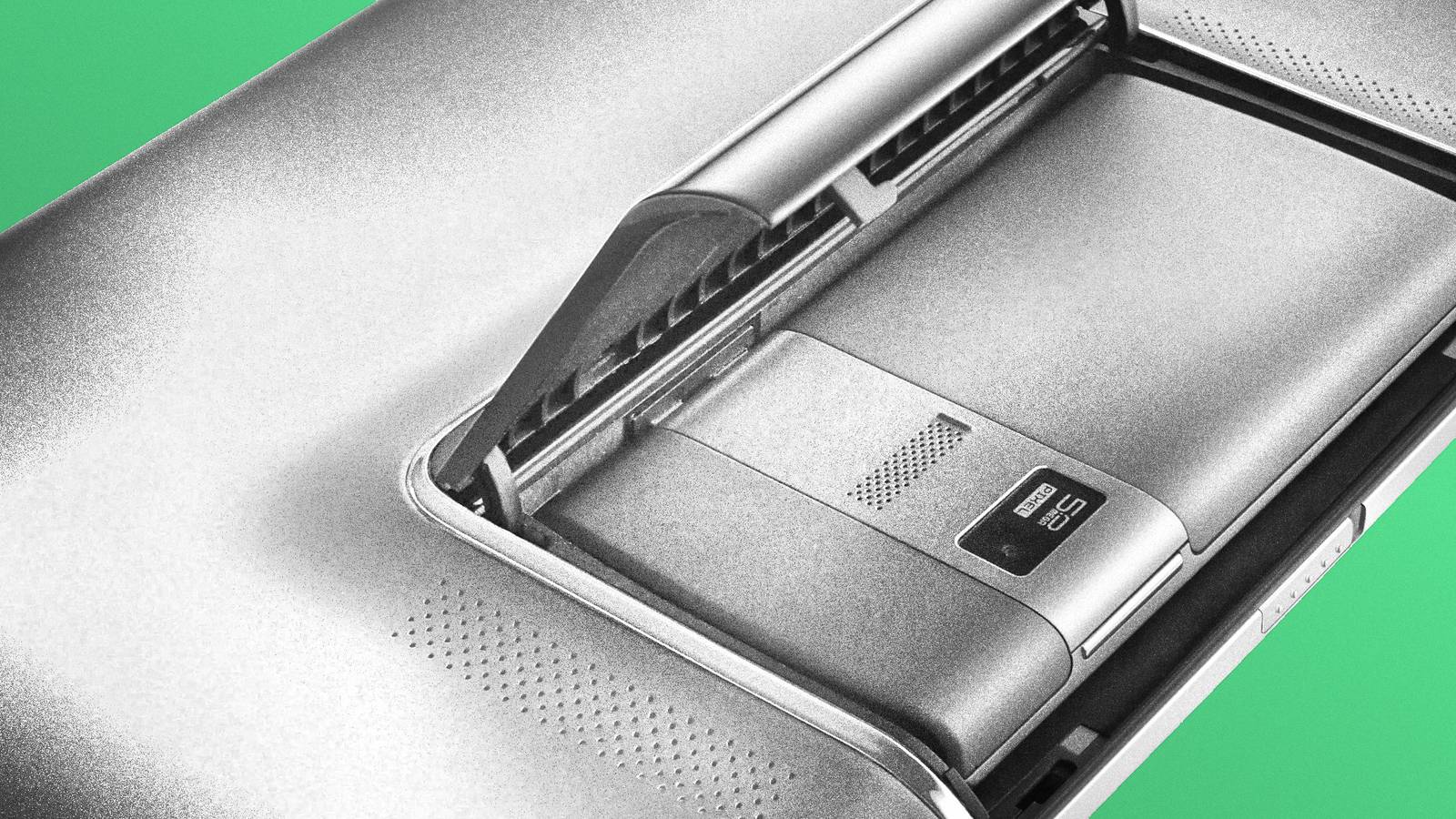
With a more unified and flexible platform that could run on various screen sizes, a new idea took hold.What if your phone could transform into something else, like a tablet? The best attempt at this vision was the Asus PadFone.It was a fairly standard slab phone, but it could act as the brains for a tablet.
That tablet was the “PadFone Station,” a 10-inch shell with a slot in the back for the PadFone.Once the phone was connected, Ice Cream Sandwich would adapt to the larger screen, and all of your phone’s apps and files would be right there.Pretty cool.
We’re still chasing this idea today with foldable phones and desktop mode.However, the PadFone had a fatal flaw.You’re carrying two devices, but they feel like one.
The $1,300 price for the PadFone and Station together was similar to buying an iPhone and an iPad, but the Station was nothing without the PadFone.The bargain bin king It didn’t take long for manufacturers to realize that the only way to compete with the iPad was to undercut it.So, after a couple of years of everyone trying to make 10-inch Android tablets work, the first big hit was a throwback to the beginning.
In July 2012, Google launched Android 4.1 Jelly Bean and the Nexus 7 tablet.It was a 7-inch tablet with pure Android that cost a measly $200.The weirdest thing about the Nexus 7 was that it was a very unremarkable device, but people went crazy for that price tag.
How-To Geek Report: Subscribe and never miss what matters Unlock your tech-savvy potential and master the digital world with How-To Geek.Subscribe By subscribing, you agree to receive newsletter and marketing emails, and accept our Terms of Use and Privacy Policy.You can unsubscribe anytime.
Many retailers had to stop taking pre-orders, and when it was available in stores, they quickly ran out of stock.Google itself had to stop accepting orders of the Nexus 7 from its official store.I can personally attest to how difficult it was to buy a Nexus 7 during the initial frenzy.
The hype eventually died down, but the sales numbers didn’t.Google was hoping to sell 3 million units by the end of 2012—it met that target in October.After the 2012 holiday season, the Nexus 7 accounted for 8% of the global Android market share.
It was clear that when priced right, Android tablets could be successful.They had to play the game on a different field than the iPad.Nowadays, Android tablets still struggle to find their place in the world.
The software and hardware have come a long way, but that doesn’t necessarily matter to consumers.High-end Android tablets are beloved by the diehards, but for most people, price is the main motivator for buying a tablet that isn't an iPad.Related This is the main reason I buy Android tablets over an iPad The freedom to choose something that's more than just a slab.
Posts 13 By Bertel King
Read More