Hybrid vehicles promise lower fuel costs and improved efficiency, but they often come with a higher purchase price than their gasoline-only counterparts.For many buyers, that raises a simple but important question: will the fuel savings eventually make up for the extra money spent upfront? The answer depends on several factors, including fuel prices, driving habits, and the efficiency gap between hybrid and non-hybrid models.In most cases, the additional cost of a hybrid is recovered gradually through reduced fuel consumption.
Because hybrid systems use electric motors to assist the engine, especially in stop-and-go traffic, they typically consume far less gasoline over time.Drivers who rack up more miles each year or spend a lot of time commuting can often reach that break-even point much sooner than occasional drivers.Understanding the payback timeline helps buyers decide whether a hybrid truly makes financial sense.
By comparing purchase price differences, fuel economy ratings, and annual driving distance, it becomes much easier to see how long it takes for the fuel savings to offset the initial premium.In order to give you the most up-to-date and accurate information possible, the data used to compile this article was sourced from various manufacturer websites and other authoritative sources, the EPA, The Zebra, Edmunds, and Kelley Blue Book.Related How hybrid vehicles are proving more reliable than gas-only cars Hybrid tech is quietly rewriting the reliability playbook.
Posts By Tyler Dupont The figures behind how long it takes you to break even on a hybrid Non-hybrid models versus hybrid models Many people looking for their next car are looking at buying a hybrid, with their impressive fuel economy figures being a pretty big draw.The general assumption is that you pay a little more to get behind the wheel of a hybrid, but that you'll get that money back over time by paying less for fuel.If you're someone who likes to have all the facts, though, you might be wondering how long it actually takes for a hybrid to save you enough to cover the premium over a non-hybrid model.
When popular hybrids break even Model Premium for hybrid model Annual fuel savings Payback time Kia Sportage $1,700 $642.86 2.6 years Toyota Corolla $1,850 $462.86 4 years Honda CR-V $2,480 $450.00 5.5 years Hyundai Tucson $3,000 $507.52 5.9 years Subaru Crosstrek $3,370 $362.07 9.3 years The above table showcases how long it will take you to get your money back on some of the most popular hybrid models on the market.The highest fuel economy estimates, courtesy of the EPA, were used to establish annual fuel costs, assuming that the cars were driven for 15,000 miles per year.Thus, we worked out how much you were saving on fuel per year on average by driving the hybrid model, and how long it would take to pay back the difference in price.
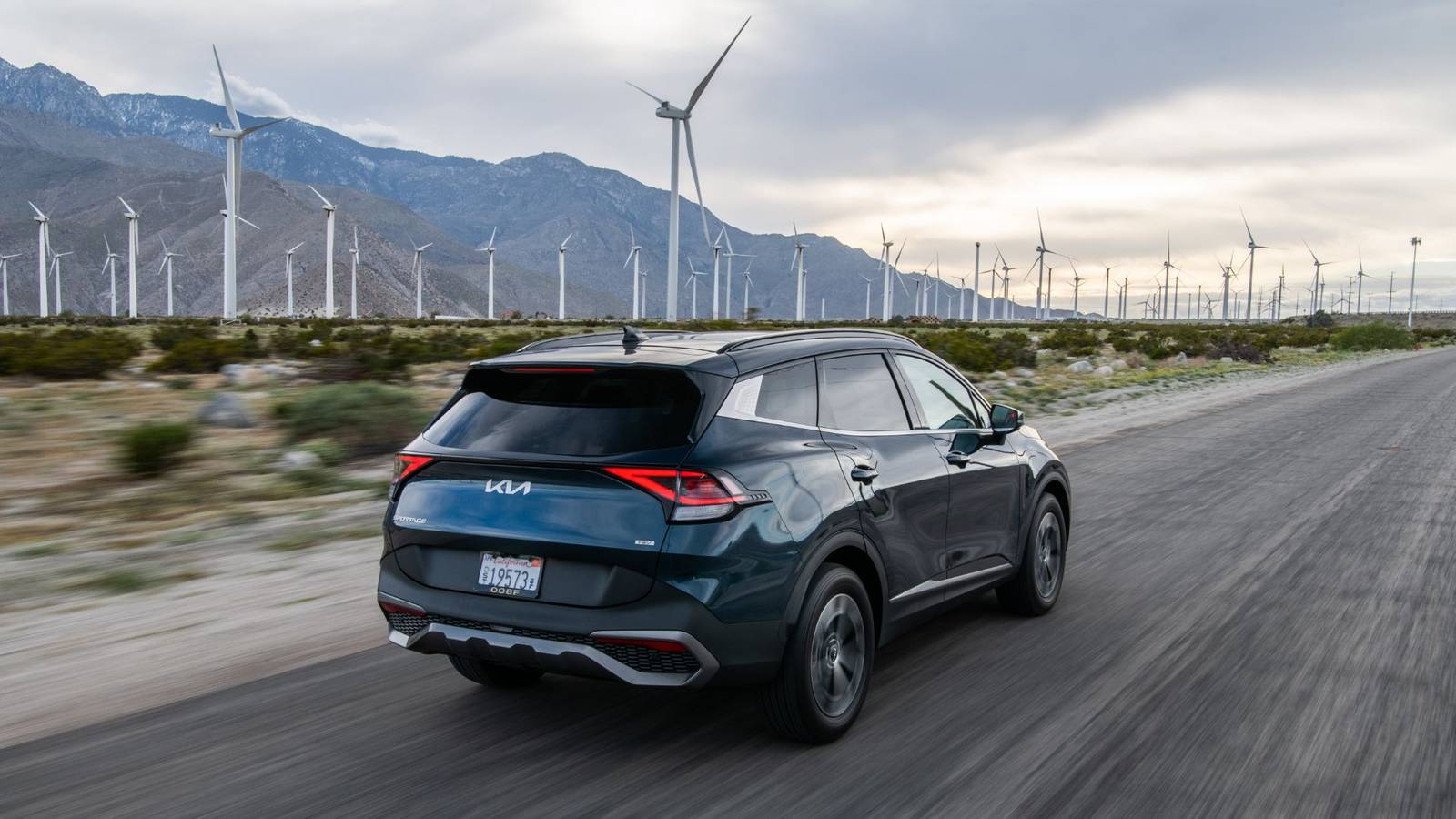
It is clear that the payback time varies pretty drastically from vehicle to vehicle, but the one thing that is obvious is the bigger the premium charged, the longer it will take, regardless of how efficient the hybrid model is.With vehicles like the Kia Sportage, where you are only charged a small premium to go hybrid, the payback time was exceptionally quick.Meanwhile, models like the Subaru Crosstrek will take a while to break even.
It is worth noting that sometimes the hybrid models come with some extra equipment over their non-hybrid counterparts.In those cases, we've used the trim level that competes closest.For example, the Crosstrek Hybrid starts with the Sport trim, so the price for the non-hybrid Sport trim was used instead of the cheapest model.
Related Forget a new Prius—these 10 used hybrid SUVs cost less Why pay more for new when used hybrid SUVs do the job cheaper? Posts By Tyler Dupont Some hybrids won't actually save you money in the long run The average new car buyer doesn't see all that much return From the data above, we can assume that it takes an average of five and a half years for popular hybrid models to save you enough to be worth it.Obviously, the longer you keep your car, or the more miles you drive, the more money your hybrid will save you.Unfortunately, all this data comes together to suggest that some hybrids might not even be saving you money.
Buyers don't hold on to cars very long The state of the economy has had a pretty profound effect on the automotive market.The average age of vehicles on the road has hit 12.8 years, which is an all-time high, and it continues to climb every year.Despite this, the average amount of time that an American holds on to their car is still relatively low.
According to a survey conducted by The Zebra, 68 percent of car buyers have only owned their current cars for six years or less.A whopping 38 percent responded that they have owned their cars for three years or less.All this suggests that a large majority of people aren't going to get all that much return on their investment if they buy a hybrid.
There is still a decently sized chunk of the market that holds on to their cars for longer, and will thus benefit from the fuel savings of a hybrid, but most don't.If your strategy is to buy a car, own it for five years and then move on, a hybrid might actually cost you money in the long run.Related 10 Best Bang for Your Buck Hybrids on the Market Today These 10 hybrids offer the best mix of efficiency, features, and value, proving you don’t have to spend big to get great fuel economy.
Posts 3 By Tyler Dupont There is more to hybrids than just fuel savings Some hybrids offer more than just better EPA estimates Obviously, the biggest chunk of what you're paying for with a hybrid over a non-hybrid is the added efficiency.However, that isn't all that the premium covers.Obviously, it varies from model to model, but in most cases you do get some extra equipment.
Whether or not its worth it isn't straightforward, but it isn't all doom and gloom for hybrids.More power and better equipment packages While some models simply throw in a hybrid powertrian, keeping trim levels identical, like the Toyota Corolla, a lot of them don't.As we mentioned in the first section of this article, some hybrid versions of vehicles are only offered in higher trim levels.
The Honda CR-V is the perfect example of this, with its trim lineup including hybrids at the top with the best equipment and non-hybrids at the bottom with more economy-focused packages.Subscribe to the newsletter for smarter hybrid buys Looking for clearer answers on hybrid payback? Subscribe to the newsletter to receive model-by-model cost breakdowns, practical payback analyses, and buying guidance focused on whether a hybrid will save you money over your ownership horizon.Get Updates By subscribing, you agree to receive newsletter and marketing emails, and accept our Terms of Use and Privacy Policy.
You can unsubscribe anytime.It is also worth noting that hybrids are often more powerful than their non-hybrid counterparts.This isn't always true, but in most cases you'll notice a little extra grunt.
We do think that most hybrid buyers make the leap for the added efficiency, though, rather than the better trim packages or extra power.Most hybrids only make sense if you own them for a while Everything above comes together to outline a pretty obvious fact, that the longer you own a hybrid for, the more money it will save you.However, the average hybrid comes with a decently higher price tag than its non-hybrid counterparts.
Hybrids have a lot of work to do to make up for the extra money they cost.The bottom line, though, is that if you're like a lot of buyers and aim to trade in your car every five years or so, then a hybrid might actually end up costing you money rather than saving you money.Every year after that point, however, you'll start to see some good return on your investment.
Read More