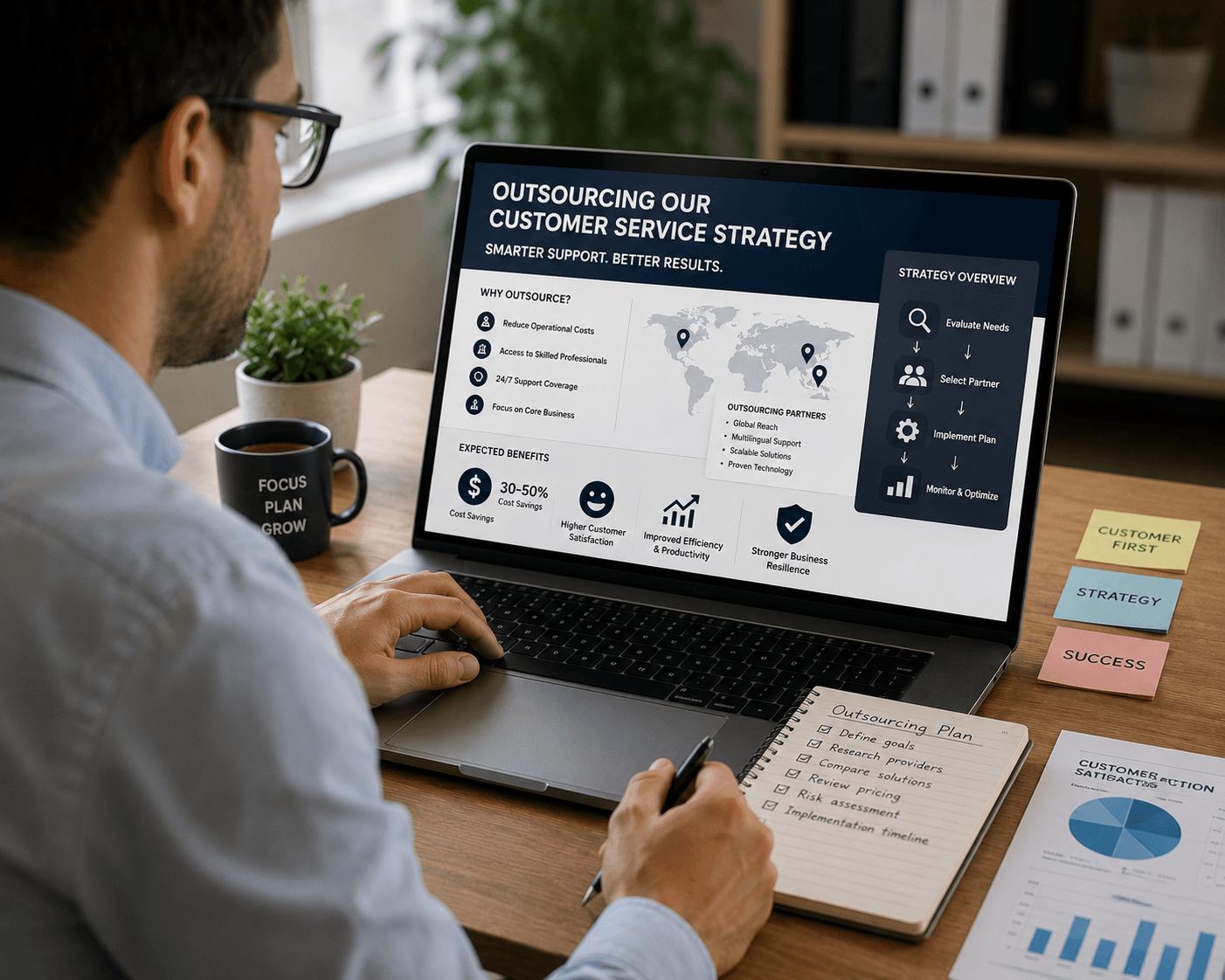
One of the things we cover in detail at Smart Data Collective is how companies can use data analytics to make smarter choices about customer service outsourcing.It is becoming harder for businesses to choose call center partners, staffing models, and support tools without using clear data about customers, costs, and service quality.ContentsData Analytics Makes Customer Service Outsourcing Easier to ManageWhat “Efficiency at Scale” Really Means in SupportThe Handful of KPIs That MatterBaseline First, Then ImproveWhere an External Team Helps Most24/7 Coverage and Burst CapacitySpecialization by Queue or ChannelTraining at Scale with Playbooks and QA RubricsKnowledge UpkeepA Simple Data Playbook to Stay in ControlInstrumentationDashboards to Watch WeeklyQA CalibrationPartner Models and How to Choose OneOptions in Plain EnglishSelection ChecklistOnboarding in 30, 60, 90 DaysDays 0 to 30Days 31 to 60Days 61 to 90Risk, Brand, and Data HygienePrivacy and Data MinimizationSecurity Signals to RequestBrand SafeguardsMeasure Value Without the HypeBuild a One-Page ScorecardReview CadenceWhen to Bring Work Back In-HouseConclusionA blog post by Schiller International University cites a McKinsey survey that found organizations using data driven strategies are 23 times more likely to acquire customers and six times more likely to retain them.It is easy to see why this matters for outsourced support, since better data can help companies understand which customer issues need human agents, which ones can be handled through automation, and which vendors are producing the best results.
Keep reading to learn more.Data Analytics Makes Customer Service Outsourcing Easier to ManageOutsourcing customer service can reduce internal pressure, but companies still need a strong way to track what is happening after they hand support work to another team.There are many ways analytics can help, from measuring call volume and ticket speed to finding patterns in customer complaints.Something that makes this especially useful is that companies can spot weak points before they turn into larger problems.
Owais Akbani of Folio3 writes that as of 2026, over 65% of organizations have adopted or are actively investigating AI technologies for data and analytics.It is a sign that more companies want better tools for planning, forecasting, and managing customer support decisions.More Read AI Is Crucial for Improving Anti-Counterfeiting Systems Why Tech Pros Are Turning To Machine Learning For Career Growth Smart Ways of Using Google API for Optimum Results Collaboration Is Vital to Success [VIDEO] 6 Ways Augmented Reality Is Changing These 6 Industries “The analytics industry itself has become a global economic force, generating hundreds of billions in revenue while creating new job categories and skill requirements.This comprehensive analysis examines the latest statistics, market projections, and industry trends that define the data analytics industry in 2026,” Akbani says.Data analytics can also help companies choose the right outsourcing partner instead of relying only on sales pitches or low prices.
Another thing companies can measure is whether a vendor is solving customer problems quickly without lowering the quality of the experience.It is also possible to compare support channels, agent teams, and response times across different regions or service providers.Ruben Boonzaaijer and Maurizio Isendoorn of Ringly write that AI handles 80% of routine calls, and more companies are using data to help with outsourcing customer service.There are growing reasons for companies to study how AI, outsourcing, and analytics work together before they make long-term support decisions.
“The global business process outsourcing (BPO) market is on track to hit $435 billion in 2026, but the conversation has shifted.AI now resolves 80% of routine calls at a fraction of offshore costs, and 91% of customer service leaders are under executive pressure to deploy it this year,” they write.Customer service outsourcing works best when companies know which tasks should stay in-house, which tasks should go to outside agents, and which tasks can be handled by AI tools.Something that analytics can show is whether customers are getting faster answers, better follow-up, and more consistent service after outsourcing begins.
Another thing it can reveal is whether cost savings are being created at the expense of customer trust.Companies can use those findings to adjust staffing, scripts, training, and service goals before problems get worse.Data analytics also makes outsourced customer service more accountable because it gives managers a clearer way to review vendor performance.It is easier to manage service partners when companies can track customer satisfaction, repeat contacts, missed service goals, and support costs in one place.When your support team is small, efficiency is mostly about focus and quick decisions.
Everyone knows the product, understands the customers, and can solve problems quickly because the people doing the work also built the process.That changes when volume climbs.More channels open up.Customers expect answers outside normal business hours.
Seasonal launches flood the queue.The same team that once handled everything can become buried, and hiring fast enough to keep up may not be realistic.An external support partner can add capacity without handing over the entire customer experience.
To make it work, you need clear metrics, simple governance, and a practical onboarding plan that protects quality as volume grows.What “Efficiency at Scale” Really Means in SupportEfficiency at scale is not just about lowering cost.It means resolving more customer contacts with consistent quality, predictable response times, and enough staffing flexibility to match demand.The Handful of KPIs That MatterBefore you can improve efficiency, you need a shared vocabulary for measuring it.These are the metrics most support teams should track.Average Handle Time (AHT) is the average time an agent spends working a single ticket, from first touch to close.First Contact Resolution (FCR) is the percentage of issues resolved during the customer’s first interaction, with no follow-up needed.Customer Satisfaction (CSAT) is usually a post-interaction survey score that captures how the customer felt about the experience.Service Level measures the percentage of contacts answered within a target time window, such as 80% of chats answered within 60 seconds.Backlog is the count of unresolved tickets waiting in the queue at any given moment.Cost per Contact is total support spend divided by the number of contacts handled over the same period.Utilization, sometimes called occupancy, is the share of an agent’s paid hours spent actively handling contacts instead of waiting.Baseline First, Then ImproveResist the urge to set aggressive targets on day one.
First, capture a four- to six-week baseline of these KPIs using your current team’s real performance.That baseline becomes the anchor for every goal you set with a partner.Without it, you are guessing, and guesses create misaligned expectations on both sides.Where an External Team Helps MostOutsourcing works best when it solves a specific capacity or coverage problem.
The strongest use cases are usually predictable, measurable, and easy to separate from highly sensitive work.24/7 Coverage and Burst CapacityIf your customers span multiple time zones or your product sees seasonal spikes, an external team can fill the gaps without the overhead of permanent hires.Instead of staffing for peak volume year-round, you can flex capacity up and down as demand shifts.Specialization by Queue or ChannelNot every contact requires the same skill set.
Billing questions, technical troubleshooting, and social media responses each benefit from focused training.An external team lets you route queues to agents with the right specialization, which can improve both AHT and FCR.Training at Scale with Playbooks and QA RubricsStandardized playbooks make it easier to onboard new agents quickly and consistently.When paired with a shared QA rubric, they help keep quality steady as team size grows.
Your partner’s job is to follow the playbook.Your job is to keep it current.Knowledge UpkeepExternal agents often surface knowledge gaps faster than internal teams because they experience your documentation with fresh eyes.Encourage your partner to flag outdated macros, missing help articles, and recurring questions that lack a clear answer.
Those flags become a roadmap for improving self-service content.A Simple Data Playbook to Stay in ControlData keeps the relationship grounded.It helps both teams see what is working, where customers are getting stuck, and which process changes are worth making.Before you build dashboards, list the inputs you already trust, such as ticket tags, surveys, account history, product activity, and chat transcripts, because a simple inventory of customer analytics sources keeps reporting grounded in real support work.
InstrumentationMake sure every ticket captures a few essential fields: channel, issue type, disposition, and resolution method.This is the foundation of data-informed customer support.Without it, dashboards are mostly decoration.
Keep the taxonomy simple.Five to ten issue categories are usually enough to start, and you can expand later.Dashboards to Watch WeeklyBuild a dashboard that tracks resolution time, reopen rate, FCR, QA score, and top contact drivers.Show trend lines over weeks, not just snapshots.
A single bad week matters less than a downward trend across three weeks.Review the dashboard in a short weekly standup with your partner’s team lead.QA CalibrationOnce a week, pull a sample of graded tickets and review them with the partner’s QA lead.The goal is alignment.
If your team scores a ticket at 85 and theirs scores it at 95, reconcile the gap before it compounds.Calibration keeps everyone grading to the same standard.Partner Models and How to Choose OneThe right model depends on your volume, channel mix, budget, and how much management responsibility you want to keep in-house.Options in Plain EnglishYou generally have three paths.
A business process outsourcer (BPO) offers larger teams, established infrastructure, and multi-client experience.A specialist boutique focuses on a specific industry or channel and often provides closer collaboration.A third option is hiring remote virtual assistants directly, which gives you more control over individual agents but shifts training and management back to your side.Selection ChecklistWhen evaluating any partner, ask about supported channels and tools, training and ramp time, QA and calibration rhythms, data access, security practices, and escalation paths.
If you are exploring outsourcing customer service for volume spikes or around-the-clock coverage, compare how each option handles hiring logistics, payroll, compliance basics, and day-to-day management.Onboarding in 30, 60, 90 DaysA phased rollout reduces risk.Start with a narrow pilot, use the first month to find gaps, and expand only after the team has shown stable quality.Days 0 to 30Grant tool access, share playbooks and brand voice guides, and pair new agents with your best internal reps for shadowing.Run the first QA calibrations during week two.
Start with a single pilot queue so issues surface in a controlled environment.Days 31 to 60Expand coverage to additional queues or channels.Refine macros based on the gaps flagged during the first month.
Begin weekly improvement notes that tie observations directly to KPI trends.Days 61 to 90Stabilize the staffing model.Introduce stretch goals for metrics like FCR or CSAT.Agree on a quarterly operations review cadence so both sides have a structured moment to assess what is working and what needs adjustment.Risk, Brand, and Data HygieneAdding an external team changes who can access systems, speak with customers, and handle sensitive information.
Treat those areas as operating controls, not afterthoughts.Privacy and Data MinimizationGrant external agents the least level of access they need to do their job.Redact sensitive personally identifiable information in ticket fields when full details are not required for resolution.Establish a clear incident response process so both teams know what to do if something goes wrong.
These are practical steps, not legal advice, so involve your compliance team for specifics.Security Signals to RequestAsk your partner to walk you through their basic security controls and incident response process.Look for clear documentation rather than vague assurances.If they can describe how they handle access provisioning, device management, and breach notification, that is a useful starting point.Brand SafeguardsCreate a voice guide that covers tone, vocabulary, and examples for tricky scenarios such as refund requests or frustrated customers.
Pair it with an approved macro library.Review a handful of real responses each week to make sure the external team sounds like your team.Measure Value Without the HypeOutsourcing should be judged by operating results, not broad claims about efficiency.A simple scorecard helps everyone see progress and spot problems early.Build a One-Page ScorecardA single page showing before-and-after trend lines for your core KPIs, plus a short note explaining what changed and why, is more useful than a long slide deck.
Update it monthly.Keep the narrative honest.If a metric dipped, say so and explain the plan to correct it.Review CadenceUse a weekly standup for tactical items like queue changes or macro updates.
Reserve a monthly meeting for trend analysis and a deeper look at top contact drivers.Once a quarter, step back for capacity planning and roadmap alignment.The same data analytics thinking used in other business operations applies directly to support decisions, and a wider view of big data in support can help you connect response trends to process changes before changing staffing.When to Bring Work Back In-HouseNot every outsourcing arrangement should last forever.
If escalation rates climb steadily or QA scores drop across two consecutive review cycles despite calibration, investigate the cause.Sometimes the answer is a new partner.Sometimes it is bringing the work back in-house.
Either way, the data should drive the decision.ConclusionScaling support without losing quality comes down to a few straightforward steps.Baseline your KPIs before you change anything.Pick the partner model that fits your volume, channels, and budget.
Pilot with a single queue, calibrate QA weekly, and watch trend lines instead of snapshots.Review performance monthly, adjust quarterly, and let the numbers show when something needs to change.The goal is not to hand off your support operation.
It is to extend it with clear guardrails and shared accountability so your team can grow without unnecessary strain.Companies that outsource customer service without strong analytics may save money at first but struggle to see what is really happening across their support operation.There are many cases where the right data can help leaders improve training, reduce repeated issues, and give customers better answers across phone, chat, email, and help desk channels.Something that makes this so important is that customer service is often one of the first places where people decide whether they trust a brand.Data analytics gives companies a better way to outsource customer service without losing control of the customer experience.
It is one of the best tools for helping leaders choose the right partners, track results, and make changes when support quality starts to slip.
Read More