Flathub spent five months refusing AI-generated apps, but sadly gave in to the inevitable reality of vibecoded apps.And while I'm personally not against vibecoding in general (and I've even vibecoded some stuff), I'm still very careful about what I install on my PC—and a lot of lazy slop is going to start flowing into Flathub.Add How-To Geek on Google Add as Preferred Source Follow on Google Discover That reversal pushed me toward elementary’s AppCenter, a smaller Flatpak store that still treats AI-generated content as a hard no.
Here’s why the switch made sense, and what it costs.Flathub traded its AI ban for a disclosure form Reviewers now decide what used to be banned At the end of May 2026, Flathub lead operator Bart Piotrowski announced one of the strictest AI policies any major software repository had adopted.Applications containing AI-generated or AI-assisted code, documentation, or other content were no longer allowed.
The rule also covered manifests, metadata, build scripts, and submission pull requests.Maintainers said the change followed a surge of low-quality submissions and increasingly hostile replies from rejected developers.In October, Flathub reversed it.
Submitters now have to disclose any AI-generated material in an app or its packaging, along with which parts are affected and roughly how much.Some restrictions remain.Manifests still can’t contain AI-generated content, AI agents can’t open or automate submissions, and hiding AI use can still get an app rejected or a developer banned.
AI used only for research or debugging doesn’t need to be disclosed.Everything else is left to reviewer discretion, and the policy says disclosure doesn’t guarantee acceptance.There’s a real case for the change.
Nobody can reliably measure how much AI went into a project, a lot of modern software includes some AI-assisted code, and proprietary apps on Flathub could never be audited anyway.A rule that can’t be enforced consistently tends to punish honest developers and miss dishonest ones.Still, a disclosure requirement gives information to reviewers, not to users, and the published policy doesn’t say whether those disclosures will ever appear in the store.
Whether a vibecoded app gets in now depends on a volunteer reviewer’s judgment, which is the resource most likely to run short.If the answer has changed from “no” to “probably fine, ask a reviewer,” I’d rather use a store where the answer is still no.AppCenter still says no, on any distro A hard requirement, delivered as a Flatpak remote elementary’s AppCenter is that store.
Its publishing requirements say apps must not include AI-generated content, including code, packaging, documentation, and artwork, and reviewers can reject any app that might include it without further review.It’s listed as a hard requirement, which elementary says is checked by automated and human review before every app and every update ships.Submissions go through public pull requests on GitHub, where developers confirm on a checklist that their app contains no AI-generated content.
Like Flathub, AppCenter allows AI for research or debugging, as long as nothing generated ships.Unlike Flathub, disclosed AI content doesn’t go to a judgment call.It just doesn’t get in.
The rule also matches how elementary runs its own projects, which don’t accept AI-generated code or design contributions.Gentoo took a similar position in 2024.Both ultimately depend on developers being honest, but there’s far less ambiguity about what honesty requires.
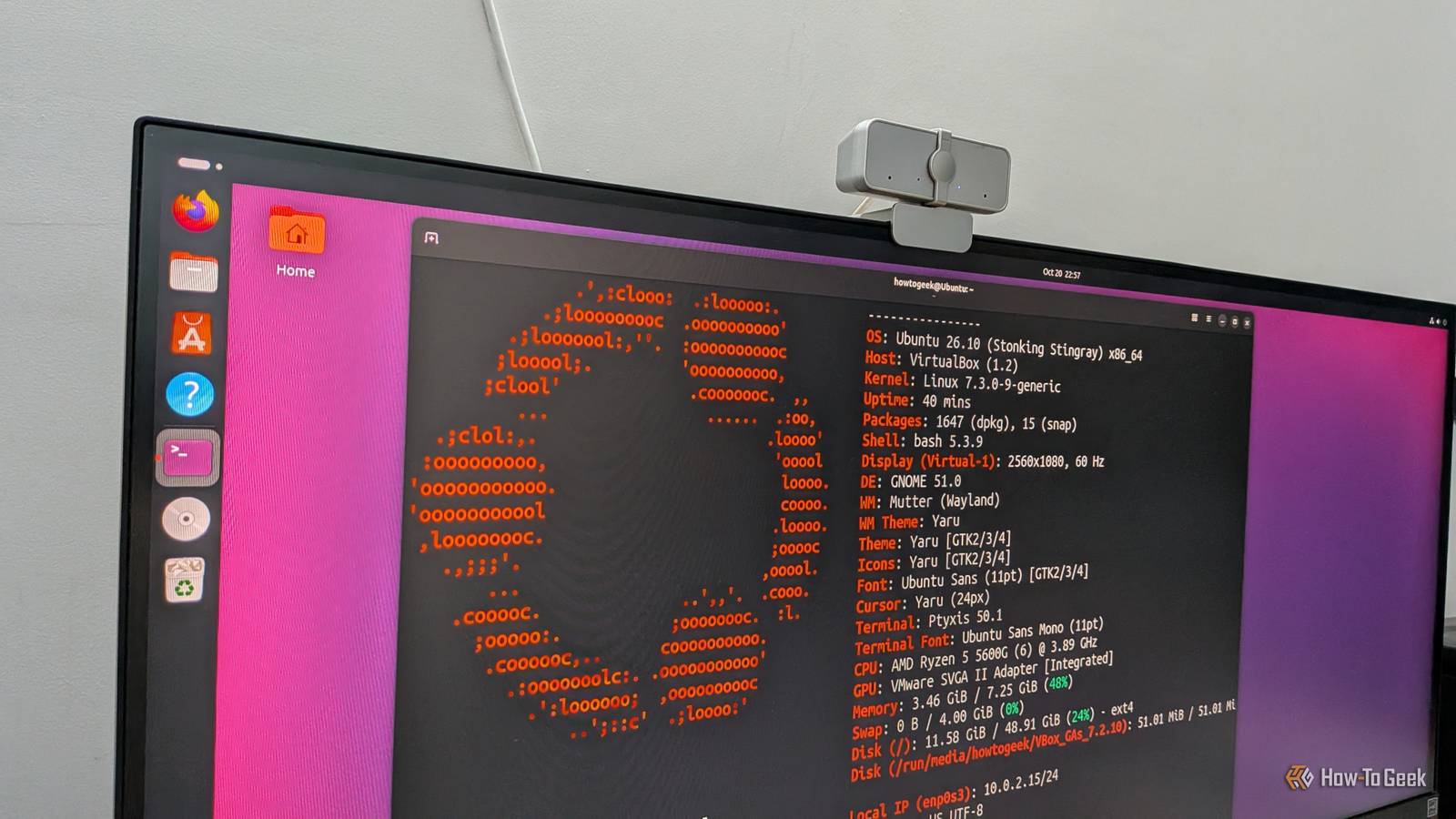
What makes the switch all the more practical is that AppCenter isn’t tied to elementary OS.Since elementary OS 5.1, its apps have been distributed as Flatpaks from elementary’s own repository, so any distribution with Flatpak can add it with one command: flatpak remote-add --if-not-exists appcenter https://flatpak.elementary.io/repo.flatpakrepo.After that, AppCenter apps show up in GNOME Software and KDE Discover next to Flathub apps, run in the same sandbox, and update the same way.
There are a few caveats to take into account.The first install pulls elementary’s own runtime, which uses extra disk space.The apps follow elementary’s design language, which may not match every desktop.
And the pay-what-you-can prompt is part of elementary’s own AppCenter client, so on other distros, supporting developers means going to their project pages directly.The tradeoff is a smaller catalog Strict curation only works at a smaller scale Close The obvious cost is size.AppCenter requires native GTK3 or GTK4 front ends, and its rules reject web, Electron, Qt, and Java apps, with a limited exception for games.
That excludes KDE software, most Electron chat and productivity clients, and a lot of the cross-platform apps Linux users rely on every day.So switching doesn’t mean removing Flathub.It means changing where I look first.
For small, focused utilities like note apps, timers, converters, and system tools, AppCenter is now my starting point.Those are also the categories where low-effort AI-generated apps cluster, so that’s where a stricter policy matters most.For big-name apps that will never be GTK-native, Flathub stays configured, and those projects carry less risk to begin with because they have real teams and long histories.
The downside is that I have to pay attention to which remote an app actually installs from, since software centers don’t always make that obvious.The size gap is also what makes AppCenter’s policy realistic.Flathub has become the default distribution channel for desktop Linux, and every rule there affects thousands of developers, so a compromise like disclosure was always likely.
AppCenter never tried to carry every Linux app, and its GTK-only requirement keeps submissions manageable enough for a strict rule to stay meaningful.The pressure isn’t limited to one store.GNOME Circle paused new submissions this year over its review backlog and adopted its own AI policy to keep machine-generated software from adding to it.
AppCenter isn’t perfect.Its catalog is narrow, and a dishonest developer can still lie on a checklist.But choosing where software comes from has always been part of using Linux, and a store’s policies are a good reason to choose it.
A stricter store beats a disclosure checkbox Flathub’s move from an outright AI ban to disclosure leaves the decision to reviewers.elementary’s AppCenter still rejects AI-generated code, packaging, documentation, and artwork outright, and any Flatpak-enabled distribution can use it.The catalog is smaller and GTK-only, but for small utilities, the stricter curation is worth it.
Read More