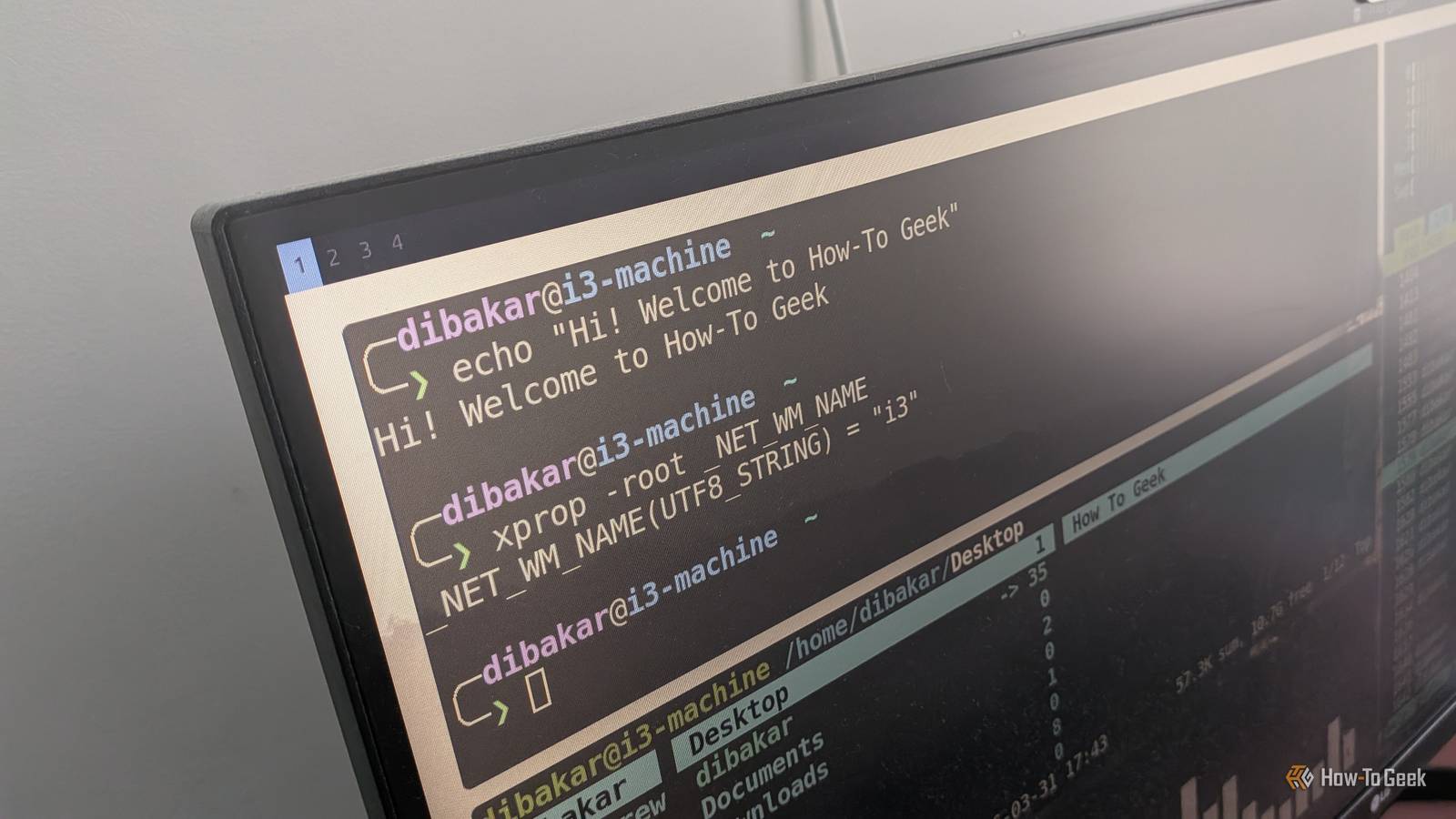
Everyone who uses i3—or any Linux window manager—has some version of the same story: excited going in, and confused right after installing it.People on the internet will show you what’s possible with i3, but very few talk about what it actually takes to get there.I pushed through, figured it out, and now I’m sharing the three things I wish I knew before I started.
Related Looking for the best Linux window manager? Here’s how I rank them Whether you want the simplicity of i3 or the eye-candy of Hyprland, this guide breaks down the best WMs for your Linux workflow.Posts 4 By Dibakar Ghosh It’s not like the fancy screenshots you see on Reddit i3 is just black emptiness You probably discovered i3 the same way most people do—a screenshot on r/unixporn or a YouTube video where someone’s desktop looks impossibly clean.You see the sleek wallpaper, blurred transparent windows, colorful widgets, a minimal top bar, perfectly tiled apps and think—I want that Laptop With Linux Intel NUC13 Choose from three different Intel processors when you configure this mini PC, along with your choice of dozens of Linux distribution options.
Expand Collapse However, the first time you log in, all you’re going to get is an empty black screen.In fact, it’s almost alarming how empty it is.You see, the setups people show off online aren’t just i3.
They’re i3 a collection of other tools, like: Picom: transparency, blur, shadows Polybar: custom status bar Rofi: app launcher Nitrogen or feh: wallpaper Dunst: notifications i3lock: screen lock You have to install and configure all of these yourself before your desktop starts to resemble what you see online.i3 is just a window manager—not a full desktop environment.It manages windows, and that’s it.
Everything else is up to you.This can trip you up if you’ve only used traditional desktop environments like GNOME or KDE Plasma, which come with a window manager everything else necessary to make up a desktop.This minimalism is what makes window managers so powerful—nothing is baked in, so you can build it up from scratch.
But it also means that if you've never stopped to think about what a desktop environment is actually made of, i3 will feel overwhelmingly confusing.Related New to Linux? Focus on the Desktop Environment, Not the Distro Why choosing your Linux desktop environment matters far more than picking the perfect distro.Posts 10 By Dibakar Ghosh The config file the settings menu I didn’t realize how much I relied on Settings apps There's no Settings app in i3.
No preferences panel, no graphical interface—nothing to click through.Every change you want to make—keybindings, gaps between windows, startup apps, colors—lives in a plain text file at ~/.config/i3/config.You open it in a terminal text editor, write your changes using i3’s syntax, save, and reload.
If the blank empty screen on the first boot caught you off guard, just sit with it for a second.The only way to change that black screen is by writing text inside a terminal.It almost feels like coding because it essentially is—you're writing instructions that i3 executes.
And just like coding, one wrong line can break things after a system restart, leaving you staring at that black screen again.To save you from the pain, here are a few best practices: Change one thing at a time, then reload to verify it works Run i3 -C before reloading to catch syntax errors Keep a backup of your working config file I tried using Claude Code—which has direct filesystem access—by describing the setup I wanted, and it generated a working config file.It’s not a substitute for understanding what’s in there, but it’s much faster than building everything line by line.
Your familiar keyboard shortcuts don’t mean anything Expect a week of staring at a cheat sheet before anything feels natural You’re probably drawn to i3 partly you’re a keyboard-first user.You’re fast with shortcuts, you know your way around, and you expect i3 to feel like more of the same.That was my assumption too—but I was completely wrong.
Most of the shortcuts you rely on—the ones from Windows that carry over to GNOME or KDE Plasma—don’t work in i3.Alt+F4 won’t close a window.The Super (Windows) key won’t open a launcher.
Super+D won’t show the desktop.i3 has its own bindings for everything, and almost none of them overlap with what you’re used to.It took me a week or two of staring at a cheatsheet just to handle basic tasks.
But once it clicked and stuck in muscle memory, I started to prefer the i3 approach.The shortcuts are built around a keyboard-first workflow, and once you internalize them, they’re faster than what you had before.Subscribe to the newsletter for practical i3 configs Get deeper i3 coverage - subscribe to the newsletter for ready-to-use configs, keybinding walkthroughs, and curated tool stacks (Picom, Polybar, Rofi).
Practical setup tips and safe config practices to help you build the desktop you want.Get Updates By subscribing, you agree to receive newsletter and marketing emails, and accept our Terms of Use and Privacy Policy.You can unsubscribe anytime.
However, one thing I wish I’d known earlier is the tool called rofi-i3-shortcut-help that makes this transition much easier.It parses your i3 config and shows all your keybindings in a searchable pop-up inside Rofi.Bind it to something like $mod+Shift+/ ($mod = Super key), and you’ve got a quick access cheat sheet.
You can theoretically remap everything to your old Windows-style shortcuts—but don’t.It feels easier at first, but you’ll be fighting how i3 is designed.Learn the defaults, and you’ll end up faster than before.
To solve a problem, you must first understand the problem The blank screen, the config file, the new muscle memory—none of it is as scary as it looks on day one.i3 rewards the people who stick with it, and now you're going in with more context than most.That's already half the battle won.
Read More