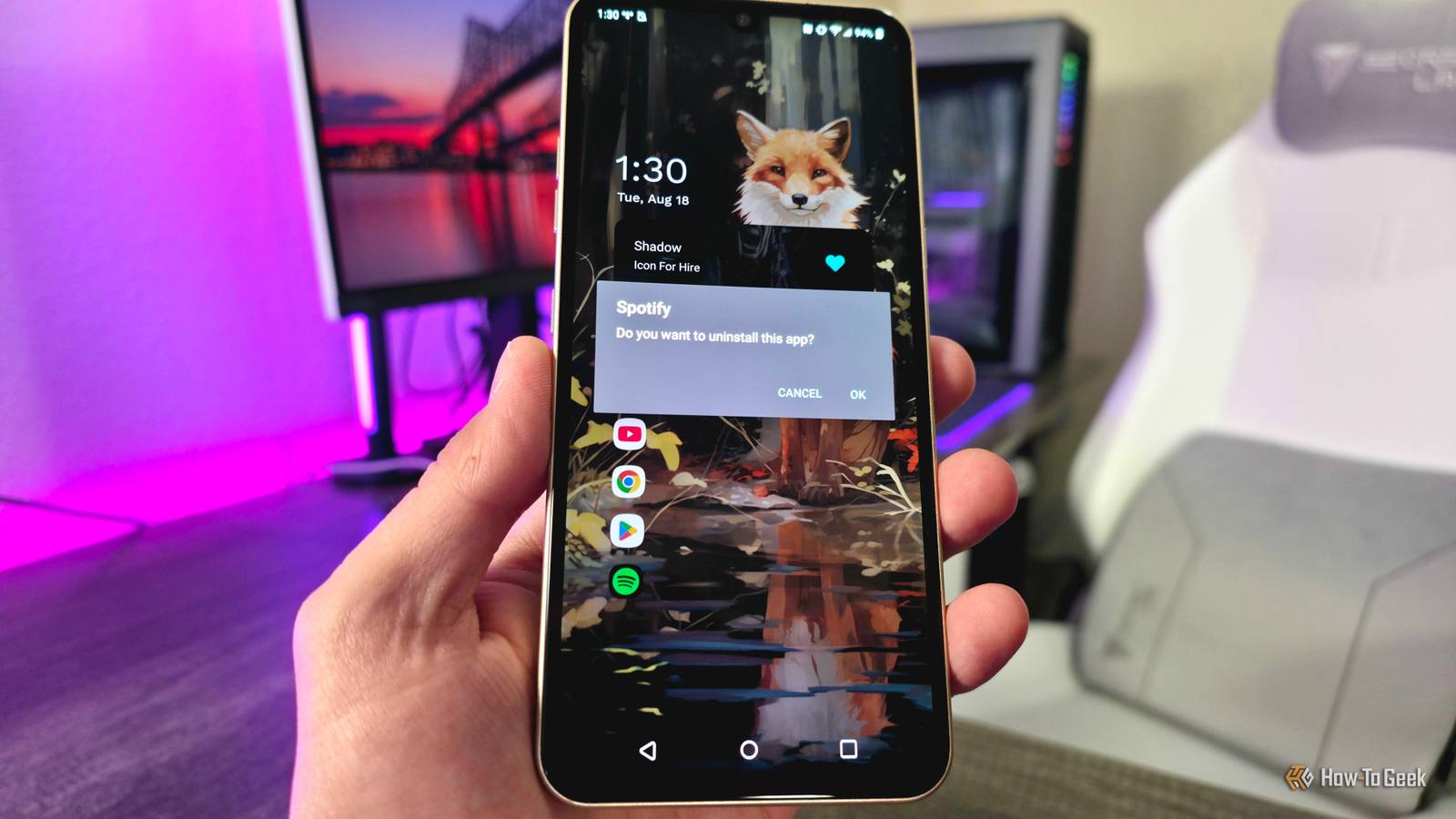
The billions of music enjoyers around the world are flush with streaming options thanks to platforms like Apple Music, YouTube Music, and the green monarch that rules above them all: Spotify.The streaming giant used to be my app of choice for all my music needs, too, but I happily abandoned Spotify years ago in favor of Tidal, another strong contender in the space.Now, I'm pitting the two against each other once again to prove that Tidal is the better choice over Spotify.
I can provide more than a few reasons to convince you to switch, too—even if you're not entirely sold on the hi-fi audio promises that set Tidal apart from its competition.Related I can't give up my outdated LG smartphone for one reason When it comes to music, nothing beats my six-year-old LG V60 ThinQ.Posts 9 By Zachary Boddy A cleaner, lighter app that focuses on the music Tidal doesn't get in your way with unwanted content Close One of my most prominent criticisms of Spotify was the app itself.
Packed with features and rocking a sleek, modern design language, Spotify's app shows all the marks of a long-lasting and highly successful platform.It also wants to do a lot more than just play your music—and I'm frankly not interested.Apart from a practically endless library of music and music videos, Spotify also boasts countless podcasts and a rapidly growing catalog of audiobooks.
These features are great for those who use them, but those just interested in their tunes might prefer the cleaner, more streamlined interface of Tidal, which is only interested in getting you to your music as quickly as possible.Quiz 8 Questions · Test Your KnowledgeMusic streaming servicesTrivia challengeFrom Spotify to Tidal — test how well you know the biggest names in music streaming.SpotifyApple MusicTidalYouTube MusicAmazon MusicBegin 01 / 8SpotifyIn what year was Spotify officially launched to the public?A2006B2007C2008D2010Correct! Spotify launched publicly in October 2008, founded by Daniel Ek and Martin Lorentzon in Sweden.It started with an invite-only model before opening to broader audiences.Not quite — Spotify launched in October 2008.
Though the company was founded in 2006, it took two years of development before it was ready for public release.Continue 02 / 8Apple MusicWhich music service did Apple acquire in 2014 to help build Apple Music?ARdioBPandoraCBeats MusicDRhapsodyThat's right! Apple acquired Beats Electronics — including Beats Music — for $3 billion in 2014.The streaming technology and talent from Beats Music became the foundation for Apple Music, which launched in 2015.The correct answer is Beats Music.Apple's $3 billion acquisition of Beats Electronics in 2014 brought not just the headphone brand but also a streaming service that Apple retooled into Apple Music, launched in June 2015.Continue 03 / 8TidalWhich artist-owned collective famously relaunched Tidal in 2015 with a star-studded press event?AJay-Z and a group of music artistsBKanye West and Universal MusicCTaylor Swift and Republic RecordsDBeyoncé and Sony MusicCorrect! Jay-Z purchased Tidal through his company Project Panther and relaunched it in March 2015 alongside artists including Beyoncé, Rihanna, Kanye West, and Madonna.
The goal was to create an artist-owned streaming alternative.The answer is Jay-Z and a group of music artists.Jay-Z bought Tidal for $56 million and relaunched it in 2015 with a high-profile event featuring co-owner artists like Rihanna, Kanye West, and Beyoncé all holding hands on stage.Continue 04 / 8YouTube MusicYouTube Music replaced which previous Google music streaming service when it became the default in 2020?AGoogle Play MusicBGoogle SoundsCGoogle TuneDPixel MusicSpot on! Google Play Music was officially shut down in late 2020, with YouTube Music taking over as Google's primary music streaming platform.Users were encouraged to transfer their libraries and preferences to YouTube Music.The correct answer is Google Play Music.
Google ran two overlapping music services for years before finally retiring Google Play Music in 2020 and consolidating everything under YouTube Music.Continue 05 / 8Amazon MusicWhich Amazon Music tier offers a free, ad-supported listening experience with limited on-demand features?AAmazon Music BasicBAmazon Music FreeCAmazon Music LiteDAmazon Music PrimeCorrect! Amazon Music Free is the ad-supported tier that gives listeners access to a curated selection of music without a subscription fee.It offers limited on-demand listening compared to the paid Prime and Unlimited tiers.The right answer is Amazon Music Free.Amazon offers several tiers — Free (ad-supported), Prime (included with Amazon Prime), and Unlimited (full catalog access) — each with increasing levels of on-demand functionality.Continue 06 / 8SpotifyWhat is the name of Spotify's AI-powered feature that creates a personalized playlist every Monday based on your listening history?AWeekly MixBDiscover WeeklyCMonday MoodDFresh FindsExactly right! Discover Weekly launched in 2015 and became one of Spotify's most beloved features.
It uses machine learning to analyze your listening habits and generate a 30-track playlist of songs you haven't heard but are likely to enjoy.The answer is Discover Weekly.Launched in 2015, this Monday playlist became a massive hit for Spotify — within its first year, over 1.7 billion tracks were streamed from Discover Weekly playlists alone.Continue 07 / 8TidalTidal is particularly known for offering which audio quality feature that sets it apart from many competitors?ASpatial audio onlyBLossless and hi-fi audio streamingC8D audio processingDAI-mastered audio tracksRight! Tidal built its brand around offering lossless FLAC and hi-fi audio quality, appealing to audiophiles who want the highest fidelity streaming experience.Its HiFi Plus tier even supports Master Quality Authenticated (MQA) tracks.The correct answer is lossless and hi-fi audio streaming.
Tidal has long positioned itself as the premium choice for audiophiles, offering lossless FLAC streams and MQA masters at quality levels beyond standard compressed audio.Continue 08 / 8Apple MusicApproximately how many songs does Apple Music claim to have in its streaming library as of 2024?A50 millionB70 millionC100 millionD150 millionCorrect! Apple Music boasts a catalog of over 100 million songs, making it one of the largest music libraries available on any streaming platform.This gives it an edge in niche genres and rare recordings compared to some rivals.The answer is 100 million songs.Apple Music has grown its catalog aggressively and now claims over 100 million tracks — significantly more than early streaming catalogs, which typically hovered around 30 to 50 million songs.See My Score Challenge CompleteYour Score/ 8Thanks for playing!Try Again Another side effect of Spotify's do-it-all approach is a more bloated app and worse performance.
As my music library grew, stutters and longer load times became more frequent.Spotify never entirely failed to work, but its inconsistency slowly built up my frustration over time.Even Spotify's music discovery and automatic mixes have drastically fallen in quality over the years, while Tidal remains focused on what matters.
Now, I won't claim that Tidal is a slam dunk.I've encountered a few minor bugs, such as Tidal "forgetting" that I've added songs or albums to my collection (they're still there, but Tidal sometimes shows the Add plus symbol instead of the correct Added heart symbol).I also wish Tidal had a dedicated Xbox app like Spotify does, as I love to put on music while I'm cleaning or working around the house.
Superior audio quality across the board Lossless audio is standard for everyone Tidal initially made a name for itself as the ultimate music service for audiophiles, thanks to lossless, high-fidelity music being the standard across the catalog.Nowadays, Tidal still sets the bar for audio streaming quality, with a vast collection of tracks available at their absolute best quality.But this victory isn't as important as it used to be.
Spotify now offers lossless audio to Premium subscribers.The feature may have arrived years late, and Spotify's lossless audio quality may be lower than Tidal's (24-bit/44.1KHz versus 24-bit/192KHz), but it is here and, admittedly, it's more than good enough for the majority.That's especially true considering most people listen to their music via Bluetooth-enabled headphones or speakers, which lacks the bandwidth to get the most out of lossless files.
The hi-fi promise is a huge reason I first decided to abandon Spotify for Tidal a couple of years ago.However, I have to be honest: even if Tidal is still on top, the difference will only matter to those with great wired headphones.Greater support for the artists and bands you love More pay per stream, and the option to buy direct A major pro that isn't so niche is how Tidal offers some of the best rates for paying the artists that make your favorite music, far higher on average than Spotify.
Like most music streaming services, Tidal uses a dynamic royalty system that pays artists a variable amount per stream depending on their popularity, location, publisher, and other factors, but Tidal's focus on pure music and commitment to supporting artists puts the service at the top of the industry.It can be difficult to calculate exactly how much Tidal and other services pay artists thanks to the variable rates and a lack of information direct from the source, but online calculators like this one at Ditto Music can help you compare Tidal to Spotify and other major streaming platforms.Spoiler: artists can expect two to three times as much revenue on Tidal versus Spotify when comparing the same number of streams.
It's not just about higher streaming rates, either.Tidal allows artists to sell albums and tracks directly to fans, only taking a 10% cut of the revenue; that's a better revenue split than Bandcamp, by the way.You support your favorite artists directly, and you get to keep that music forever—even if you're not a Tidal subscriber.
There are no loops to jump through for an artist to take advantage of this, either.Unlike Spotify, which requires a third-party distributor to upload your music, Tidal Upload lets artists get started for free, directly through Tidal itself.Related I've never liked Spotify—I choose a music streaming service that lets me own my songs I'm also paying artists more than a fraction of a cent.
Posts By Bertel King A stricter stance on shady AI-generated music Enjoy clear labels and an easy opt-out Generative artificial intelligence has become a scourge on creative communities, including with music, books, drawings, and photography.Spotify has been especially riddled with waves of fake, AI-generated bands designed to capture engagement and revenue from unsuspecting users, or even to capitalize on the success of established artists by closely resembling them.Tidal has also been afflicted by this problem but clearly laid out its stance on AI-generated music in July: all 100% AI-generated music will be tagged (but allowed to stay on the service); no 100% AI-generated music will be eligible for royalties or direct-to-fan sales; AI-generated music that impersonates any real artist will be removed; all users can opt out of interacting with 100% AI-generated music across the entire platform; and Tidal will also work on detecting and tagging partially AI-generated music moving forward.
These updates have already been put into effect.While I planned this article, Spotify outlined its own stance on AI-generated music earlier this month—once again late and once again a step or two behind Tidal.Starting in mid-September, Spotify will be labeling AI-generated artists as "AI Personas" and will stop recommending this AI music in its playlists or mixes (no word on Spotify's AI-assisted algorithm pumping out odd, nonsensically named mixes, though)...
but it appears AI music will still be eligible for monetization.At the very least, it's a good step forward for Spotify.All that, and Tidal actually costs less than Spotify Spotify is definitely looking rough in this versus Back in 2014, Tidal was considerably more expensive than Spotify if you wanted access to its hi-fi catalog, but the positions have actually swapped since then.
Yes, Tidal is cheaper overall than Spotify, charging $12/month for its individual premium plan compared to Spotify's $13/month and $20/month for its six-member family plan compared to Spotify's $22/month.Both Tidal and Spotify also offer a $7/month promotional plan for eligible students.Tidal also offers DJ-specific variants of its individual and student plans, which lets you natively integrate Tidal and its entire music catalog into compatible DJ software and hardware.
Now, Spotify does have a few advantages.It offers a free tier supported by ads (Tidal helps ensure higher royalties for artists by not offering this), its premium plans include access to its podcasts and 15 hours a month of audiobooks (if you care about either, as I don't), and Spotify's student plan does include access to Hulu (a powerful perk for budget-conscious students).Despite those pluses, Tidal is a no-brainer for me.
No regrets going to Tidal Spotify may be the king of music streaming services, but I have never once regretted switching to Tidal.A more focused approach to app design and recommendations, a comparable music catalog, excellent audio quality, commitment to industry-leading monetization options for artists, and a stricter approach to AI-generated music make Tidal, in my opinion, the absolute best service for those who simply want to listen to music.Well, I also hear Apple Music has gotten pretty good, but I'll leave that comparison to someone else.
If you want to make the switch, Tidal does offer a way to import your playlists and saved music from Spotify using TuneMyMusic, which supports up to 500 songs for free.Tidal Individual pricing $11.99/month Group pricing $19.99/month (6 members) Free trial 30 days Donwload Url https://offer.tidal.com/download TIDAL is a subscription-based music streaming service that competes against Spotify with its vast catalog of over 100 million songs, industry-leading audio quality, and a focus on supporting artists and their music.See at TIDAL Expand Collapse
Read More