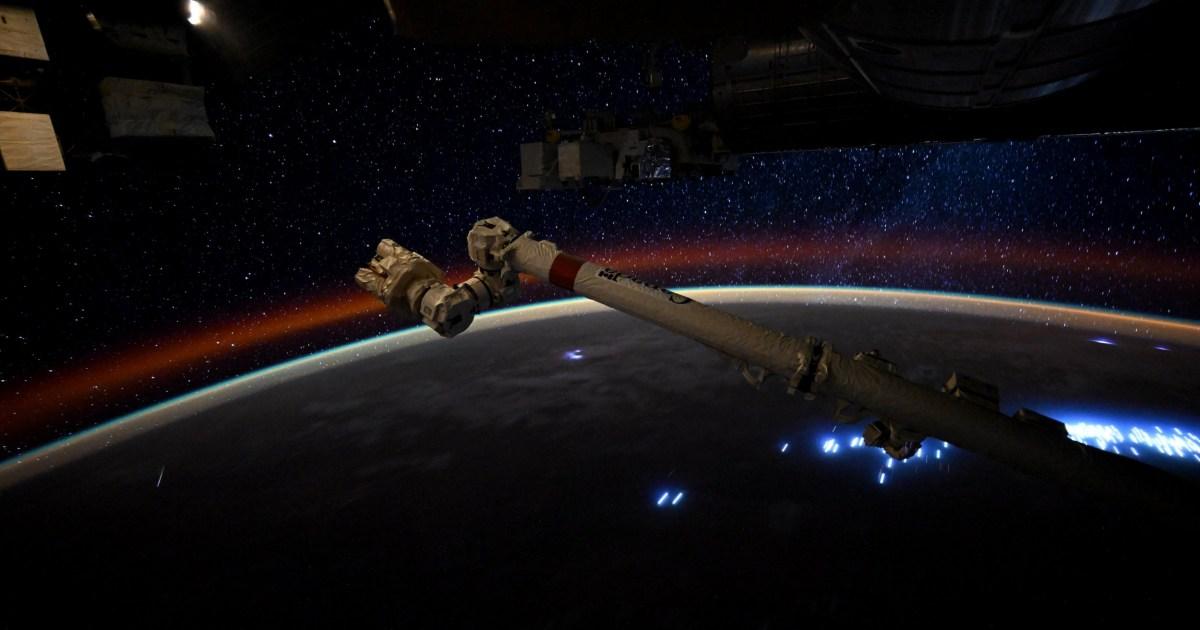
The world’s oldest known meteor shower is happening once again with its peak occurring today.But the question on stargazers’ minds is whether you’ll be able to see the Lyrid meteor shower in the UK.The Lyrid meteor shower began last week on April 16 and will continue through to this weekend, peaking today on April 22.
Once a year, the Earth passes through the trail left by the comet C/1861 G1 Thatcher, creating the oldest recorded meteor shower still visible, after it was first spotted in 687 BCE.The shower’s name comes from the Lyra constellation, where the meteors appear to originate from in the sky, even though in reality they have nothing to do with the distant stars.The sky lit up this week, with meteors whizzing past at around 30 miles per second, moving so fast the air particles in front can’t get out of the way in time.
Instead, they’re rapidly compressed and start to heat up, raising the temperature around the meteor to as high as 1,600C° – causing the meteors to shine brightly as it streaks across the sky.Here’s everything you need to know about the Lyrid meteor shower before it ends.What’s the best time to see the meteor shower? The Lyrids began on April 16 and will be visible until Saturday on April 25.
The shower reaches maximum today ahead of the Quarter Moon.The best time to view the spectacle at its peak was in the early hours of this morning, but they’ll still be highly visible tonight.The meteors will be viewable from around 2am once the Moon has set and the Earth has spun towards the cloud of debris the Lyrids originate from.
What’s the best way to view the 2026 Lyrid meteor shower? Greenwich Observatory said the best way to see the showers is at a dark site with an unobstructed view of the sky while lying down.Trending Now Trump stopped from ‘accessing nuclear codes' in furious row US 22 hours ago By Sarah Hooper First 24-hour Tube strike ends but Londoners warned of major disruption Mum asks for prayers for influencer still fighting for life after being run over in Soho Veteran 'who served his country' beaten to death in Hull city centre 'assault' The Lyrid meteor shower is visible with the naked eye, so no specialist equipment is needed to watch the spectacle, and they will be visible across the UK.How many meteors that are visible will depend on factors such as the amount of light pollution and the level of cloud cover.
What else is there to see this year? Another meteor shower, known as the Eta Aquariids, overlaps with the Lyrids.It began on April 19 and will reach its peak on May 5, so keep your eyes out.The Whirpool Galaxy will remain visible for the remainder of April, although you’ll need binoculars or a telescope to be able to see it and its glittering spiral.
For those of you that missed this month’s pink moon, there are plenty of other full moons to observe this year, including: Flower Moon on May 1 Blue Moon on May 31 Strawberry Moon on June 30 Buck Moon on July 29 Sturgeon Moon on August 28 Harvest Moon on September 26 Hunter’s Moon on October 26 Beaver Moon on November 24 Cold Moon on December 24 The observatory added: ‘The number of meteors you actually see will depend on all sorts of things, from the time of night to the level of background light.‘A bright sky will drown out the fainter meteors, making them much more difficult to see.’ Get in touch with our news team by emailing us at [email protected] more stories like this, check our news page.
MORE: Great white sharks may be ‘cooked alive’ by warming oceans MORE: Artemis II astronaut films Earth setting behind the moon with just his iPhone MORE: Alien-like creature known as Peter Pan could help humans regrow limbs Comments Add as preferred source News Updates Stay on top of the headlines with daily email updates.This site is protected by reCAPTCHA and the Google Privacy Policy and Terms of Service apply.Your information will be used in line with our Privacy Policy HomeNewsTech Related topics ScienceSpace Supermassive black holes in a 'death spiral' could collide - what impact will it have? Tech 18 hours ago By Rory McKeown Artemis II astronaut films Earth setting behind the moon with just his iPhone Tech 3 days ago By Josh Milton
Read More