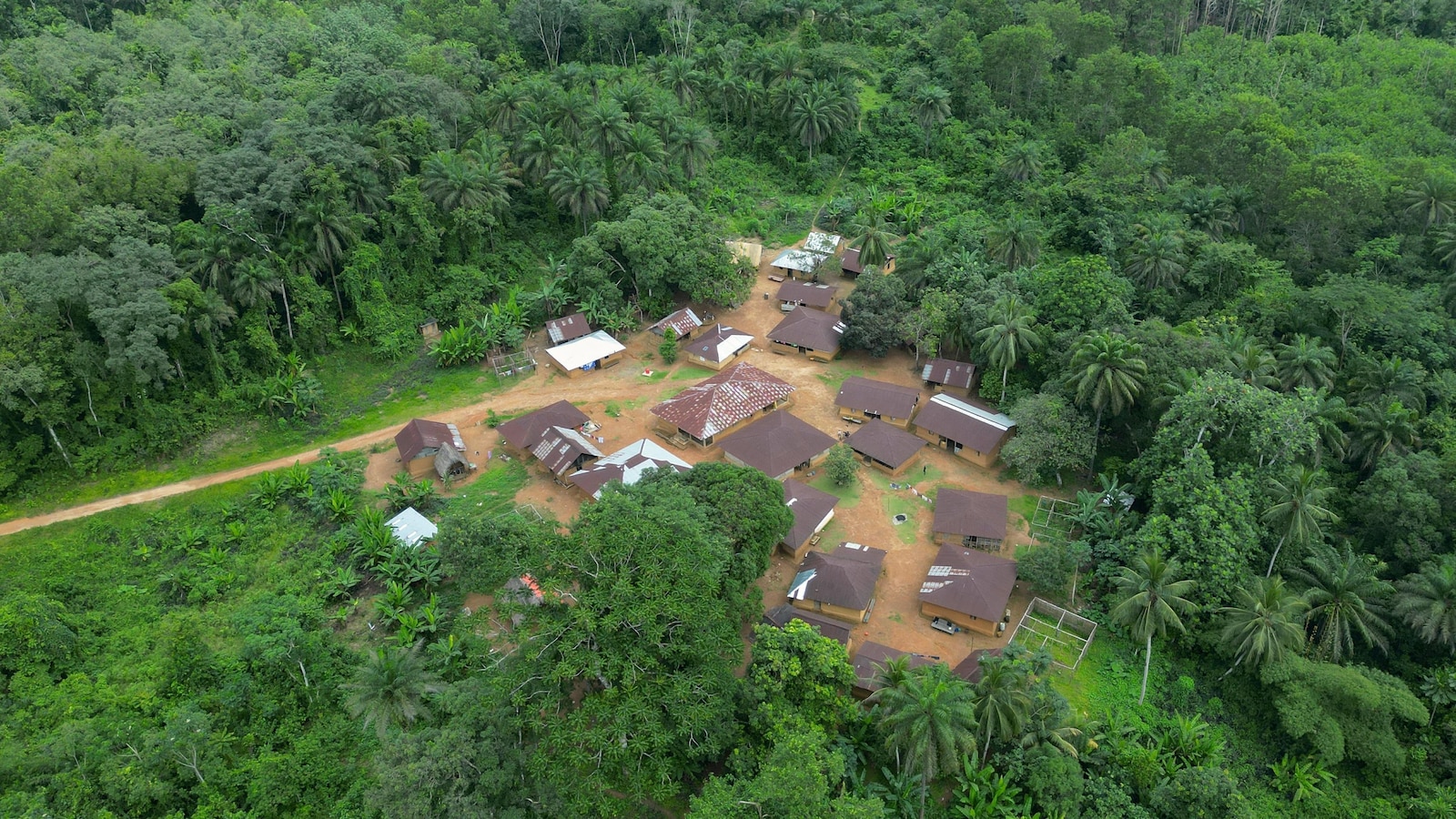
JIKANDOR, Liberia -- For generations, families in Jikandor village fished and drank from the river that runs through Liberia ’s dense rain forest.Now toxic pollution is making them leave.They blame the largest gold miner in Liberia, Bea Mountain Mining Corporation.When dead fish float to the surface, they said, they know to tell authorities.
But for years there has been little response.“If we don’t move, we will die,” village chief Mustapha Pabai said.___This story was reported in collaboration with The Gecko Project, a nonprofit newsroom reporting on environmental issues.The reporting was supported by the Pulitzer Center.AP is solely responsible for all content.
Find AP’s standards for working with philanthropies, a list of supporters, and funded coverage areas at AP.org.___The incidents point to failures in corporate responsibility that “can only be described as sustained negligence,” said Mandy Olsgard, a Canadian toxicologist who reviewed the EPA reports obtained in an investigation by The Associated Press and The Gecko Project.In response to the investigation, the country's recently dismissed minister of mines, Wilmot Paye, said he was “appalled by the harm being done to our country” and that the government was reviewing all concession agreements.The outspoken minister was dismissed in October.MKS PAMP declined to share the assessment’s findings, citing confidentiality.It said it would end the relationship if Bea Mountain doesn’t improve.Between July 2021 and December 2022, the most recent period for which figures could be obtained, Bea Mountain exported more than $576 million worth of gold from Liberia.
It contributed $37.8 million to government coffers during that time.Extracting gold from ore often involves cyanide, a chemical that at high levels can cause severe neurological damage and can be fatal if ingested, inhaled or absorbed through the skin.Cyanide must be treated before it enters and when it leaves a tailings dam, a storage site for mining waste.Other toxic substances, including arsenic, often found in gold mining also pose serious health risks if not properly controlled.The Günals took over Bea Mountain in 2016, acquiring it from Aureus Mining, a UK-listed gold producer, after years of warnings.In 2012, Canadian consultancy Golder Associates found a risk of contamination of local rivers from the New Liberty mine’s tailings dam and warned that seepage would breach Liberia's drinking water standards.Two years later, the Digby Wells consultancy flagged cyanide and arsenic as key risks and suggested measures to prevent contamination.In 2015, a year before production began, a third consultancy, SRK, warned that arsenic could exceed World Health Organization standards for drinking water if not properly managed.It was not clear whether the IFC still holds a stake, and it didn't respond to questions.Popular ReadsMinneapolis live updates: 'We can always do better,' Noem says2 hours agoOmar says Trump's 'hateful rhetoric' causes threats against her to 'skyrocket'Jan 28, 9:14 PMMinneapolis ICE shooting updates: Over 3,000 arrested in Minnesota, DHS saysJan 18, 2:39 PMThe first spill documented by the EPA came in the first month of full production.
In March 2016, just before the Günals' purchase of Bea Mountain, cyanide and arsenic leaked from the New Liberty mine.Dead fish floated downstream.Residents reported skin rashes.It was the first of four EPA-confirmed cases at the mine in which Bea Mountain exceeded government pollution limits.“Physical access to the laboratory was also not approved,” the EPA said in one report.In May 2022, dead fish drifted down Marvoe Creek, which flows past Jikandor village and into the Mafa River that runs to the Atlantic.
The EPA reported that a spill from Bea Mountain’s tailings dam had suffocated the fish “due to exposure to higher than permissible limits" of cyanide.Six residents of villages downstream of the Bea Mountain mine asserted that they and their families fell ill after eating fish from the river in June 2022.One villager, Korto Tokpa, said she saw children collecting dead and dying fish.“They all were sick, vomiting, throwing up and going to the toilet the whole night” after consuming them, she said.However, no tests were carried out on the villagers.Independent environmental scientists and toxicology experts said there is insufficient evidence to identify pollution as the cause of the reported illnesses.When EPA inspectors arrived at the mine to test the water days after the spill, they found arsenic and cyanide levels well above legal limits.Schwamberger said the cyanide concentrations reported by the EPA, from water flowing out of the tailings dam, were more than 10 times the concentration “that would typically be considered to be lethal to fish.”In February 2023, another spill occurred.
The EPA documented “a huge quantity of raw copper sulfate” leaking into the environment.Six of nine water samples breached legal limits for cyanide and copper.An EPA official involved in the May 2022 investigation, speaking on condition of anonymity because they were not authorized to discuss the matter, said the mine’s tailings dam had been originally built too small, a design flaw that later caused it to overflow.In a written response to questions from the AP and The Gecko Project, the EPA acknowledged three “pollution incidents” between 2016 and 2023 in which laboratory tests found “higher than permissible levels" of cyanide.It also confirmed fish deaths were caused by cyanide, copper sulfate and arsenic leaking from the mine’s tailings dam.
It was not clear why the EPA did not acknowledge the fourth spill.The EPA said the spills it documented occurred before the agency’s current leadership took office in 2024.It said it had ordered Bea Mountain to hire an EPA-certified consultant and reinforce the tailings dam, and that the measures were implemented.It did not say when that occurred.“No entity is above the law,” the agency said.Bea Mountain is now exploring new gold reserves elsewhere in Liberia.___Aviram reported from London.
Read More