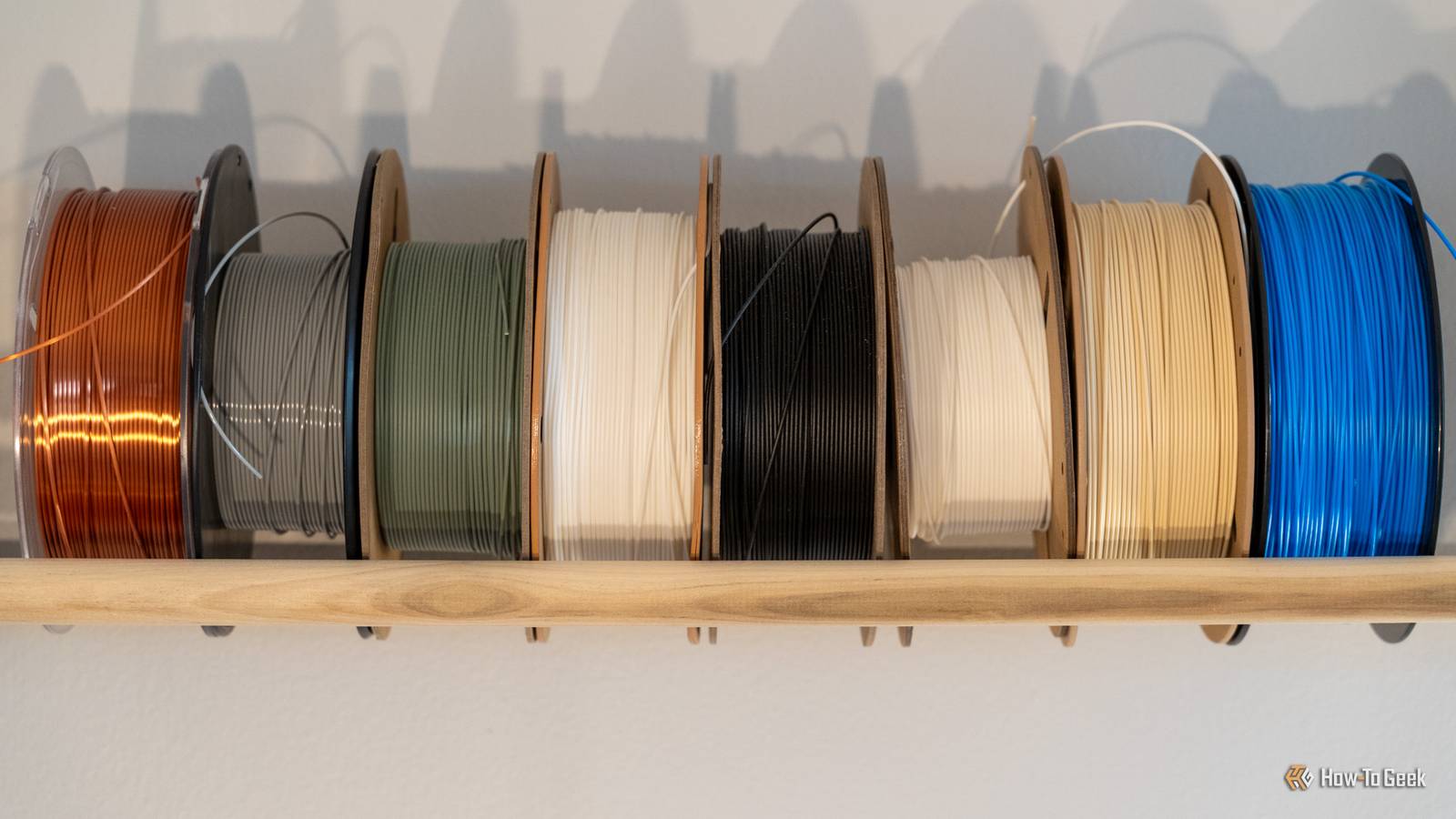
If you store your 3D printer filament on a shelf or out in the open, chances are you’re storing it wrong.If you live in a very dry climate, that might be fine, but for those in more humid environments, the moisture in the air is likely what’s ruining your 3D printing projects—here’s how to fix it.Moisture is your filament’s worst enemy Even brand-new filament can be moist If you’ve ever had to fight inconsistent prints, there’s a good chance that moisture could be the culprit.
While not all filaments are ultra-hygrosopic (can absorb water), many can.PETG, nylon, or TPU are particularly bad filaments when it comes to absorbing water, and the problem is, even brand-new filaments can arrive moist.Your filament arrived nicely vacuum sealed with a silica package in the middle, so it should be perfectly dry, right? Wrong.
Often, new filaments contain a decent bit of moisture, even though they shipped with that desiccant pack in the middle of the roll.If a filament is too moist, you’ll have artifacts come up in your prints like stringing, bubbling or rough surfaces, poor layer adhesion, foggy or dull finishes on translucent filaments, increased brittleness, and more.So, if you’ve been experiencing any of those issues, there’s a good chance that your filament is wet and you haven’t been storing it properly.
There’s no replacement for properly drying your filament before printing Storage is only a small part of the battle Silica can’t effectively dry out wet filament.If your filament has absorbed a lot of moisture, then you simply need to dry it out.It’s that simple.
Some modern printers have drying capabilities built in, and there are also third-party filament dryers you can purchase.Bambu Lab’s newer AMS units have built-in drying capabilities, too.The thing to remember is: heat dries.
If you’re trying to dry out filament with just desiccant, you’re going to be in for a rude awakening.Desiccant is a great way to filament dry, but it’s not the best choice for actually drying out the filament.If your 3D printer doesn’t have built-in drying support, then you really need a filament dryer.
You can get filament dryers that fit one roll, some that fit multiple rolls, and even industrial-sized dryers.My best friend runs a 3D print farm and recently picked up an industrial filament dryer for his filaments, and he’s noticed a massive improvement in his print quality when going straight from the dryer to printing.However, drying your filament before print can be a bit of a hassle, and that’s where proper storage comes in.
Those little silica packets aren’t as powerful as you think Dry boxes are nice, but need more than a few packets and wet filament to be effective Even though your filament ships with that little pack of desiccant, that doesn’t mean it’s enough to keep it dry long-term.Even if you have a fully water-tight box and several of those desiccant packs in there, that’s not enough—at least, not to dry out your filament.If you stick wet filament in a dry box with a little bit of desiccant, you’re going to still have wet filament when you pull it out in the future.
The only way to truly have dry filament is to dry it and then store it once it’s properly dried.I recommend getting some form of a dry box that locks out moisture once sealed.Just make sure you put dry filament in the dry box, and have a good amount of desiccant in there.
Reusable desiccant beads are perfect for this, as once they absorb the moisture, you can dry them back out and put them back into rotation.If you take the necessary steps to dry your filament properly first, then store it in a dry box with desiccant, then you’ll be able to mitigate most of the issues you could see during printing that are filament-related.It’s not a guarantee, but it’s the best you can do.
Subscribe for better prints: filament-drying tips Get hands-on guidance in the newsletter on fighting filament moisture—drying methods, storage setups, and troubleshooting for PETG, nylon, TPU and more.Learn actionable filament care and 3D-printing best practices.Get Updates By subscribing, you agree to receive newsletter and marketing emails, and accept our Terms of Use and Privacy Policy.
You can unsubscribe anytime.While the best practice is to dry while printing, that’s not always possible, so drying filament ahead of time and storing it in a dry box is the next best option.SUNLU FilaDryer S4 Brand SUNLU The SUNLU FilaDryer S4 filament dryer is designed to actively dry up to four filament rolls at one time.
There are digital controls on the side where you can choose what temperature you want it to run at and what type of filament you're drying.There are even filament guides out both sides of this dryer so you can feed filament directly into your 3D printer while it's drying.$140 at Amazon $140 at SUNLU Expand Collapse SUNLU S1 Plus filament dryer The SUNLU S1 Plus can dry filament while printing to improve 3Ds model, reducing the impact of a humid environment on the printing of 3d filaments. Adjust the temperature of the filament dry box according to different filament requirements, ambient temperature, humidity and other factors.
The adjustable temperature range of 35℃-55℃ is suitable for more than 20 kinds of filament.$40 at Amazon $60 at SUNLU Expand Collapse Bambu Lab AMS 2 Pro A multi-material system for Bambu Lab printers with active air vent 65°C filament drying, air-tight filament storage, a brushless servo feeding motor, Bambu's signature RFID filament sync, and compatibility with up to up 24-color/material printing by connecting more AMS 2 Pro units.$359 at Bambu Lab Expand Collapse Wet filament is holding your printing quality back At the end of the day, most 3D printing quality issues come down to one of three areas: wet filament, bed leveling/adhesion, and print settings.
Of those three, wet filament is often the variable that is least dealt with.I’ll admit, I haven’t dried filament in my setup often.I used to have a filament dryer, but it was bulky and didn’t work well.
Now, I have the Bambu Lab P2S which has built-in filament drying capabilities, but I also will likely be getting a dedicated dryer here soon that can dry up to four rolls of filament at one time.If you’re facing print quality issues, check that your filament is properly dry.Chances are, it’s not, and remedying that will fix your problem.
Read More