The modern SUV market has quietly gotten out of hand.Prices keep climbing, and a lot of what you’re paying for is extra size and badge appeal you don’t really need.Every new generation seems bigger than the last, and naturally, more expensive too.
It might look impressive on the road, but that added bulk doesn’t always translate to real-world usefulness.There is one SUV, though, that takes a different approach.It focuses on the stuff that actually matters day to day—without inflating the price just for the sake of it.
In order to give you the most up-to-date and accurate information possible, the data used to compile this article was sourced from BMW, Honda, Mazda, Nissan, and Toyota, as well as other authoritative sources including the EPA, IIHS, J.D.Power, Kelley Blue Book, NHTSA, and TopSpeed.Related This Toyota hybrid makes some luxury SUVs hard to justify Turns out you don’t need a luxury badge to feel spoiled—this Toyota SUV is refined and seriously comfortable.
Posts 1 By Adam Gray SUVs have gotten bigger—and way more expensive You’re paying more without getting much in return A good SUV should balance practicality with value, but that balance has slipped a bit.You still get the versatility you expect, but the “value for money” part isn’t what it used to be.A lot of mainstream crossovers now come stacked with features that sound impressive on paper but don’t really change how you use the car day to day.
The result is a higher price tag without much real-world payoff.The average new SUV price doesn’t really add up anymore Sticker prices for most crossovers have pushed well past the $40,000 mark, and “affordable” doesn’t really mean what it used to.Buying a new car now often means stretching budgets further than people would like, just to keep monthly payments manageable.
Loan terms have quietly crept out to 72–84 months in many cases, which helps soften the monthly hit but hides the true cost over time.It’s easy to focus on what fits each month and forget how much you’re actually committing to in total.Meanwhile, wages haven’t kept pace with the rise in vehicle prices, which keeps pushing the idea of “affordable” further up the ladder.
What used to feel like a budget-friendly price point now sits in the mid-$30,000 range.SUVs are getting bigger, but not really more practical Car makers have leaned hard into the idea that bigger automatically means better.A lot of buyers are led to believe more size equals more value, even when that isn’t really true in practice.
That’s part of why compact SUVs have quietly stretched by around six inches over the past decade.But in reality, the trade-offs show up fast—parking gets tighter, fuel economy takes a hit, and cabin space doesn’t always grow in a meaningful way.Most of that extra length isn’t even going into usable cargo room.
Take the Honda CR-V, for example—it’s gained over six inches in length between generations, but only adds a small bump in storage space, roughly the size of one extra-large moving box.Related Forget a new RAV4—this luxury SUV now goes for less used It may be hard to believe, but you can grab this high-end German SUV for less than a new RAV4—here’s how.Posts By Adam Gray Efficiency, comfort, and cargo space are what actually matter Everything else is just marketing noise If you strip away the badges and marketing hype, most SUV buyers are really after five things: good fuel economy, a comfortable cabin, usable cargo space, solid driver assistance tech, and a fair price.
Not every model gets the same spotlight, so some of the best choices tend to fly under the radar instead of leading the ads.Where today’s segment leaders set the standard To understand the baseline in this segment, it helps to look at the usual heavy hitters like the Toyota RAV4 and CR-V.These are the models most buyers end up cross-shopping, and they basically set the standard everyone else gets measured against.
In terms of fuel economy, the 2025 RAV4 LE FWD and 2026 CR-V LX FWD both land around 30 mpg combined, with the 2025 Mazda CX-5 just behind at 29 mpg.It’s a tight spread, but it shows how closely matched the segment has become.Cargo space is where things start to separate a bit more.
The 2026 CR-V leads with 76.5 cubic feet, followed by the RAV4 at 70 cubic feet, while the CX-5 trails at 59.3 cubic feet.The CX-5 comes with a pretty solid safety setup out of the box, thanks to its standard i-Activsense suite.That includes features like blind-spot monitoring, rear cross-traffic alert, and rear automatic emergency braking.
That said, it’s not quite as complete as what you get in the CR-V or RAV4.Both of those models add more advanced lane-centering systems, giving them a slight edge in everyday highway driving.How modern driver assist tech has become the new standard Advanced driver assistance systems (ADAS) have basically moved from “nice-to-have” to standard equipment on most modern crossovers.
What used to sit in pricey option packs is now expected even on base trims from mainstream brands.Because of that, the real competition has shifted to who can offer the most complete safety and driver assist setup for the money.One model in particular stands out at the sub-$35,000 level, offering features like hands-on highway assist with lane centering and adaptive cruise control—right up there with the CR-V and RAV4, but at a lower price point.
It’s also earned repeated Top Safety Pick+ ratings, which says a lot about its real-world safety performance.Still, despite all that, it tends to fly under the radar compared to the usual segment leaders.Related How the 2026 Honda Passport quietly beats more expensive rivals The 2026 Honda Passport brings 285 horsepower, upgraded AWD, and rugged looks to take on off-road rivals like the Bronco and Land Cruiser.
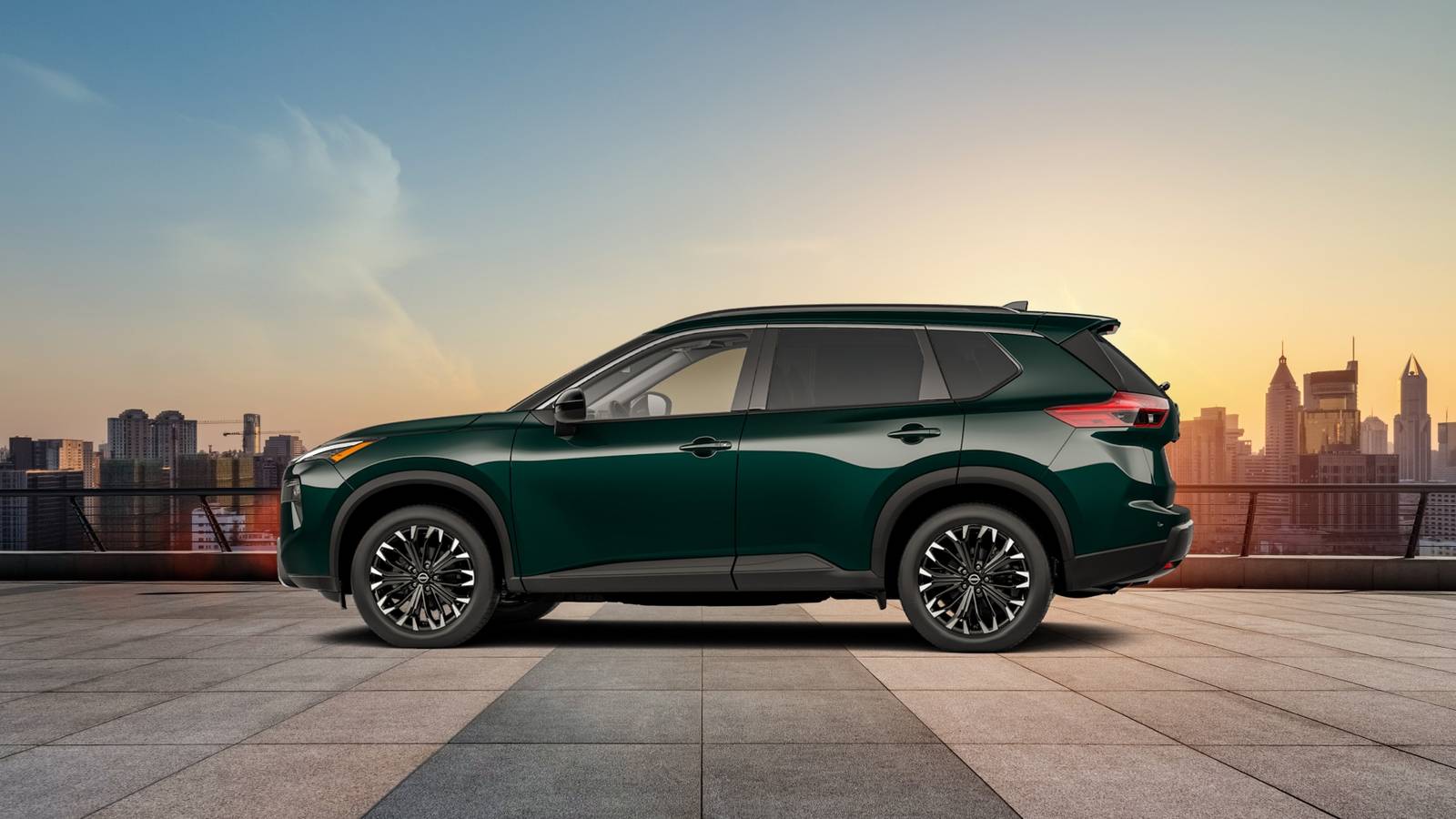
Posts By Adam Gray The Nissan Rogue checks the boxes most buyers actually care about Comfort, efficiency, and value all in one package By now you’ve probably figured it out—the compact crossover we’ve been talking about is the 2026 Nissan Rogue.It’s quietly become one of the most well-rounded options in the segment.The reason is simple: it’s built around what everyday drivers actually use, not what looks good on a spec sheet.
225 lb-ft of torque and zero gravity seats make a strong combo Nissan’s Zero Gravity seats might sound like marketing talk, but they actually hold up once you sit in them.The NASA connection sounds flashy, but the real takeaway is simple—they’re genuinely more comfortable than most seats in this class.They tend to get overlooked in reviews, which is a bit surprising given how noticeable the difference is day to day.
It’s one of those things you don’t really appreciate until you’ve spent some time in the car.Then there’s the Rogue’s 1.5-liter VC-Turbo three-cylinder engine, which does more with less than you might expect.It puts out 225 lb-ft of torque at just 2,800 rpm, giving it a stronger mid-range feel than the 2025 RAV4’s 184 lb-ft at 5,000 rpm or the 2026 CR-V’s 179 lb-ft at 1,700 rpm.
On paper, it’s the smallest engine of the three, but in real-world driving it feels more confident than you’d think.Most people wouldn’t even guess it’s a three-cylinder once they’re behind the wheel.Strong fuel economy and solid standard features The VC-Turbo engine gets even more impressive when you look at fuel economy, with the Rogue returning up to 32 mpg combined in FWD form on regular 87-octane gas.
That’s about two mpg better than the 2025 RAV4 and 2026 CR-V, while still coming in at a lower price.The $30,490 Rogue SV also includes standard ProPILOT Assist, which adds to its everyday usability.To get a similar level of features in a RAV4 XLE or CR-V EX, you’d need to spend more—around $31,615 and $33,150 respectively.
Put simply, the Rogue SV delivers a stronger value package than its main Japanese rivals.For buyers focused on getting the most for their money, it makes a pretty compelling case.Related 10 budget-friendly SUVs that rarely need repairs Budget-friendly and dependable: these SUVs won't break the bank.
Posts By Tyler Dupont The Rogue punches above its weight against luxury SUVs And it does it where it actually matters day to day Up to this point, we’ve mainly looked at the Rogue against its direct rivals.But those aren’t the only SUVs it ends up going head-to-head with.Subscribe to the newsletter for smarter SUV buying Want clearer buying choices? Subscribe to the newsletter for value-focused SUV and car-buying analysis and practical recommendations that cut through marketing noise and badge appeal, helping you prioritize what actually matters.
Get Updates By subscribing, you agree to receive newsletter and marketing emails, and accept our Terms of Use and Privacy Policy.You can unsubscribe anytime.Take a fully loaded Rogue Platinum and line it up against an entry-level luxury crossover like the 2026 BMW X3, and things get more interesting.
The Rogue Platinum vs the BMW X3 30 xDrive The 2026 Rogue Platinum AWD comes in at $40,935 after destination and delivery.By comparison, the entry-level 2026 X3 30 xDrive starts at $51,300.But to match the Rogue Platinum’s level of standard equipment, the X3 needs a fair list of optional extras.
That includes the Driving Assistance Professional Package, Premium Package, heated front and rear seats, rear climate controls, and the Harman Kardon audio system.Once those are added in, the BMW’s total climbs to about $59,400.That puts it roughly $17,475 above the Rogue Platinum for a similar feature set.
In terms of usable cargo space, the Rogue offers 71.4 cubic feet at max capacity, compared with 62.7 cubic feet in the X3.That’s a noticeable gap in everyday practicality.The BMW’s interior may look more premium at a glance, but in real-world use, the comfort difference isn’t as dramatic as the price gap suggests—especially when you factor in Nissan’s Zero Gravity seats.
At this point, you’re mostly paying extra for the badge rather than meaningful day-to-day advantages.Value isn’t just about the price tag You might think there’s no scenario where you’d pick a Nissan over a BMW if you can afford the badge.But sometimes the sensible choice isn’t a downgrade—it’s just the smarter move.
Marketing tends to push the idea that you should stretch for the most premium SUV you can justify.But once you start looking at what you actually get day to day, a lot of those upgrades feel less essential than they first appear.The Rogue isn’t trying to be the flashiest option in the segment, but it consistently sits near the top of the compact SUV sales charts for a reason.
In a market that’s drifted toward higher prices and added complexity, it sticks to a simpler formula: give people what they need, and skip what they don’t.
Read More