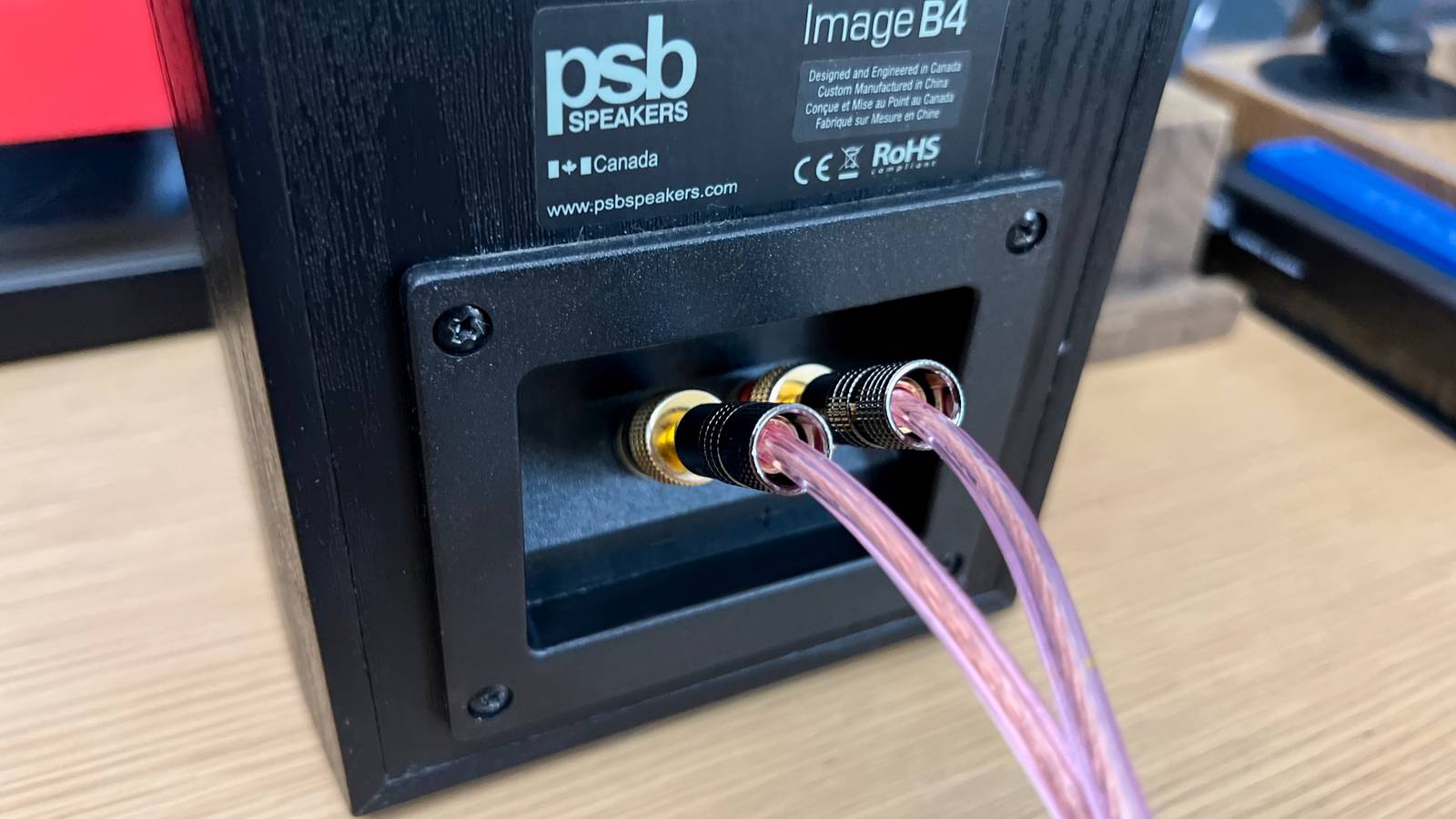
Audiophiles and audio enthusiasts love to argue about which features are a meaningful investment and which are just a flashy waste of money.One of the most hotly debated topics is audio cables themselves.Does gold plating matter? Do fancy connections really make a difference? What is the real improvement between a coat hanger and a $1,000 premium audio cable? High-power amplifiers and long runs call for heavier wire Resistance can become a problem Most people using common amplifiers are perfectly fine with standard 16-gauge wire.
However, there are some circumstances when a thin wire can be a problem.All wires have both resistance and resistivity.Resistivity is how much a given material (like copper-clad aluminum or oxygen-free copper) opposes the flow of electricity.
Resistance is the total amount of opposition you get when you combine the thickness of a wire, the length of the wire, and the resistivity of the material.In general, the thicker a conductor, the lower the resistance will be; increasing the length does the opposite; it increases the resistance.If your 16 gauge wire is 10 feet long, it might have a total resistance of a bit less than 1/10th of an ohm.
If you ran that feet, you'd be looking at around 1 ohm.1 ohm doesn't sound like a lot, but consider it relative to your speakers.Most speakers have a nominal impedence of 4 or 8 ohms.
One extra ohm is an appreciable amount of the total resistance of the system.Micca 14 Gauge Pure Copper Speaker Wire Gauge 14 Take the guesswork out of connecting speakers to amplifiers with the Micca Media Series speaker wire.Like other Micca Media Series audio and video products, Micca takes the no-nonsense approach to building a high quality yet affordable speaker wire.
Using carefully selected materials and construction methods, every aspect of its design is geared towards delivering superior audio performance and durability.$26 at Amazon Expand Collapse That means that 12.5% and 25% of the total amount of energy you send to the speaker get wasted as heat instead of producing sound.If you have both powerful speakers and a powerful amplifier, that could easily be enough energy to make those wires warm to the touch.
This is primarily a concern for dedicated speaker wire runs in high-powered home theaters, professional PA setups, or unusually long runs.In these specific cases, you should step up to 14- or 12-gauge wire.You need extreme power, distance, or both to justify thicker wire; for a standard bookshelf or tower speaker setup in a living room or bedroom, the extra size doesn't provide any benefit and costs more. Noisy RF environments spell trouble for cheap cables You don't want your speaker wire to act as an antenna If you find yourself in an RF-heavy environment, you may need shielded cable.
If your sound equipment is located near broadcast equipment, on a stage surrounded by wireless microphones, or in an industrial setting, unshielded cables will act like antennas.They will pick up electromagnetic interference that is audibly noticeable as hums or buzzes. Related 9 Ways to Repurpose Your Old Speakers Found some old speakers in your basement? Put them to good use.Posts 3 By Ismar Hrnjicevic Running speaker wire next to power wire in a residential setting can also introduce noise to the audio line.
This is especially likely to be a problem if your speaker wire and power wire run parallel to each other.It may also violate building codes, since they usually require that high-voltage lines (like 120V or 240V AC) be physically separated from low-voltage things like speaker wire and Ethernet so they can't accidentally become energized. If your speaker wire must cross AC lines, try to ensure that the cross is perpendicular.Perpendicular crossing minimizes the effect of the AC wire's magnetic field on the signal traveling in the speaker wire.
This is even more important for unamplified signals, since they're even more vulnerable.In any of these noisy environments, you should look for cables with proper shielding to block the interference.Keep an eye out for inflated or exaggerated technical claims when you're shopping around.
A "premium" or "luxury" cable without proper shielding is useless in a noisy environment.You also have to consider the length of your runs.The longer the cable, the more the quality of the shielding, conductor size, and connector integrity actually matter.
Outdoor connections need to be resilient Your home is a safe place for electronics; the outdoors are not In an outdoor setting, the big problem isn't usually signal integrity or power problems—it's the environment.UV exposure, moisture, and extreme temperature swings will destroy a cheap cable jacket in a matter of months.Subscribe to the newsletter for smarter cable choices Curious about when expensive audio cables actually matter? Subscribe to the newsletter for clear, practical guidance—real-world coverage of shielding, conductor size, connectors, long runs, outdoor durability, and when a cheap cable is fine.
Get Updates By subscribing, you agree to receive newsletter and marketing emails, and accept our Terms of Use and Privacy Policy.You can unsubscribe anytime.If you are installing a system in a garden or on a patio, you need to invest in cable that is specifically rated for the outdoors.
Look for direct-burial ratings, UV-resistant jacketing, and CL2 or CL3 ratings.Those are the things that tell you how well cable will hold up to the elements.If you have the option, you should opt for waterproof connectors.
However, if you don't go that route, at least opt for something gold-plated — it'll hold up better than most other connectors, since gold doesn't readily oxidize.A bit of diligence in advance will save you from having to rewire your entire outdoor setup in two years.Cheap cable is the right cable most of the time Unless you are dealing with extreme power, heavy RF interference, large distances, or outdoor exposure, the $10 cable is going to sound the same as the $80 one.
Just stay away from copper-clad aluminum (CCA), and you'll be okay.Instead of spending your budget on cables that offer no significant improvement to your sound, you should spend that money on better speakers, a nicer amplifier, or basic room treatment.You'll get a much better bang for your buck.
Read More