Your computer probably isn't as fast as it should be, and the reason usually isn't the hardware.Windows ships with defaults that make sense for someone, somewhere, but not necessarily for the way you actually use your machine.None of these are hard problems to fix, and there are three changes that you could make that take maybe ten minutes total and cost nothing.
However, you'll see the difference immediately.Disable heavy startup apps Some apps slow you down, despite not being used immediately When you turn on your computer, you probably expect it to be ready to use pretty quickly.I remember there was a time when PCs took at least a few minutes to start up, but now I get frustrated if I'm waiting 20 seconds.
What's actually happening behind the scenes is surprisingly messy, and that short start-up time sounds more like a miracle.Windows has a lot of work to do just to get itself up and running.The computer has to load drivers, read the registry, and start core services.
Pile a bunch of extra programs on top of that, and you've got a real traffic jam.Every app that launches at startup is competing for processor time right from the moment you log in, which is exactly why your desktop can feel slow before you've even opened anything.The memory situation is just as bad.
Each of those background programs claims a chunk of your RAM and holds onto it.So you've got little leeches before actually using the app.Once enough of them pile up, Windows starts shuffling things off to the page file.
"This basically uses your hard drive as overflow RAM.That's when you start noticing the stutters, the slow clicks, the moments where everything just hangs for a second.The good news is that Task Manager gives you an easy way to fix this.
Open it up and head to the Startup apps tab, and you'll see a full list of everything that launches when you boot your computer, along with a Startup impact rating for each one.That rating reflects how much CPU time and disk activity each app burns through during startup.The higher the impact, the more it's slowing you down.
The easy ones would be Steam, Edge, Xbox, and things that you really only need when you need them.What's interesting is that Edge and Steam are high impact, and the latter is rarely used.Enable Hardware-Accelerated GPU Scheduling Just make sure you've got a good GPU Getting Windows to display graphics is a surprisingly clunky process for something so basic.
Your CPU essentially acts as a micromanager for your graphics card.In the traditional setup, a high-priority thread runs on the CPU coordinates and schedules every rendering task your applications throw at it.It gets the job done, but the overhead adds up.
The CPU has to prepare and queue several frames of graphics commands ahead of time, and all that buffering makes a built-in delay between your physical inputs and what you actually see on screen.A built-in Windows feature cuts out the middleman.Hardware-Accelerated GPU Scheduling (HAGS) is a fundamental shift in how Windows handles graphics that targets this exact problem.
With HAGS enabled, low-level scheduling and memory management get handed off directly to a dedicated processor built into the graphics card itself.Instead of routing every command through the CPU and waiting on the operating system's memory manager, the GPU takes care of its own workload.So you have the CPU and GPU communicate less.
All that means is less overhead from the constant context-switching that slows things down under heavy workloads.The GPU stops waiting to be fed and instead works from a steady, continuous stream of instructions.In practice, this matters most in modern games and graphics-heavy apps.
Turning it on is pretty easy.First, go to your Settings and then open the Display menu.Find the Graphics settings page, and you'll see the HAGS toggle is right there.
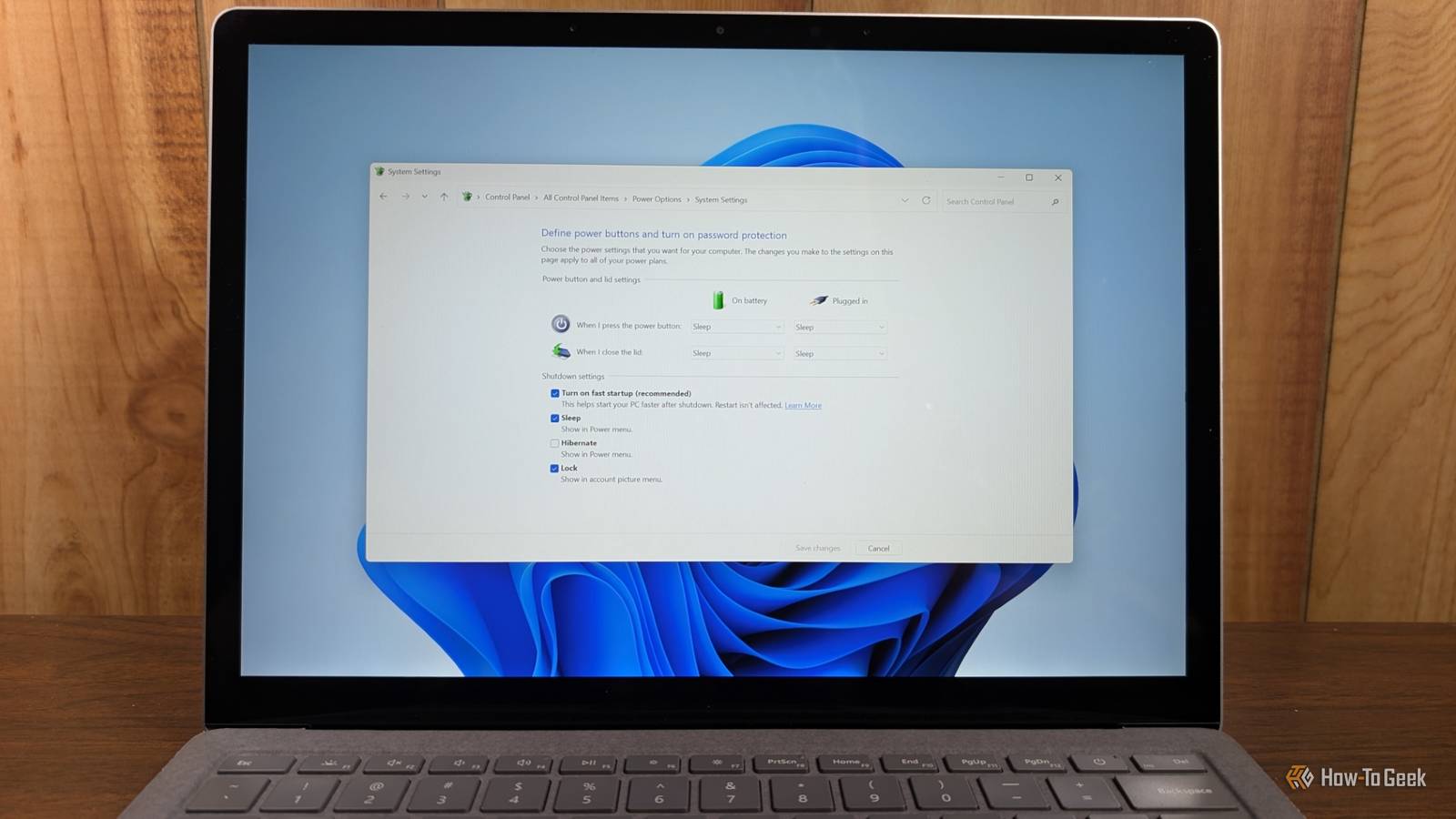
Flip it on, reboot, and Windows will start moving those scheduled tasks to the GPU automatically.It does use a small slice of VRAM to store scheduling data, but for anyone running a modern graphics card with decent memory, that's a trade-off well worth making.Change Windows Power Mode to Best Performance You're plugged into the wall, so you're fine Windows uses something called ACPI to manage how your hardware uses power.
By default, it runs on a Balanced power plan, so it constantly lowers your CPU's speed and voltage during light tasks to save electricity.It also puts idle processor cores into a deep sleep to lower power draw even further.This is great for battery life and keeping temperatures down, but it creates a problem during gaming or other demanding work.
When your CPU suddenly needs full power, it has to wake those sleeping cores and ramp its clock speed back up, which takes long enough that you're going to notice the stutters and frame timing issues in games.I know there are a lot of people who are actually better at seeing frame differences than others, so it will make more of a difference if you can do that.Subscribe for Windows speed tweaks in our newsletter Want a noticeably faster PC? Subscribe to the newsletter for clear, step-by-step Windows performance fixes — from stopping heavy startup apps to enabling GPU scheduling and choosing Best Performance, all practical and easy to apply.
Get Updates By subscribing, you agree to receive newsletter and marketing emails, and accept our Terms of Use and Privacy Policy.You can unsubscribe anytime.The fix is switching your Windows power plan to Best Performance.
Click the Battery or Power icon in the bottom right corner of your taskbar.You'll usually see this next to the clock, but I had to press the arrow pointed up to see it.A small pop-up window will appear with a slider.
Drag the slider all the way to the right to Best Performance (or Ultimate Performance if available).You're done when you save.This tells the CPU to stop aggressively downclocking: it keeps all processor cores active instead of parking them, and it stops the chip from dropping into deep low-power states between tasks.
The result is a CPU that's always ready to go, with no spin-up delay when demand spikes.The trade-off is that your idle power draw and temperatures will be slightly higher, since the hardware is no longer dialing itself back during quiet moments.For a desktop, that's worth it without a second thought.
On a laptop, you'll want to weigh that against battery life, but if you're plugged in and gaming, there's no real reason not to have it on.Give these optimizations a try today None of these changes needs third-party software, and none of them carries real risk.Disabling a startup app doesn't uninstall it.
HAGS uses a small amount of VRAM that any modern card handles without issue, and Best Performance mode is a setting you can flip back anytime.These are adjustments Windows should probably make by default, but it may be to keep everyone's machines running longer, because not everyone is playing games or needing them for high intensity.Microsoft 365 Personal OS Windows, macOS, iPhone, iPad, Android Brand Microsoft Microsoft 365 includes access to Office apps like Word, Excel, and PowerPoint on up to five devices, 1 TB of OneDrive storage, and more.
Price $100/year Developer(s) Microsoft Free trial 1 month $100 at Microsoft Expand Collapse
Read More