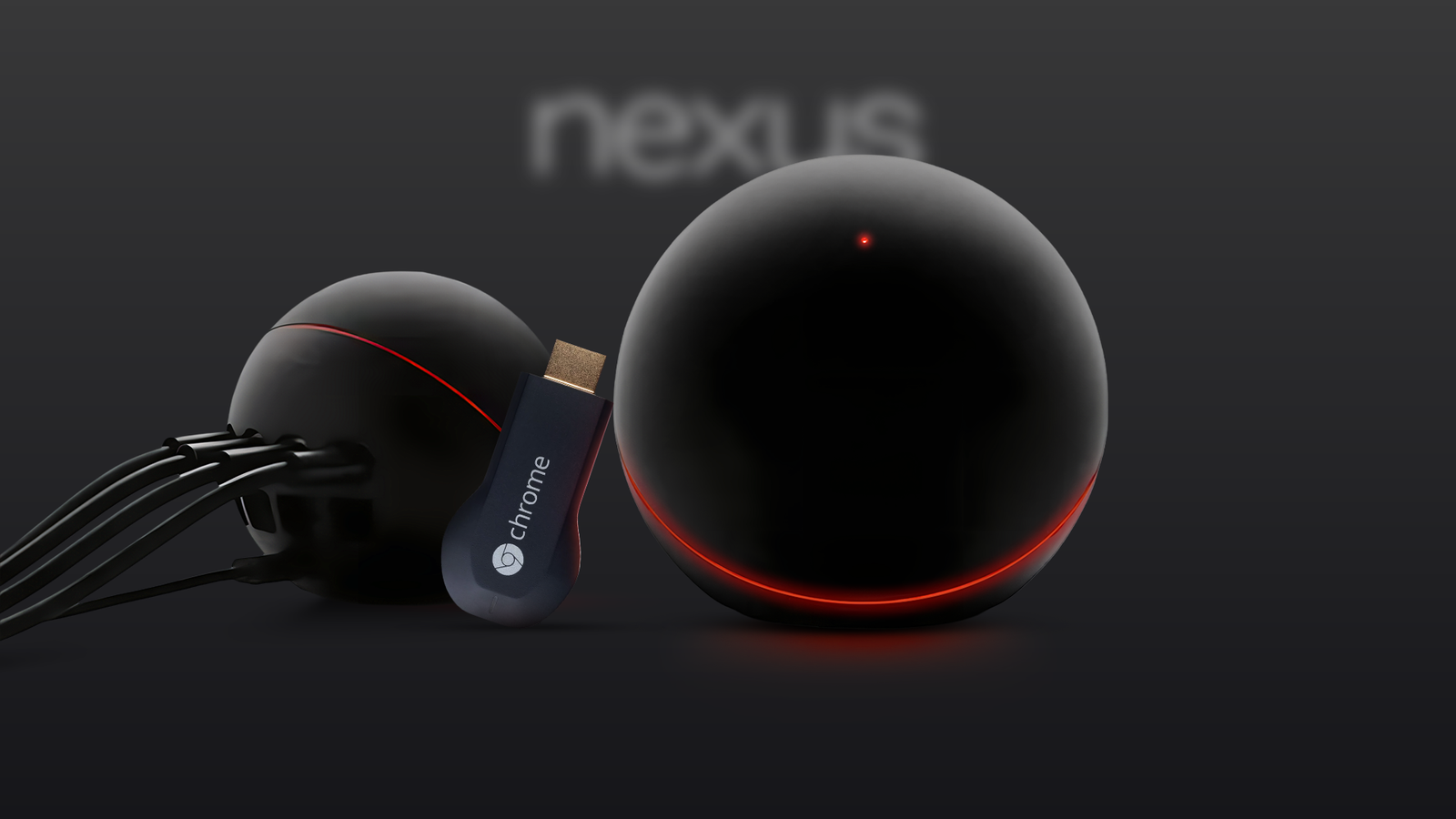
It might be hard to imagine, but there was a time when every TV didn't have the ability to install streaming apps, meaning that unless you were willing to give up your existing TV, there was a need for a streaming attachment.This was still an open market, so no one knew exactly what to expect.Even so, when Google's presenter walked out on stage in 2012 and showed off a sci-fi orb with glowing lights, I'm willing to bet it wasn't on anyone's Bingo card.
That was the advent of the Google Nexus Q.Google once tried to sell a disco ball as a streamer Perhaps the thing the Nexus Q is best remembered for is its shape.There had been prototypes shown off before the official unveiling that had an angular square shape, as well as some spherical mockups, but in the end Google went with the sphere.
The Nexus Q was a masterclass in engineering.I'm sure the choice to make it spherical made things harder than they had to be, but the device was absolutely packed.Not only did it contain an Android-powered system on a chip, but it also contained a 25W amplifier and advanced wired and wireless networking hardware for the time.
The Wi-Fi was dual-band and everything! Google also included a micro-USB port to promote "hackability," according to the presentation, but it was probably intended for maintenance.Still, that's a different tune than the company is singing these days.The Nexus Q was a “social streaming media player” in the sense that your friends could show up and start playing their music and videos on your TV from an Android phone or tablet.
It was the center of Google's entertainment cloud services.It was also an abject and almost instant failure.The Nexus Q didn’t just flop—it confused everyone The Nexus Q was a beautifully engineered, high-end...what exactly? That was the problem.
It was a $299 device that no one really understood the need for.Google didn't really make it clear why anyone would actually want this device.I clearly remember watching videos and reading articles about the device at the time and thinking that even if I could afford one, I had no idea what I'd actually do with it.
It looked awesome, and the pretty lights were nice to look at; even the audio and video were good by all accounts for the time, but no one actually needed or wanted one.Google learned the hard way that nobody wanted this The problem was that people weren’t looking for reinvention.They weren’t asking for social music queueing or collaborative party playlists managed through apps.
They wanted to sit down, press play, and watch something without thinking about it.The Nexus Q was a mystery box (sphere?) with so little appeal and such a muted public response that Google didn't even let it get into full production and release.Less than two months after that presentation, Google started to wind down the project with delayed pre-orders.
So no units were ever sold to the public.However, hundreds of free units were given away at Google IO, so if you see someone with a Nexus Q on YouTube or anywhere else, there's a good chance the unit they have was one of those early freebies. Chromecast was the apology tour About a year after the Nexus Q was nipped in the bud, we got the Chromecast—a tiny $35 dongle that plugged into the back of your TV and did pretty much whatever the Nexus Q was supposed to, minus the fancy amp and powerful internal hardware.The Chromecast was the opposite of the Nexus Q in a sense.
On stage, Google had made it a point of pride that the video and audio streaming you saw from the Nexus Q wasn't coming from your phone.It was running on the Nexus directly from the cloud; your phone or tablet was simply a remote control.How-To Geek Report: Subscribe and never miss what matters Unlock your tech-savvy potential and master the digital world with How-To Geek.
Subscribe By subscribing, you agree to receive newsletter and marketing emails, and accept our Terms of Use and Privacy Policy.You can unsubscribe anytime.Why not use the powerful hardware in smartphones to run the show? We have already paid hundreds of dollars for the phone, so it stands to reason that paying hundreds more for redundant features doesn't make sense, especially in retrospect. How an embarrassing failure unlocked Google’s smartest hardware idea The failure of the Nexus Q forced Google to unlearn some of its worst instincts.
That tendency to over-design, overthink, and over-explain.Compare this to the product launch of something like the iPhone, and it becomes clear that the Nexus Q was rubber-stamped by too many people who couldn't see the forest for the trees.The Nexus Q was designed to solve problems that, as it turns out, no one really had, whereas the Chromecast was laser-focused on solving a real problem with streaming interfaces everyone had.
While the $35 Chromecast dongle might now finally be gone, there's a Chromecast inside pretty much every smart TV and streaming box not made by Apple, so it's not hard to see which approach ends up being better for everyone involved.Sadly, looking at the state of Google today, it might be a lesson that's already forgotten.
Read More