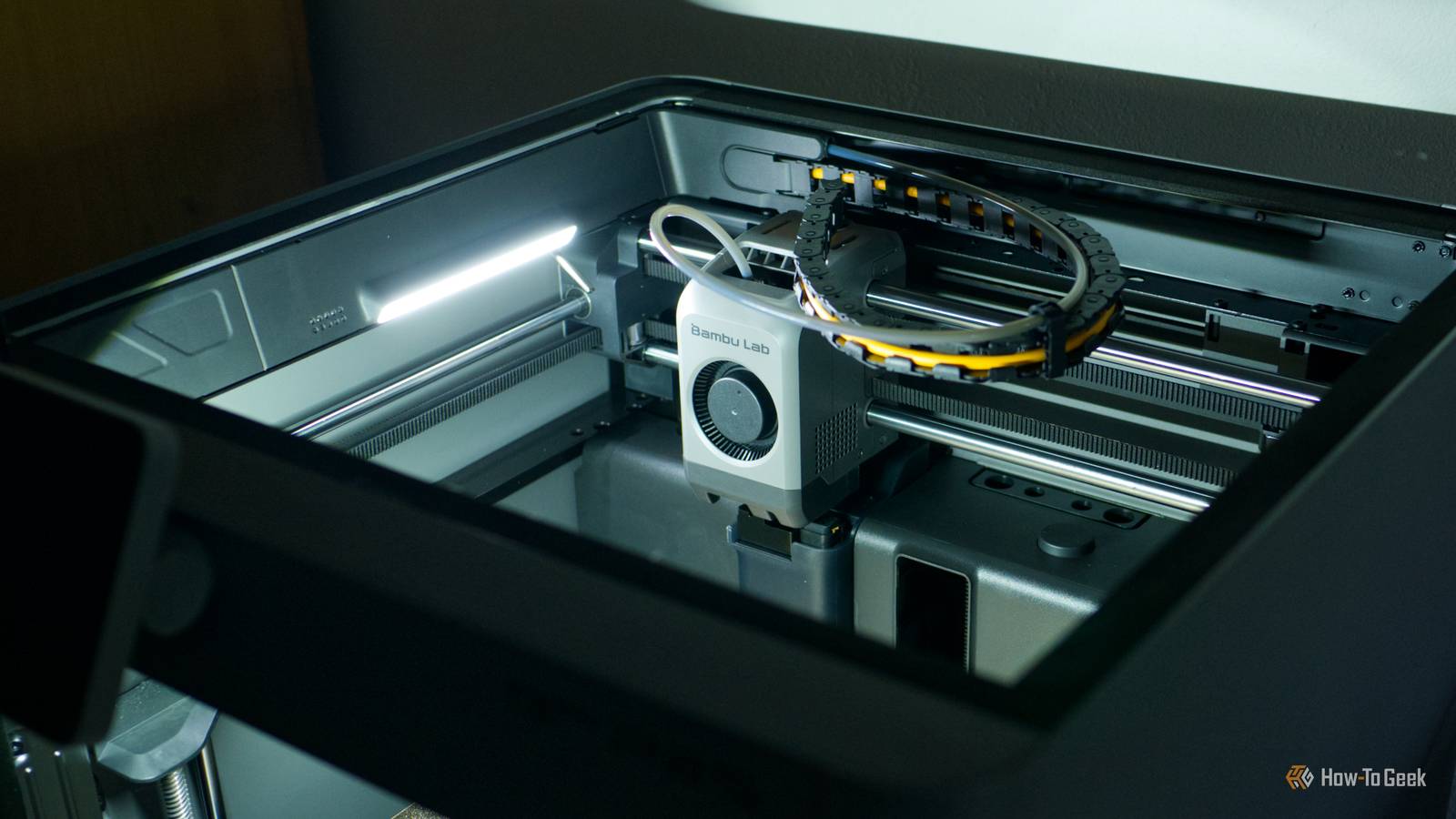
There are many preconceptions about 3D printing, among them the idea that 3D printer owners spend all of their time making fidget toys and other useless bits of plastic.While there’s a grain of truth to this, many outgrow the tchotchkes and move on to printing solutions instead.You have to get the fun prints out of your system The honeymoon period is real Close Though I can’t speak for everyone, there’s some validity to the idea that the “honeymoon” period of owning a 3D printer involves a lot of unnecessary printing.
You’ve got a tool that can produce all sorts of neat things, simply by downloading them from well-stocked model repositories like MakerWorld and Printables.As a result, it’s easy to go a bit wild.You might also take the time to explore some of your interests and see what 3D prints are available that align.
For example, there are a of -themed 3D prints available, from Power Armor helmets and Pip-Boy wearables to laser pistols and bottle caps.Finishing these items with a lick of paint can also be appealing to many fans.This is all part of the adjustment period that accompanies the newfound ability to manufacture objects in your own home.
It’s one way that many new printer owners burn through their first few rolls of filament.At this point, you’re probably not thinking of the ongoing costs in terms of materials.You’ve just spent all this money on a printer; you might as well be using it—right? A few spools are just the cost of doing business.
It doesn’t take long before you’ll start thinking about what else you could be making, though.Practical solutions are the most valuable prints Changing how you think about your printer Close Using your 3D printer as a tool to produce solutions to problems is where things started to get really exciting for me.For many, organization systems like Gridfinity, Multiboard, openGrid, and Honeycomb Storage Wall are a great place to start.
These projects require some real planning and can transform your drawers, desks, workbenches, walls, and anything else that needs tidying up.The first print that really knocked my socks off was a filter adapter for my mirrorless camera.For a few grams of filament and about an hour of print time, I’m able to create small threaded discs that adapt lens filters of one size to fit my other lenses.
Not only does it save me money on buying filters, but it opens the door to all sorts of thrift store buys.I’ve since taken this a step further and started printing whole adapters.These allow me to use Canon lenses on my Sony camera, and even breathe new life into old vintage lenses for 35mm camera systems I have lying around.
This is just one way to use a 3D printer to enhance your existing creative hobbies.My 3D printer now occupies the same headspace as a toolbox.Only last weekend I used a parametric wall plug generator to 3D print custom-sized wall plugs to reattach something to a wall.
The object’s constant movement had eroded the wall in a way that wasn’t uniform, so I printed different-sized plugs to suit.Minimizing waste is important too Filament costs and shelf space matter The other reason to slow down on the toy factory comes down to waste.This hits at both ends: you have to fund your pointless prints with filament, and you have to have somewhere to put them.
If you’re simply throwing things away out of boredom, take it as a sign that you might need to be a bit more selective about what you print.There will be enough “waste” with failed prints, prototypes that don’t work out, and items that don’t hold up over time due to being printed with PLA rather than PETG or a tougher material.Personally, I’m ok with a few fidget toys in a desk drawer that actually get used when it’s time to do some deep thinking.
On the contrary, I don’t want to stare at my 3D printed experiments all day long.I’m not swearing off pointless prints altogether.I’m all about having fun and trying things out, but now I think twice before hitting print and ask myself whether this is something I’m going to regret printing later.
If you’re looking for some useful ways to use your 3D printer, check out these tiny prints that use less than 20g of filament.
Read More