
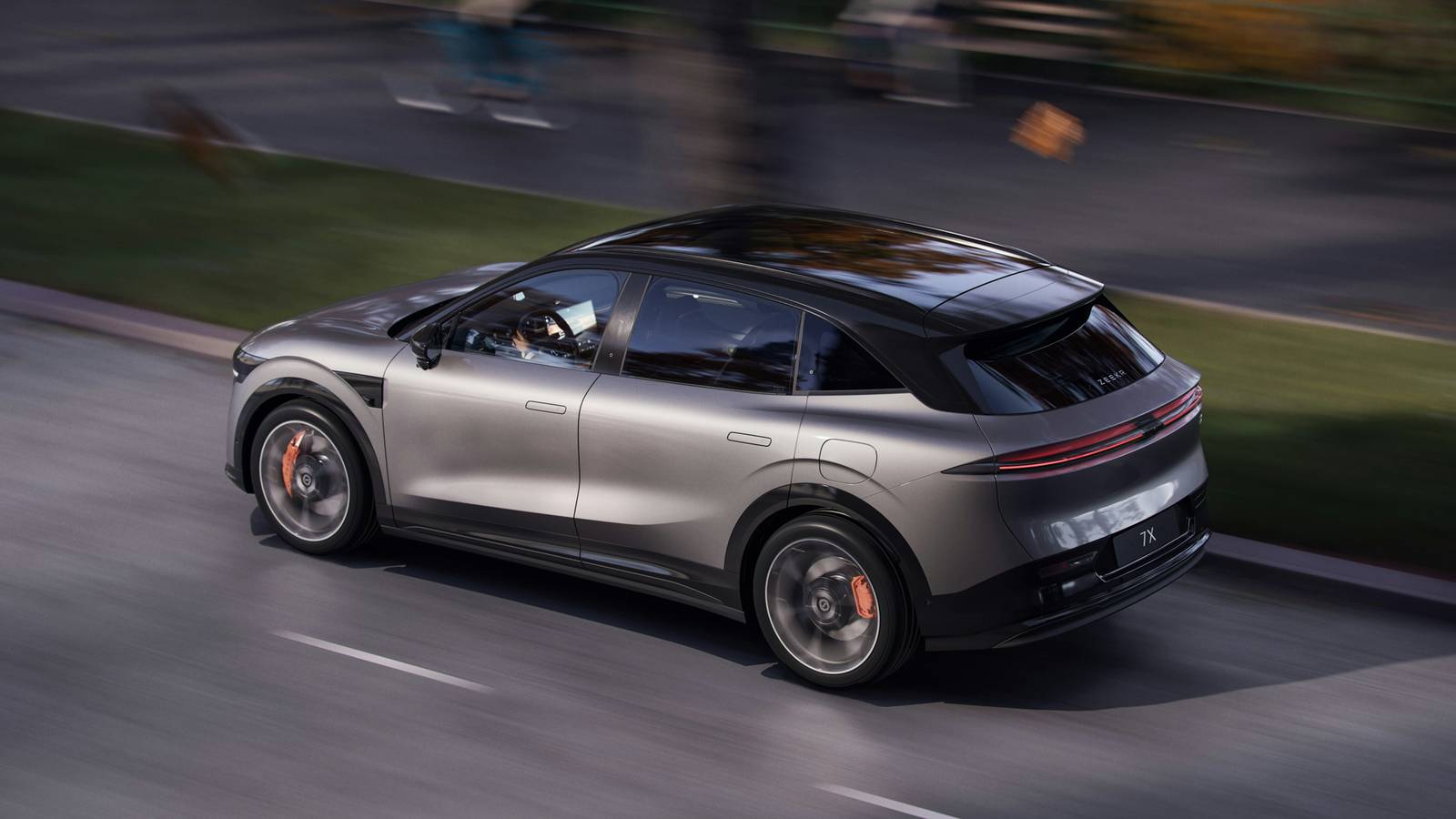
Geely Holding Group isn't exactly a household name in the American automotive market.You're forgiven if you've never heard of it before reading this, as you're far from alone.However, Geely is the Chinese automotive giant behind some brands you probably have heard of, such as Volvo, Polestar, and Lotus.
However, Geely has a few Chinese brands under its belt that it wants to bring here, too, like Zeekr and Lynk & Co, which sell cars that boast impressive range and 800v technology at prices that typically undercut their competition.If Geely can pull that off here, it can force mainstream automakers to come up with lower-cost vehicles.Upstart brands need a hook.
Is Geely's affordability enough? When Tesla first hit the market, it had better battery tech, range, and performance than any other EV.Customers wanted it.Rivian was the first to show off what electric trucks could do both on and off the road.
Customers wanted that.Lucid provided more range than anyone else while upping the luxury EV game.Again, customers wanted it.
Most of Geely's vehicles are just solid EVs, at affordable prices, and customers will want that, too.It's worth noting that Geely will not be alone.Many brands make great EVs at the moment and competition is as fierce as ever.
I just drove a Kia EV6 GT-Line for the first time a few weeks ago and was blown away by its refinement, agility, and ride quality.However, if you compare the Zeekr 7X Performance AWD, which costs roughly the same as the Kia I tested when you adjust for exchange rates, the Zeekr has nearly double the power and around 63 additional miles of range.If the Zeekr, or any of Geely's other brands, can provide that level of value with anywhere near the same level of driving dynamics, ride comfort, or build quality, it will be a no-brainer for customers.
Geely can avoid tariffs with Volvo's factory Geely has a convenient workaround that will help it avoid tariffs and sell cars at any sort of profit: Volvo.Geely VP of communications, Ash Sutcliffe, told in a recent video that while it doesn't have an exact U.S.manufacturing site in mind, it can utilize Volvo's South Carolina plant.
"Geely Holding Group is the major shareholder in Volvo Cars, and they have a strong facility in South Carolina," he said."So if we wanted to work with them, we would approach Volvo Cars and see if we could share their facility." Building its cars in South Carolina will not only skirt tariff costs but will also add more desirability for customers, as Geely can market them as American-made.Expansion of Volvo's South Carolina plant will likely be necessary to accommodate additional production, which will help create jobs at the plant and in the surrounding area.
That could bolster Geely's public standing with American buyers.Related These 5 hybrids have a proven track record for reliability Years on the road have earned these hybrids real trust.Posts By Tyler Dupont Why not just re-badge Volvo? On its face, it might seem like it makes more sense for Geely to rebrand a few Volvos.
Good old-fashioned badge-engineering is an automotive tradition, after all.However, badge-engineering has diluted car brands and their offerings in the past and that isn't what Geely wants.Geely wants to sell its Chinese brands in the U.S., and it's willing to eat some profit loss to do so.
Joe McCabe, CEO and President of AutoForecast Solutions, told and the in 2024 that Chinese brands are prioritizing market share over profitability."A lot of current manufacturers have shown that profitability is second," McCabe said of Chinese automakers."They'll eventually get there, as long as they get there over time, and I think the Chinese are the ones that are going to play by that script." Chinese brands might look to grow a healthy market share in a similar fashion to how Japanese automakers did decades ago, by selling affordable but high-quality cars that weren't flashy but reliable.
With vehicle prices being at an all-time high, brands like BYD, Zeekr, and Lynk & Co have the ability to undercut legacy automakers and take some of their market share away.However, it does come down to the cars themselves.If they aren't reliable or the build quality is low, cost will be irrelevant as customers will see them as cheap, rather than affordable.
There are other hurdles, but Geely seems capable Cost is but one of the many hurdles Geely will face before selling cars in the U.S.Current policy prevents vehicles with Chinese connectivity software or hardware from being sold here.That would mean Geely would have to completely rework its software architecture to meet U.S.
requirements, and that could take some time.Additionally, American legislators have called Chinese automakers an "existential threat" to the U.S.auto industry, so it seems unlikely Geely will find a soft landing here.
Subscribe to our newsletter for deeper EV market insight Dig into the implications: subscribing to the newsletter unlocks in-depth analysis of how Geely's U.S.push could affect EV pricing, tariffs, production choices and competitive strategies, along with related auto industry context.Subscribe By subscribing, you agree to receive newsletter and marketing emails, and accept Valnet’s Terms of Use and Privacy Policy.
You can unsubscribe anytime.Then there are safety hurdles.This isn't to say that Chinese-made vehicles are unsafe, but Geely's brands would have to meet the National Highway Traffic Safety Administration's regulations to be sold here.
If they don't, vehicles from Geely would require engineering changes, which will cost time and money.Geely does seem ready to adapt to whatever the U.S.throws at it, though.
"I think every political bloc, every major trade bloc, has its own set of issues and, as a global company, you have to work around them or work with them," Sutcliffe told ."Every country has very strong data protection laws and regulations in place and, as a major company, it's your duty to follow these rules and regulations." Related These plug-in luxury SUVs won’t punish you with repair bills These plug-in luxury SUVs prove you can get tech, style, and electrification without rolling the dice on long-term reliability.Posts 1 By Adam Gray Geely's entry into the U.S.
should drive costs down The U.S.EV market could benefit greatly from Chinese vehicles, as they're often significantly cheaper than their competitors, while boasting similar or better specs.And since Chinese brands may be willing to forgo some profit to gain U.S.
market share, they have an advantage over traditional North American brands.If those cheaper Chinese cars hit the U.S.market, they should force mainstream brands to offer similar value vehicles, thus bringing overall prices down, and giving customers more options.
It isn't going to happen overnight, but China's expansion into the North American vehicle market could make your next EV more affordable, even if it isn't Chinese.
Read More