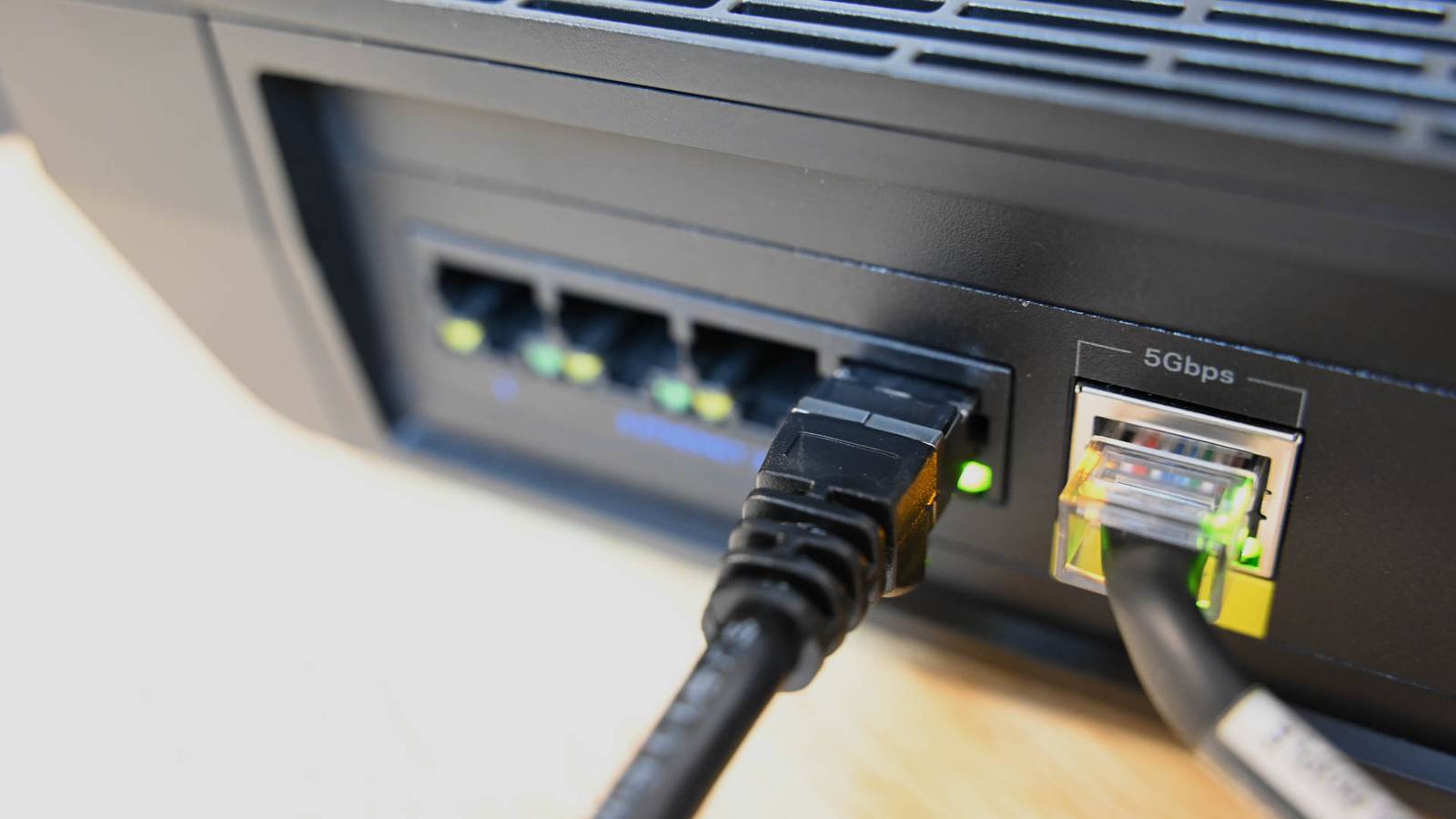
Your physical Ethernet port has lasted the test of time despite slowly getting phased out.Lots of modern laptops and smaller PCs don't even have this familiar connector anymore, and some people may not know what Ethernet is.This can make people think a wired connection is just old news, something slow and clunky from the dial-up days.
We will show you that your computer's often-ignored Ethernet port is actually a hidden Swiss Army knife.It can make dedicated high-speed links for moving files between devices, give power to remote equipment, and let you set up advanced networks way beyond just getting online.Direct PC-to-PC connection You don't have to wait for Wi-Fi Connecting two computers to transfer files with just one Ethernet cable creates a private, fast mini-network between them.
This is the absolute quickest way to move huge video files or backup folders from an older laptop to a newer one, without dealing with slow USB drives or waiting for cloud storage uploads.When you transfer files over Wi-Fi, you're limited by Wi-Fi technology itself, including signal problems, distance issues, and sharing bandwidth with other cordless devices at home.In contrast, a direct Ethernet connection gives you a dedicated, shielded data pathway.
A regular Gigabit Ethernet connection can theoretically handle up to 1,000 megabits per second, or 125 megabytes per second, letting you copy enormous amounts of data in a fraction of the time it would take over a typical unwired network.Years ago, setting up this kind of ad-hoc, device-to-device network needed a special cord called a crossover cable, which internally flipped the transmit and receive signal pins so the two machines could talk to each other correctly.Luckily, you don't need to hunt for specific networking equipment anymore.
Network-attached storage Storage that comes from your home Network-attached storage (NAS) is a smart, dedicated hard drive system that lives on your home network, so every device in your house can access and store files.By connecting it over Ethernet, you're making sure that backing up massive photo libraries or streaming your personal 4K movies to your TV moves along quickly.A NAS device works like a private cloud solution; it runs its own specialized operating system, letting you keep complete data ownership without paying monthly subscription fees.
Unlike a standard external USB hard drive that you have to physically move from computer to computer, a NAS offers 24/7 uptime, independent user accounts, and constant accessibility for any authorized device on your local area network.While it's most common to plug a NAS into a centralized router or switch, you can actually get the most out of it by connecting it directly to your computer's Ethernet port.This direct, point-to-point configuration creates an exclusive fast lane that's completely unaffected by the rest of your home network traffic.
UGREEN NASync DXP2800 Brand UGREEN CPU Intel 12th Gen N-Series $699 at Ugreen Expand Collapse Power over Ethernet Use your PC to keep things going Power over Ethernet (PoE) gives devices a reliable internet connection and electrical power at the same time, using just one standard Ethernet cable.This is super handy for mounting things like outdoor security cameras or ceiling Wi-Fi extenders, because you will not need to hire an electrician to add a nearby wall outlet to power them.This works by using the twisted pairs of copper wire inside standard network cables, like Cat 5e or Cat 6, to send direct current (DC) voltage along with high-speed data signals without either getting in the way of the other.
Since the IEEE 802.3 standard lets Ethernet cables run up to 100 meters before the signal gets weaker, you can put powered devices in remote or hard-to-reach spots like rooflines, drop ceilings, or perimeter fences with incredible ease and lower installation costs.Hardwire a game console There's a much faster way to play games While Wi-Fi is convenient, it's prone to invisible interference from thick walls, microwaves, and your neighbors' routers.This causes frustrating lag spikes during online multiplayer matches.
Plugging your PlayStation or Xbox directly into your network with an Ethernet cable gives you a perfectly stable, uninterrupted connection so your button presses register instantly.Routing a physical cable across your home to the main router isn't always feasible, and that's exactly where your computer's Ethernet port can serve as a clever workaround.If your desktop or laptop is already connected to the internet (for example, through a strong Wi-Fi signal), you can easily repurpose its open Ethernet jack to supply a hardwired connection directly to your game console.
Connect your Xbox or PlayStation to your PC's Ethernet port with a standard Ethernet cable.On Windows, open Network Connections, select both your active Wi-Fi and the Ethernet adapter, right-click, and choose "Bridge Connections." Configure a headless device Make those devices work much more easily A headless device is essentially a computer that's designed to operate quietly in the background without needing its own dedicated monitor, keyboard, or mouse attached.While this saves desk space and lowers costs, it can be difficult to initially set up the operating system, run necessary software updates, or tweak configuration settings if you can't see a screen or type commands.
The smartest and most direct solution is to use your main computer's Ethernet port.By running a standard Ethernet cable directly from your primary PC or laptop to the Ethernet port on the unit, you basically create a private, high-speed, two-node local area network.Once the physical connection is established, your main computer can act as the gateway and control hub for the headless machine.
If you need to download system updates or install new software packages from the web, you can easily use built-in operating system features like Windows Internet Connection Sharing (ICS) or macOS Internet Sharing.Connect to a hardware firewall Firewalls can be a lot stronger than you know Instead of just relying on the software antivirus installed on your computer, a hardware firewall is a physical security box that sits like a bouncer between your home network and the outside internet.Plugging your connection through this device lets it aggressively scan and block malicious activity, hackers, and viruses before they ever have a chance to reach your personal PC.
Subscribe for practical Ethernet tips and networking insight Level up your wired setup: subscribe to the newsletter for hands-on Ethernet guides, clear troubleshooting steps, PoE and NAS walkthroughs, and practical tips that help you get the most from wired networking.Get Updates By subscribing, you agree to receive newsletter and marketing emails, and accept our Terms of Use and Privacy Policy.You can unsubscribe anytime.
By routing your internet traffic through a dedicated hardware firewall using an Ethernet cable, you force all incoming and outgoing data packets to pass through a strict inspection gateway.Wi-Fi still can't beat Ethernet reliability By now, you've probably figured out that the simple Ethernet port isn't obsolete at all.While Wi-Fi's convenience often makes us forget about it, this physical connector is all you need for fast connectivity, better security, and effective device management.
It handles everything from high-speed multi-gigabit file transfers between PCs to reliably powering remote gear with Power over Ethernet, and even giving your gaming console a lag-free wired connection.If you're an IT professional, a serious gamer, or anyone handling big media files or important backups, ignoring what this port can do means you're just accepting slower, less secure, and less dependable connections.
Read More