ESP32 boards are incredibly versatile.They're small and relatively cheap, and I use them for a wide variety of purposes in my smart home.The problem is that a bare ESP32 board doesn't look great dangling off the back of a power cable.
A Home Assistant user has found a neat and elegant way to hide them away.Bluetooth presence tracking needs proxies in multiple rooms More proxies mean more accuracy One of the simplest ways to use an ESP32 is as a Bluetooth proxy.The ESP32 can communicate with Bluetooth devices that are nearby, and relay information back and forth to Home Assistant.
This means that even if your Home Assistant server is on the other side of your home, it can still communicate with Bluetooth devices, despite being a long way out of Bluetooth range.Another benefit of setting up Bluetooth proxies in your home is that you can use them to track Bluetooth devices.Using an integration such as Bermuda, Bluetooth proxies around your home can each report back the signal strength of a detected device such as a smartphone or smartwatch.
By comparing these signal strengths, the integration can estimate which room a device is in, giving you presence detection on a room-to-room level.Using a single Bluetooth proxy isn't ideal.To get the most accurate results, you need multiple Bluetooth proxies around your home so that the signal strength from each can be compared to determine which Bluetooth proxy the device is likely to be nearest to.
Seeed Studio XIAO ESP32C3 Brand Seeed Studio The Seeed Studio XIAO ESP32-C3 is the perfect budget-friendly microcontroller for smart home projects.With Wi-Fi and Bluetooth built-in, it also features a super deep sleep mode for low power usage when it isn't doing anything.The compact size makes this ideal for building smart home projects, and ESPHome allows it to easily integrate into Home Assistant.
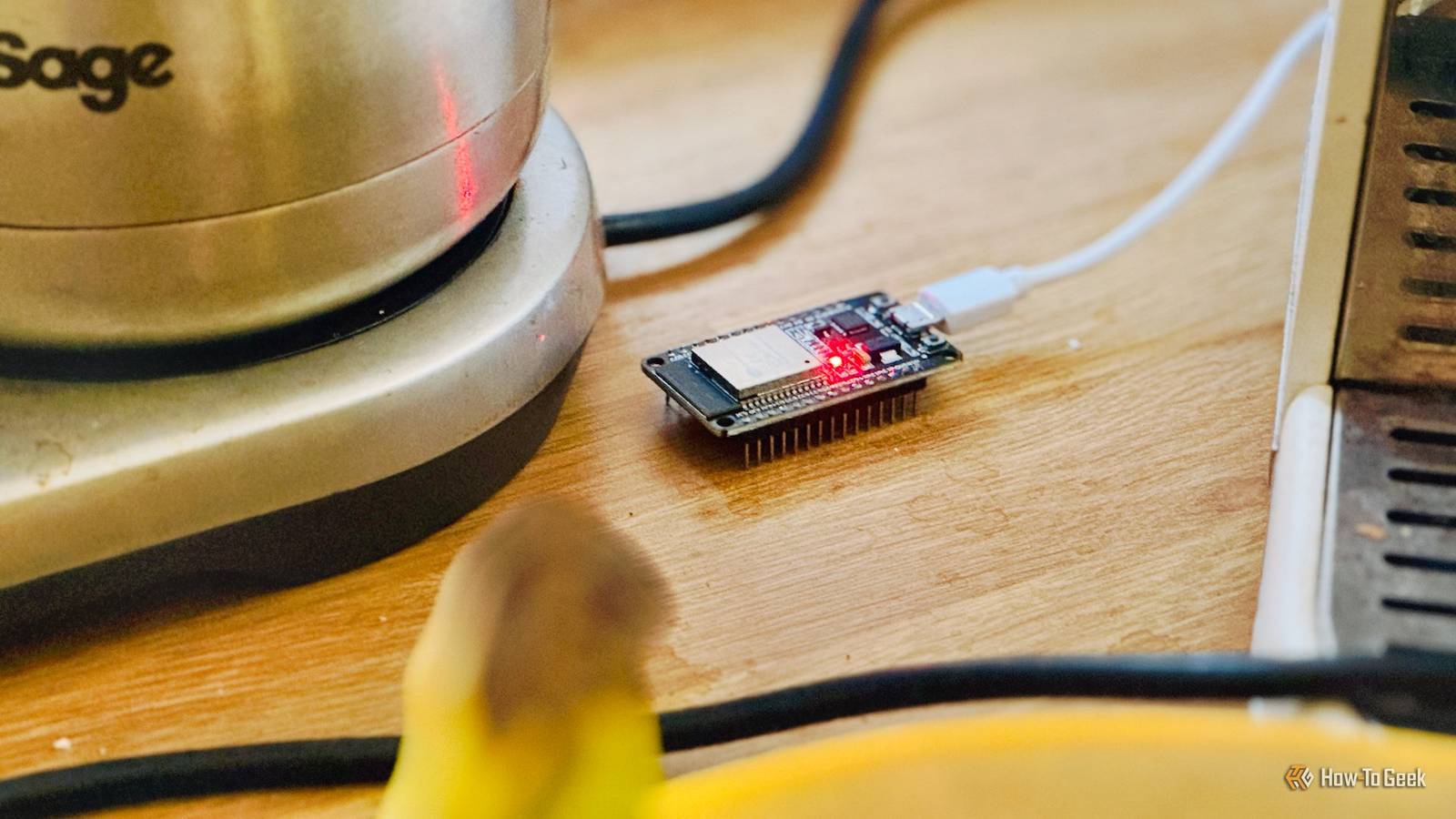
$5 at Seeed Studio $10 at Amazon Expand Collapse Dangling an ESP32 out of an outlet is messy You can be sorely lacking the spouse approval factor The problem with placing ESP32 boards all around your house is that they're not the most stylish-looking devices.They're often essentially bare circuit boards with a chip, a couple of LEDs, and a USB port for connecting them to power.I always like to make use of the spare tech I have around my home to save myself from buying stuff I don't need.
This means that my ESP32s are connected to random USB cables of varying lengths, which are themselves connected to USB plugs of different brands and styles.The result is a bit of a mess.In some rooms, ESP32s are dangling from outlets without even reaching the floor.
In other rooms, they're just placed on surfaces and really don't look very smart.My family already has to put up with a lot when dealing with my smart home obsession, and having a bunch of ESP32s dotted around the house hasn't gone down particularly well.Related The best smart home sensors are the ones you'll never see Your smart home doesn't need to look like one.
Posts 1 By Tim Brookes Your ESP32 needs power and somewhere to hide Building a housing around the charger is a genius idea Close A Home Assistant user on Reddit has come up with an elegant solution.A post from showed the 3D-printed ESP32 Bluetooth proxy housing that they had designed.The concept is simple but effective.
The 3D-printed housing is designed to hold three things.The first is a 90-degree USB-A charging brick.This is what plugs into the outlet, and the 90-degree design ensures that the USB-A port isn't blocked by the casing.
The second element is a small USB-A to USB-C adapter.The USB-A end plugs into the charging brick, and the USB-C end is then free to plug into the ESP32.The final element is an ESP32 D1 Mini, which the 3D-printed case is designed to fit.
The adapter goes into the brick, the ESP32 goes into the adapter, and the whole thing goes into the housing.You then have a small and discreet white block you can plug into the outlet, instead of a mess of cables and bare boards.The case even has a stylish Home Assistant logo etched into the front of it.
You can keep your Bluetooth proxies discreet Make them look like proper smart home devices These ESP32 nodes are clean and unobtrusive.They look like typical smart home devices that you might plug into an outlet, and you'd be forgiven for mistaking them for genuine smart home products.The ESP32 boards I use around my home are slightly wider than ESP32 D1 Minis, so they're not the right fit for this design.
In the long term, I plan to upgrade to these stylish nodes and repurpose my current boards for other projects.It will definitely earn me some points with my family.In the meantime, I'm going to have to live with my bare boards and flapping cables.
It may not be the most beautiful setup, but being able to ask my voice assistant where my phone is when I lose it for the eighth time that day is more than worth it.A smart home doesn't have to look like a mess.Smart home products aren't always the most beautiful-looking devices.
While some look sleek and stylish, there are plenty that really don't (my DIY smart speaker, for example).This simple project turns what would otherwise be messy devices into something that looks really smart.
Read More