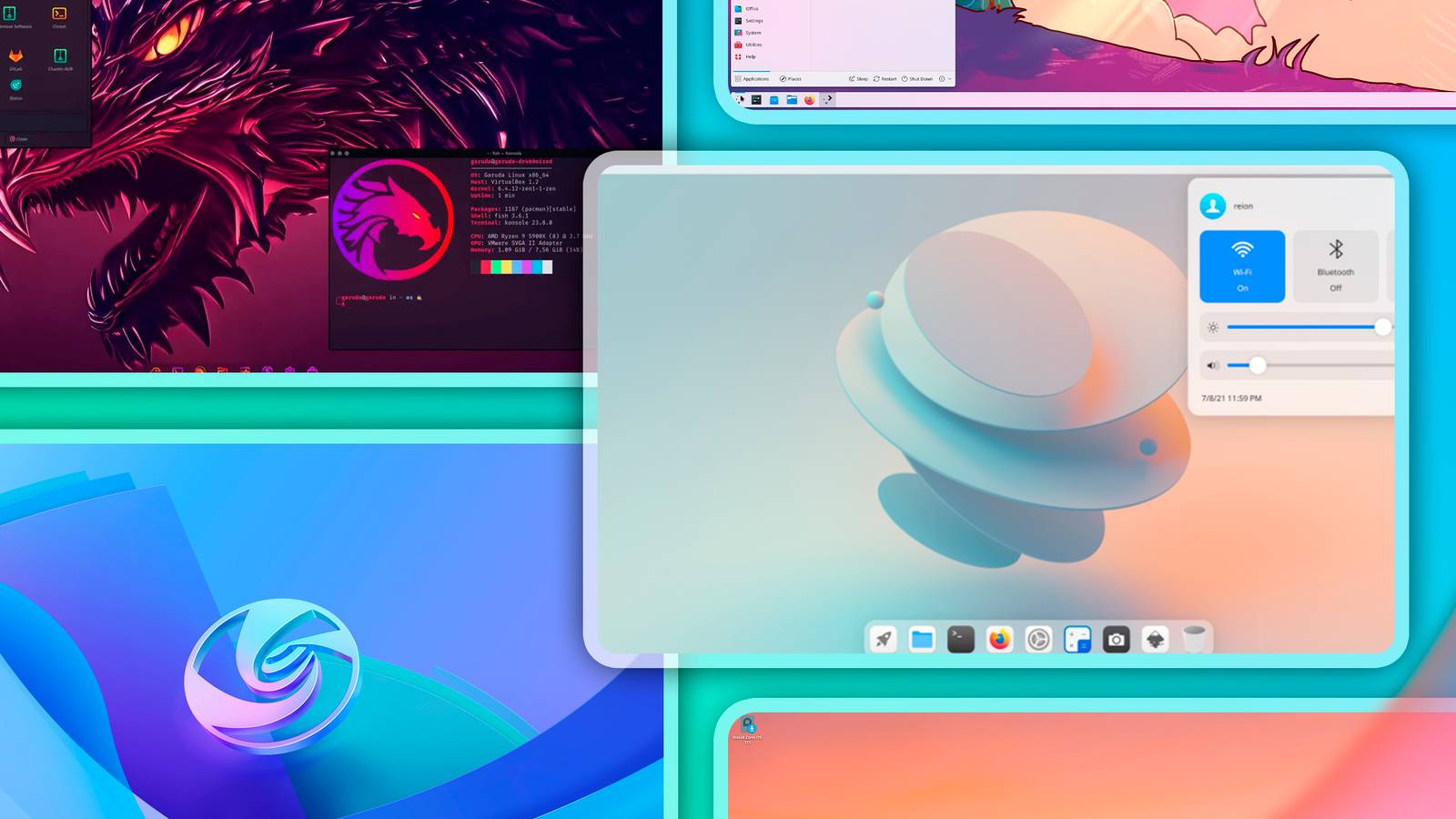
An age-old rhetorical question has plagued everyone’s favorite open-source operating system from the very beginning: Is Linux ready for the desktop? Of course it is! In the early days, when users were forced to use the terminal, battle with device drivers, or even compile their own kernel, things were different.But nowadays, we have clean, attractive desktop environments that are every bit as capable as Windows or macOS.Check out these distros, which make moving to Linux easier than ever, and demonstrate how bright the future is for Linux at home.
CachyOS Optimized to make the most of your hardware CachyOS builds on top of Arch Linux to provide a distribution that’s highly optimized for specific CPUs.With an emphasis on gaming, it’s no surprise that CachyOS is currently the number one choice on DistroWatch.With plenty of polish, CachyOS brings the Arch experience to a wider audience.
It’s easy to install, yet still has the options necessary to tweak your system just how you like it.For those unwilling to totally give up on Windows, there’s a chance to use both OSes without having to dual-boot, and such features should ensure CachyOS remains a popular choice.Pop!_OS (Modern & Accelerated Workflow) A distro for everyone, with cutting-edge features Pop!_OS is a modern, fast distro with plenty of features that show off just how much progress the Linux desktop has made for everyday users.
Pop!_OS’s fans value its COSMIC desktop, which is written in the Rust programming language.With speed and safety at the forefront, this should help to ensure that desktop Linux is more approachable than ever.Pop!_OS is great for beginners, but features such as auto-tiling, keyboard navigation, and disk encryption mean that it’s popular among power users too.
In fact, with native drivers and strong GPU support, Pop!_OS is also perfect for gamers, so its potential to appeal to a broad cross-section of users gives it an excellent chance of breaking through.Laptop With Linux Intel NUC13 Choose from three different Intel processors when you configure this mini PC, along with your choice of dozens of Linux distribution options.Configure Now Expand Collapse Fedora Silverblue A rock-solid distro with plenty of safeguards For Linux nerds, one of the great benefits the OS offers is the ability to endlessly customize your environment.
But with great power comes great responsibility, and there’s no surer way to run into trouble than tinkering under the hood, with things you don’t fully understand.An atomic (immutable) Linux system aims to resolve this, with a core that’s isolated from unauthorized updates and containerized apps for specific user software.In effect, an installation of a specific version is identical to every other installation of that same version.
Silverblue uses the Flatpak format to manage software installs and upgrades, which makes for a great app store experience.Although Silverblue is built around GNOME, there are atomic Fedora versions for other desktops, including Kinoite (KDE Plasma), Sway Atomic, and COSMIC Atomic.Linux Mint The distro that converted many Windows users, and continues to do so Now an incredible 20 years old, it’s easy to forget the impact that Linux Mint had when it was first introduced.
By bundling proprietary drivers and codecs, it made Linux more compatible than ever, easing the transition from other OSes.The Cinnamon desktop environment has a clean, minimalist look that targets those escaping from Windows, with a layout familiar to users of Microsoft’s operating system.It’s still a great choice today; although some dependencies can still be tricky to resolve, you should find it suitable for almost everything you might think you need Windows for.
Linux Mint is perfect for beginners, especially since it requires no command-line knowledge.The great number of online communities should help to ease migration from proprietary operating systems.Debian This wise old distro proves Linux is here to stay As proof of longevity, Mint may be good, but it cannot compare to Debian, the distro that is now over 30 years old.
Debian is proof, if you need it, that a Linux distribution can endure as long as any OS.Despite its age, Debian remains one of the most popular distros, consistently in the top five according to DistroWatch.Debian Stable—the main release—is highly reliable, with excellent long-term security support.
It forms the basis of many other distribution strains, from Ubuntu to Kali, so many users have a stake in it, even if it’s indirect.Compared to distros like Mint and CachyOS, Debian can take a bit of work up-front to get set up.However, once you’ve tailored it to your own needs, it should remain a solid, dependable system for many years to come.
Zorin OS Easy to migrate to, whether you’re a Windows user or a Mac user Zorin is yet another distro that makes switching from Windows seem effortless.But it also aims to convert macOS users, with a polished interface and a custom GNOME desktop that can imitate aspects of either alternative OS.While Microsoft and Apple continue to reinvent their OS paradigms, in a never-ending attempt to wow potential new users, distros like Zorin remain firmly wedged in the past, with a stable, familiar look and feel.
Such consistency may not win any innovation awards, but it tends to make for happy users; Zorin is currently the sixth most popular distribution.Mature, polished desktop distros are abundant Whatever your particular needs, there’s a distribution for you.Many of them aim to simplify the desktop experience, with attractive graphical interfaces, easy-to-use installers, and rock-solid software management.
Read More