On October 14th, 1947, U.S.Air Force Captain Chuck Yeager pushed the Bell X-1 past the speed of sound over the California desert, becoming the first pilot in history to fly faster than Mach 1.Less than two decades later, Lockheed's Skunk Works division answered with the SR-71, a reconnaissance plane built to cruise at more than three times the speed of sound.
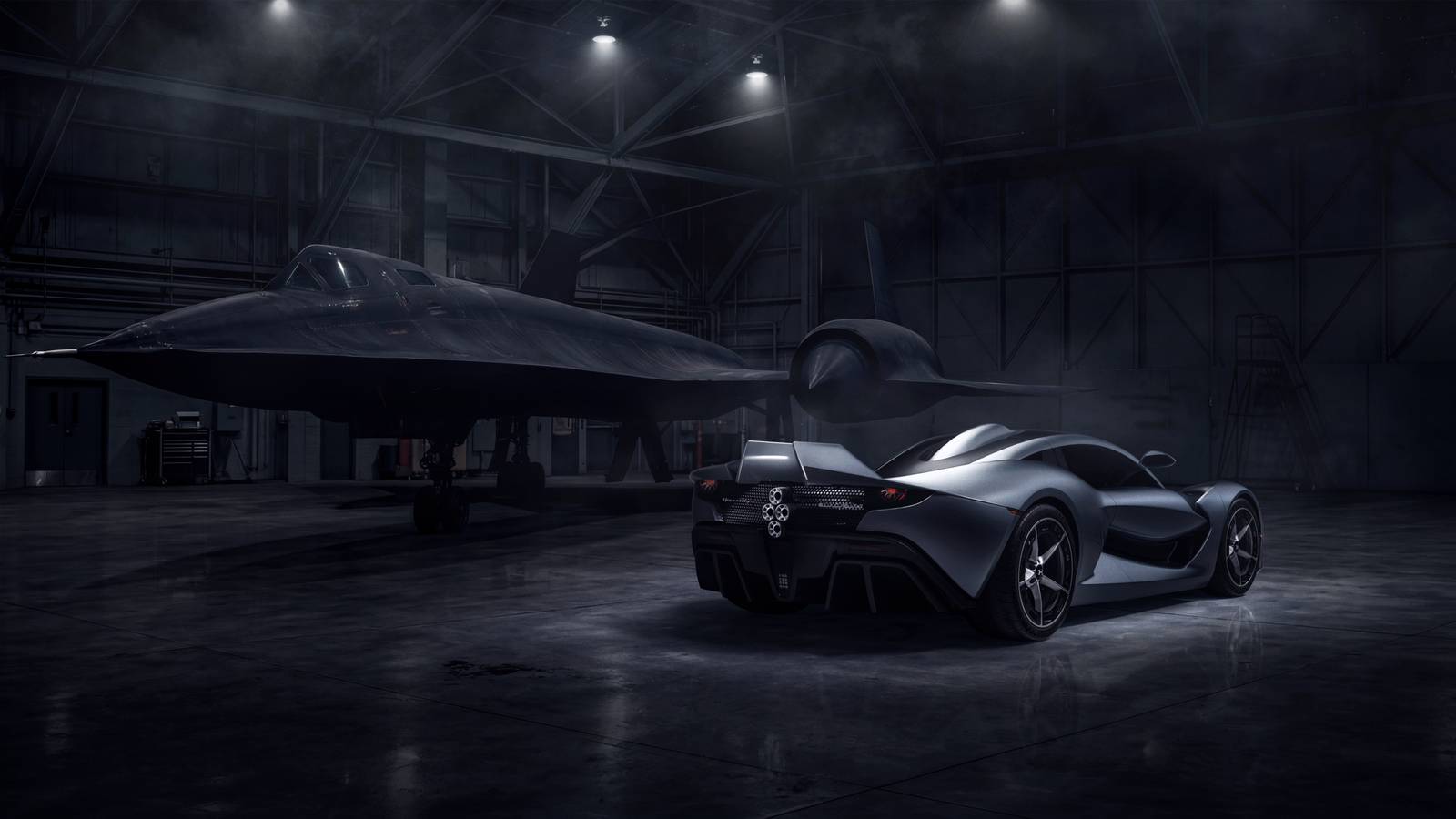
Hennessey Special Vehicles is borrowing from both the X-1 and the SR-71 for its newest hypercar.The Texas-based manufacturer has revealed the all-new Blackbird, a naturally aspirated, manual-transmission hypercar named after the Lockheed SR-71, with elements of the X-1 woven in.“Blackbird isn’t just the next chapter in the Hennessey story; it represents the beginning of a new book,” said company founder and CEO John Hennessey.
“Our third hypercar, Blackbird, is unexpected by design, yet it’s exactly what I wanted to create and what our customers have been asking for.” Naturally aspirated V8 running solo 800 to 850 horsepower, no turbo, no battery Close While hypercars like the Bugatti Tourbillon and the Rimac Nevera leverage batteries and electric motors for performance, Blackbird goes old-school with a physical ignition key, manual transmission, and a pure, naturally aspirated V8.The heart of the Blackbird is a 6.2-liter V8 developed with Ilmor Engineering, the firm that has built winning engines for IndyCar and Formula 1 over the past four decades.Hennessey is targeting 800 to 850 horsepower and more than 9,000 rpm, which the company said would make it the highest-revving and most powerful naturally aspirated V8 ever put in a production car.
Likewise, Hennessey is targeting a 0-60 mph time of 2.5 seconds and a top speed of 220 mph.Meanwhile, a Hennessey bespoke carbon tub and carbon-fiber body should bring the Blackbird's target weight below 3,000 lbs.No turbochargers or hybrid battery system are standing between the pedal and the engine.
All that pure V8 power goes to the rear wheels only, through a six-speed gated manual with an exposed shift linkage.“From the beginning, Blackbird was guided by a simple idea: to deliver an analog experience where beauty and drama define every moment,” Hennessey said.“We set out to create an unparalleled emotional experience, from the first time you see it to the moment you take the wheel and feel the connection between driver and machine.” Related Cadillac's F1 sedan is a 685-horsepower manual transmission you can't buy Developed in conjunction with Formula 1 for the 2026 season.
Posts By Carl Anthony Aerospace-inspired design elements From the chine line to the exhaust tips Close Hennessey points to the SR-71’s long stance and “disciplined surfacing” as the starting point for Blackbird's proportions, carried through into a “crisp body-side chine line,” or the edge where the upper and lower body surfaces meet.The line serves as the car's primary hard edge, echoing the same tightly pinched detail found where the SR-71's fuselage surfaces meet.Active vertical stabilizers on the rear deploy automatically at 71 mph and sit at plus- or minus-71 degrees, a nod to the SR-71 designation (drivers can also trigger them manually at any speed).
Hennessey shaped the Blackbird’s diamond quad-exhaust after the exhaust on the Bell X-1, the same plane Yeager flew on that 1947 flight, now on permanent display at the Smithsonian's National Air and Space Museum.The diamond shape carries over into the headlights and reappears inside the cabin, alongside Formula One-style side pods and LMP1-inspired winglets that round out a design pulled as much from racing as from flight.On the inside, you won’t find an infotainment screen, digital gauge cluster, or any buttons on the steering wheel.
A large analog tachometer sits at the center of the cabin instead, in front of the driver where engine speed is easy to read at a glance.However, some connectivity does exist as Apple CarPlay and Android Auto can be run through the driver’s device, which can be placed in a Hennessey holster.An optional glass roof, called Sky Glass, tapers asymmetrically in a shape borrowed from the SR-71's canopy.
Additional glass at the rear bulkhead and over the engine bay brings more light into the cabin, part of Hennessey's goal for the Blackbird's design to look just as special in 50 years as it does today.“Beauty is not a byproduct; it must be intentional,” said Nathan Malinick, Hennessey Director of Design.“With Blackbird, every decision our team made, inside and out, was guided by our vision to create the ultimate touring hypercar: one that strikes a perfect balance between elegance and aggression, beauty and purpose, inspiring people to fall in love at first sight.” Pricing and customer deliveries Close Hennessey will build 71 examples of Blackbird, priced from $2.5 million before taxes, with each car designed and manufactured at the company's Sealy, Texas facility.
More than two-thirds of that production run is already spoken for ahead of the car's public debut at The Quail in California on August 14th.Customer deliveries are targeted for 2029 through 2030, shortly after Hennessey winds down Venom F5 production, expected to end around 2028.The Blackbird’s cabin does have more room than the Venom F5, along with gullwing doors, four cup holders, and storage for two carry-on bags in the front trunk plus more in the rear quarters.
An adaptive suspension system, traction control, and anti-lock brakes are standard, while the Michelin Pilot Sport Cup 2 tires can be fitted to one of two available wheel designs.
Read More