You don’t need the internet or cellular reception in order to send and receive messages.With LoRa and a protocol like Meshtastic, you can send messages directly between devices even when none of the conventional networks are working properly.Add How-To Geek on Google Add as Preferred Source Follow on Google Discover This is what makes Meshtastic and technologies like it so favorable for off-grid communication.
Understanding off-grid messaging using LoRa Here’s how it works LoRa is an abbreviation of “Long Range,” and it is used to describe a type of peer-to-peer network.This is the underlying technology on which other protocols (like Meshtastic) are built, sometimes referred to as the “physical layer.” On the architecture side of things, LoRaWAN (Long Range Wide Area Network) defines a set of standards for how LoRa should be implemented.Meshtastic is a mesh-based protocol that has been built on top of LoRa.
A mesh-based network means that communication is carried between nodes—different instances running the protocol.Each jump between nodes is known as a “hop,” with Meshtastic’s maximum number of hops being seven (though this is often set to a lower value like three).LoRa, and the networks that use it, work best in wide open spaces.
Meshtastic's maximum transmission distance was measured at 205 miles (331 kilometers) under ideal conditions.In everyday use, where topology, trees, and buildings are likely to interfere with your signal, you can expect a realistic range that is far smaller.This could be as little as 1 mile, but is unlikely to exceed 7 miles (that’s 1.5 to 11 kilometers).
You don’t need a license to use Meshtastic, since LoRa falls within open frequencies (these vary, depending on where you live).The protocol works both on dedicated devices that can send and receive messages directly, or by pairing with a smartphone and sending messages using an app.LoRa prioritizes long-distance communication over data transmission rate, which means that the technology is suitable for sending text messages, but not images, videos, or voice communication.
Buy or assemble your own LoRa kit What you need to get started Close To use Meshtastic, you’ll need a LoRa radio.There are a few routes you can take here.You can buy a preassembled unit, buy a kit, or build something yourself from scratch.
A good starting point is the Meshtastic list of officially-supported devices.There are also a good range of community-supported devices to choose from.Most LoRa radios are powered by ESP32 microcontrollers, which include both Wi-Fi and Bluetooth, or the more power-efficient nRF52 chips which lack Wi-Fi but make up for it with incredible battery life.
Many devices also support GPS and other navigational aids, which can be particularly useful for reporting your location.There’s a neat Hackster guide to designing a Meshtastic handheld from scratch if that’s something you’re interested in.The process is fairly involved, uses a custom PCB which you’ll need to print, and requires that you’re comfortable with soldering and compiling the Meshtastic firmware.
A far simpler starting point is the $20 Heltec V3, which is one of the most popular LoRa radios on the market.It comes with a board, antenna, battery connector, and two header pins.You can make or 3D print yourself a case for it, source a battery, and swap out the antenna for something a little stronger.
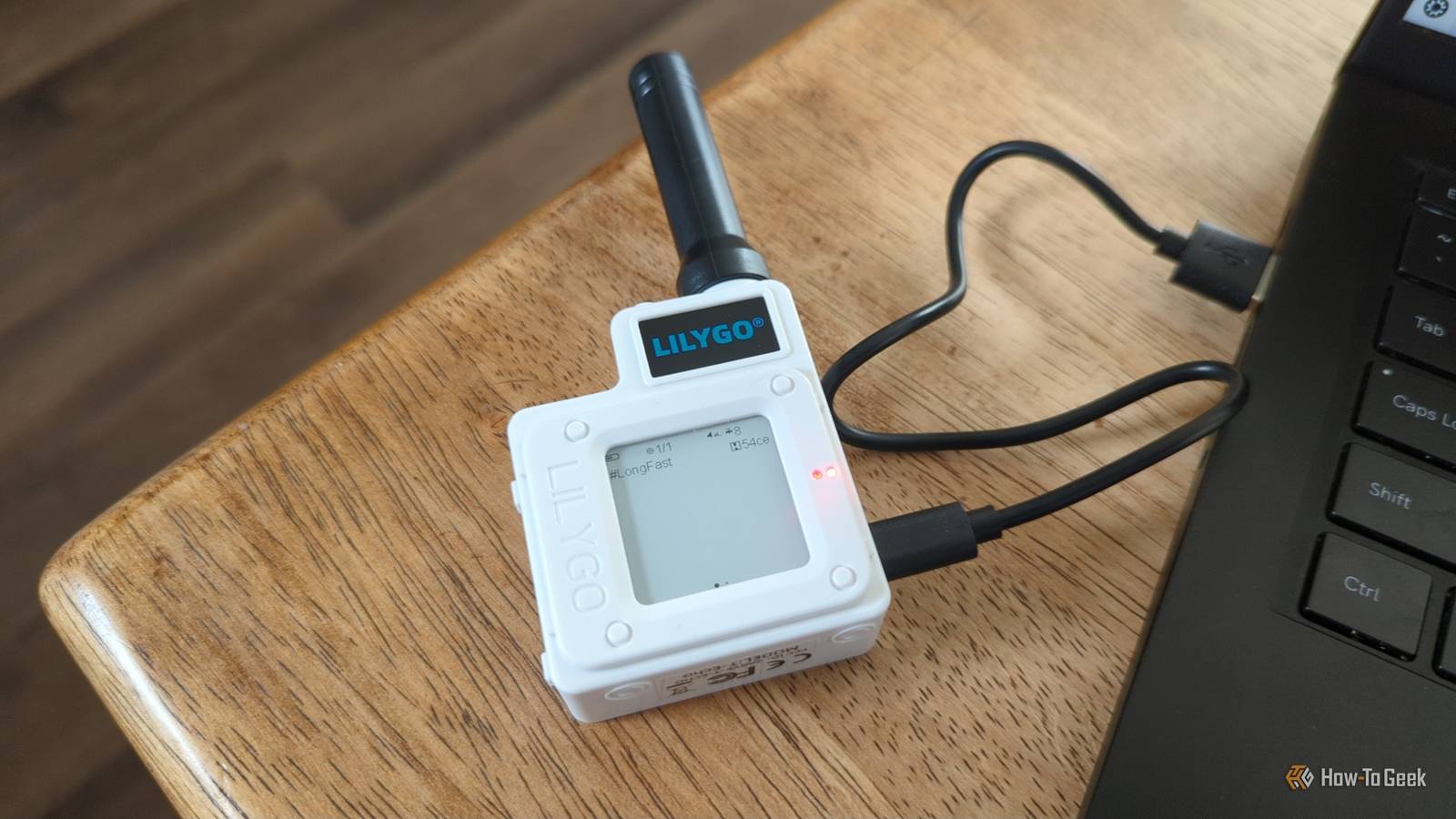
You can also integrate it into other projects, like a cyberdeck.For the easiest start, you can pay just shy of $50 for something like the Lilygo T-Echo which has everything you need to get started including a case, battery, antenna, and built-in screen.It even includes support for optional GPS and other positioning systems.
It’s about as plug-and-play as it gets when it comes to LoRa and Meshtastic.Lilygo T-Echo Meshtastic LoRa Device Dimensions (exterior) 5x2.1x0.96 inches Compatibility Meshtastic $59 at Amazon Expand Collapse Don’t forget about MeshCore The more popular LoRa mesh network Meshtastic is widely seen as being the easier LoRa network to get on with.You can take a look at the MeshMap (above) to see how many nodes are currently online, which should give you a good idea if investing in a Meshtastic setup is worth it for you.
Alternatively, you might want to consider the slightly more involved MeshCore instead.MeshCore uses three tiers of devices, is optimized for wider communication potential thanks to support for many more hops, but is generally regarded as being a more involved process.Check out the MeshCore map (below) to see just how popular the protocol has become.
Both solutions have their merits.If you’re simply looking for a means of staying in contact with a group in a rural area, you might find that Meshtastic has everything you need.You might also find that many more nodes come online during times when traditional communications networks are not available, like during storms or wildfires.
That said, if you’re interested in taking a more involved role in a local LoRa network, then you’ll have more people to talk to if you choose MeshCore instead.Thankfully, LoRa devices are somewhat interchangeable, so you can swap between protocols on the fly simply by flashing new firmware.If you’re only vaguely interested, you might want to invest in the hardware and try each out for yourself.
Interested in mesh networks and have a 3D printer? Here are some fun projects you might want to try.
Read More