
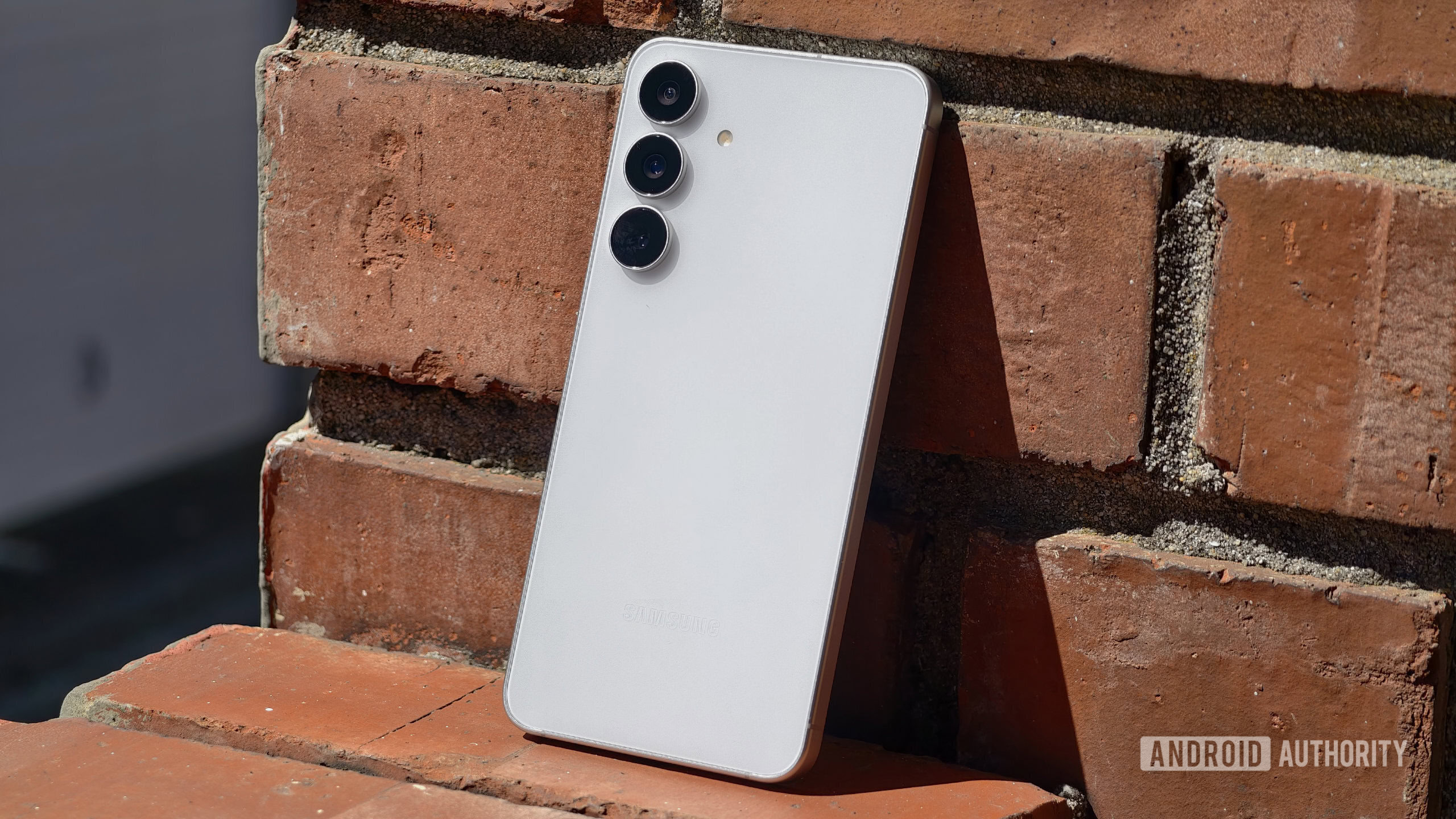
Hadlee Simons / Android AuthorityThere are a lot of Android phone manufacturers out there.Counterpoint Research, for example, tracks more than 140 brands in its quarterly smartphone market-share reports.Yet despite all that choice, Samsung remains the undisputed king of Android.Its global market share among Android makers exceeds 30%.
In other words, almost one in three people who buy an Android phone end up choosing Samsung.So how is it possible that in a market with so many options, a single company can capture nearly a third of it? Are Samsung’s phones truly that much better? Is the company’s business strategy simply superior? Or is it a mix of both?I’ve thought about this a lot, and I’ve come up with seven reasons why Samsung is the king of Android — and why that’s unlikely to change anytime soon.What company is best positioned to eventually challenge Samsung's Android dominance?0 votesGoogleNaN%XiaomiNaN%OnePlusNaN%VivoNaN%OppoNaN%Other (let me know in the comments)NaN%Innovation at its finestRyan Haines / Android AuthoritySamsung isn’t afraid to push the boundaries of technology and has significantly contributed to the progress of smartphone tech.The company consistently defines new categories and pushes core component performance forward, backed by its massive R&D resources.The most famous example is the creation of the “phablet” category with the original Galaxy Note.
Many consumers, as well as journalists, laughed at its large size at the time (5.3 inches), but it turned out to be the right call.The success of the Note series demonstrated that customers demanded larger displays, and today, most phones sport much larger panels than the original Note.Speaking of displays, Samsung is one of the biggest global manufacturers in this area and knows how to produce outstanding AMOLED panels, which is a massive competitive advantage.I mean, even Apple’s iPhones and devices from many other rivals use their panels.
Samsung was also at the forefront of curved displays, showcasing what advanced panel technology could achieve — even though people got tired of them eventually.Don’t want to miss the best from Android Authority? Set us as a favorite source in Google Discover to never miss our latest exclusive reports, expert analysis, and much more.You can also set us as a preferred source in Google Search by clicking the button below.
Then there are foldables.While Samsung may not have announced the very first foldable phone, it was one of the earliest to commit to the space and arguably makes the best ones out there.The Galaxy Z Fold and Z Flip series are highly polished devices for those looking for a truly different form factor, establishing Samsung as the undisputed leader in this premium segment.Crucially, Samsung isn’t like most other phone makers who outsource almost all production.
Samsung makes a lot of components in-house, from the already mentioned displays to its own memory chips and Exynos processors.All these things combined are a clear signal of quality and trustworthiness to consumers.It shows that Samsung is a massive, highly capable company that knows what it’s doing, invests heavily in R&D, and has tight control over its quality assurance.
This full control over the supply chain gives people peace of mind that they are buying a high-quality product packed with the latest technology, reinforcing their trust in the brand.A great software experienceRyan Haines / Android AuthorityA phone’s software can make or break a smartphone, and Samsung is among the best in this area.While older versions of its Android skin left a lot to be desired, One UI is arguably among the best experiences you can get on Android today.
It is clean, refined, and consistently fast across the brand’s entire lineup — even though it does suffer from a bit of bloatware.It is packed with unique features that draw people in and make them stick to the brand.This includes DeX for a true desktop-like computing experience, Secure Folder for keeping images and files safe from prying eyes, Knox for added security, and Good Lock for deep customization.Then there’s Galaxy AI, which brings a whole host of useful features to compatible Samsung phones.
Even smaller features matter to consumers, like widget stacks and a superior alarm clock.Then there are the updates.Samsung offers up to seven years of OS and security updates for its flagships and most of its popular mid-rangers.Even its affordable phones, like the Galaxy A-series, receive six years of Android upgrades.
Only Google matches this update promise, while other Android manufacturers are far behind.The flagship OnePlus 15, for example, will only get four Android upgrades.It’s a similar story with Xiaomi and other Samsung rivals.A great UI and a long software support commitment give consumers peace of mind and are a signal that Samsung phones are built to last.
The South Korean giant can afford to invest in software development for so many phones for years because it sells enough of them to make sense.For a smaller company with less sales volume and lower margins, the expenses tied to something like this are simply too high.A phone in every price tierPaul Jones / Android AuthoritySamsung’s business strategy is very different from companies like Apple and Google.
Samsung focuses on volume, offering devices across nearly every price range.Whether your budget is $200, $2,000, or anywhere in between, there’s a Samsung phone for you.Catering to all price brackets allows Samsung to sell far more than some of its biggest rivals.
Google’s cheapest phone, for example, starts around $500, and the company releases only a handful of devices each year.Samsung, in contrast, launches dozens of new phones annually.This strategy also allows Samsung to effectively target different regions based on demand.Entry-level and mid-range phones are especially popular in parts of Asia, Africa, and Latin America, while more expensive models dominate in North America and Europe.Having multiple models in its lineup also creates a seamless upgrade path.
Someone who starts with a more affordable Samsung phone can eventually upgrade to a higher-end model without losing access to familiar One UI features.It’s worth noting that other manufacturers, such as Xiaomi, also offer a wide selection of phones.So a broad lineup alone isn’t the main reason for Samsung’s success, but it is an important part of the puzzle.A massive marketing budgetEdgar Cervantes / Android AuthorityWe all like to think that marketing doesn’t work on us, but who are we kidding? We have a preference for the familiar, and Samsung phones fall squarely in this camp thanks to the company’s rich history and a massive, effective marketing budget.
From TV commercials to major global sports sponsorships, Samsung has a wide reach.Because Samsung outsells every competitor and arguably has higher margins due to its vertical integration, it has a massive marketing budget, which enables it to be seen everywhere.From TV commercials and online ads to major global sports sponsorships, Samsung has a wide-reaching presence.
It loves to partner up with high-profile actors, singers, and athletes to give its products even more appeal, as consumers gravitate toward things associated with people they admire.Beyond advertising, Samsung’s sheer prominence makes it a retailer’s best friend.The company secures separate, dedicated sections in various big-box and carrier stores, prominently displaying all of its latest gadgets.Crucially, retailers and mobile carriers also like to put Samsung front and center in their own advertisements — like those promos you get in the mail — since that’s what they sell the most.
A global reachC.Scott Brown / Android AuthorityIn order to sell a huge volume of anything, you need to have a truly global distribution network in place.This means partnering with carriers and retailers across the globe who will sell and finance your products.Samsung has been building its distribution network for decades and has a clear advantage over most of its rivals.
As an example, you can get a Samsung phone on just about any major carrier in the US — one of the largest phone markets in the world — but you won’t find a Xiaomi or an OPPO phone.Without a proper reach, companies can’t count on a massive sales boost.Samsung has partners in more or less every country in the world, giving it a clear advantage over the dozens of smaller brands that can only count on online sales and a few retail/carrier partners here and there.This is a strategic necessity because a lot of phones in bigger markets are still sold through carriers and their financing programs.
Those deep-rooted relationships are worth their weight in gold for Samsung, guaranteeing massive sales volume.A reputation like no otherEdgar Cervantes / Android AuthoritySamsung has been in the game for a long time.It announced its first phone back in 1988, while its first Android device debuted in 2009.
But the company’s history stretches much further — all the way back to 1938.The company has had plenty of time to build a solid reputation, and it did so by creating high-quality products — not just smartphones — and consistently innovating in the field of technology.Samsung’s brand is anchored in consumers’ minds as reputable, reliable, trustworthy, and, to a point, even premium.
Sure, there were issues along the way, like the Note 7 fiasco, but it doesn’t seem to have caused Samsung a lot of long-term damage.Its premium phones are generally more expensive than those of other Android brands, and people are willing to pay a premium because the Samsung name carries weight.There’s a perception of quality and prestige, which distinguishes Samsung from many competitors — even if that perception isn’t always entirely accurate.Take the Galaxy S series, for example.It’s far more respected and recognizable than flagship series from Xiaomi, Motorola, and OnePlus.
It’s seen as premium and aspirational, appealing to consumers who value their electronics as a reflection of status and taste.Location helps as wellEdgar Cervantes / Android AuthorityCountries have their distinct reputation when it comes to engineering and product quality.For many consumers in Western and established markets, a product produced in a country like Germany, Switzerland, the United States, Japan, and even South Korea is seen as having higher value than something manufactured in China.This perception gap creates a powerful advantage for Samsung.
A lot of people are still wary of buying a phone from a Chinese brand, as a lack of quality or data security often comes to mind right away.This sentiment persists even though many devices, including Apple’s iPhones, are physically assembled in China, but it seems that the brand’s origin is what matters most to buyers.Samsung is based in South Korea, a country that does not carry the same reputation for quality concerns or political risk as China.
Politics plays a role here as well.Chinese companies are under intense scrutiny in many key markets for possible spying or data integrity issues.Huawei is the textbook example: the US sanctions crippled its ability to use Google services, causing the company that might have dethroned Samsung to lose a lot of its global market share.Samsung, by contrast, is based in South Korea, a country that does not carry the same reputation for quality concerns or political risk as China, securing its position as the safe, reliable, and premier Android brand.The bottom line is that consumers are simply not as wary of buying a Samsung phone as they are of a phone from a Chinese brand.
The company’s Korean origin provides a massive, non-technical competitive advantage in Western markets.Since Samsung’s biggest rivals in terms of global market share are currently Chinese companies (Xiaomi, OPPO, Vivo), this helps Samsung immensely in securing its position as the safe, reliable, and premier Android brand.Will anyone be able to dethrone SamsungJoe Maring / Android AuthorityIt’s impossible to give a definitive answer to this question, but I personally think that Samsung will remain the king of Android for quite some time.
That doesn’t mean that it’s inherently better than other phone brands in every aspect, as I generally prefer Pixel phones and have always had a soft spot for OnePlus.However, the differences in competing phones aren’t that massive today, with a lot of them sharing similar specs and features.We see bigger differences in the software experience — AI included — and software support, the areas in which Samsung is hard to beat.We’d have to see a massive change on the market for someone to eventually overtake Samsung.
In my opinion, we’d have to see a massive change in the market for someone to eventually overtake Samsung.That’s what happened back when Nokia was the biggest phone manufacturer in the world.No one could compete with it until a major shift happened, which was the introduction of the Android OS.
Samsung jumped on board while Nokia was set in its old ways, refusing to release an Android phone.It eventually partnered up with Microsoft and started making Windows phones that not a lot of people wanted.It didn’t take much time for Samsung to dethrone Nokia from the number one spot, and eventually the company became a shadow of its former self.You could argue that the same thing is happening in the car world.
The slow but steady move from internal combustion engine (ICE) cars to electric cars gives companies — old and new — a great opportunity to shuffle the cards in the auto world.Tesla has done well for itself, and a lot of Chinese EV makers are now a threat to the old and established German car brands — something no one expected.If, or when, the next big shift in the smartphone market happens, that’s when Samsung may start losing its market share if it makes the wrong choices.But until that happens, its unbeatable combination of vertical integration, long-term software support, and unmatched commercial dominance means it will most likely remain at the very top, and rightfully so.
FeaturesAndroidSamsungFollowThank you for being part of our community.Read our Comment Policy before posting.


