Internet isn’t something that magically appears in your home.Unless you’re on a satellite-based Wi-Fi network, there are likely cables from an internet service provider that go directly into your residence.Not all cables are created equal, though.
It might be a fiber optic or coaxial cable, and there are some key differences between them you need to know about to choose the best broadband provider.Cable internet isn’t as fast as fiber internet, but you should still expect a reliable connection for work and play.We assembled this all-in-one hub about cable internet that lists both advantages and disadvantages.
Without question, fiber optic cables are better than coaxial, but it depends on which service you have at your address as to which one you’ll need.51.5% of U.S.households have fiber connections and access to at least 1 Gbps.
Cable companies are now providing hybrid coaxial fiber services, too.Why fiber-optic cables deliver faster, more reliable internet A fiber-optic cable consists of small, flexible strands of glass or plastic.Unlike traditional copper lines, which use electricity, a fiber optic cable utilizes light to transmit a significant amount of data.
This allows for more bandwidth (data), essentially no latency (lag) and minimal interference from weather or other power sources. In addition, unlike with cable internet, the bandwidth for individual customers with fiber internet can get very large since they’re not forced to share a connection with others in the same area.No matter the hour, fiber internet shouldn’t slow down due to congestion.The high-speed data should stay blazing-fast and manage all home activities with ease.
How fast are the data speeds on fiber cables? Fiber optic cables offer speeds of up to 100 Gbps, but of course, that depends on your internet service provider and equipment.Most internet service providers don’t go that fast by default, though.Be sure to choose the right plan and a wireless router.
Then you’ll discover the many benefits of next-generation connectivity.You can sign up for fiber internet with these companies: ProviderPrice range*Download speed range Google Fiber$70.00 – $150.00/mo.1,000 – 8,000 Mbps AT&T$40.00 – $123.00/mo.**100 – 4,700 Mbps Verizon Fios$34.99 – $94.99/mo.*** with mobile plan300 – 2,300 Mbps CenturyLink$50.00 – $75.00/mo.†500 – 940 Mbps Frontier Fiber$29.99 – $109.99/mo.200 – 7,000 Mbps Xfinity$100.00/mo.2,000 Mbps Kinetic$39.99 – $79.99/mo.300 – 2,000 Mbps Cox$50.00 – $150.00/mo.300 – 2,000 Mbps Optimum$40.00 – $280.00/mo.300 – 8,000 Mbps Ziply Fiber$20.00 – $900.00/mo.100 – 50,000 Mbps Sparklight$34.95 – $79.00/mo.300 – 2,000 Mbps EarthLink$39.95 – $189.95/mo.100 – 5,000 Mbps WOW!$30.00 – $185.00/mo.100 – 5,000 Mbps *Pricing per month plus taxes for length of contract.Additional fees and terms may apply.
Pricing varies by location and availability.All prices subject to change at any time.May or may not be available based on service address.
Speeds may vary.Updated as of 06/08/26.**Price after $5/mo Autopay & Paperless bill discount (w/in 2 bills).Monthly State Cost Recovery Charge in TX, OH, NV applies.
One time install chrg may apply.***Price guarantee for 3-5 years, depending on the internet plan, for new and existing myHome customers.Auto Pay & paper-free billing required.Mobile + Home Discount: $15/mo savings on Verizon Home Internet plans when combined with any Verizon postpaid mobile phone plan (excludes business and data-only plans).
Enrollment req’d for Fios Home Internet plans.$99 setup and other terms apply.Subj.
to credit approval & may require a deposit.Fios avail.in select areas.
Wired speeds advertised.Wireless speeds may vary due to device limits, multiple users, network & other factors.See Verizon.com/yourspeed for more info.
2025 Verizon.†Limited availability.Service and rate in select locations only.Paperless billing required.
Taxes and fees apply.Rate excludes CTL Fee not to exceed $1.50/mo./line.††Limited time offer; subject to change; new residential customers only (no Spectrum services within past 30 days) and in good standing with Spectrum.Taxes and fees extra in select states.
SPECTRUM INTERNET: Standard rates apply after promo period.Additional charge for installation.Speeds based on wired connection.
Actual speeds (including wireless) vary and are not guaranteed.Capable modem required for all Gig speeds.For a list of capable modems, visit Spectrum.net/modem.
Services subject to all applicable service terms and conditions, subject to change.Not available in all areas.Restrictions apply.
2025 Charter Communications, all rights reserved.††Limited time offer; subject to change; new residential customers only (no Spectrum services within past 30 days) and in good standing with Spectrum.Taxes and fees extra in select states.SPECTRUM INTERNET ADVANTAGE: Offer based on eligibility requirements.
Standard rates apply after promo period.Additional charge for installation.Speeds based on wired connection.
Actual speeds (including wireless) vary and are not guaranteed.Services subject to all applicable service terms and conditions, subject to change.Not available in all areas.
Restrictions apply.2025 Charter Communications, all rights reserved.How coaxial cable delivers internet to millions of U.S.
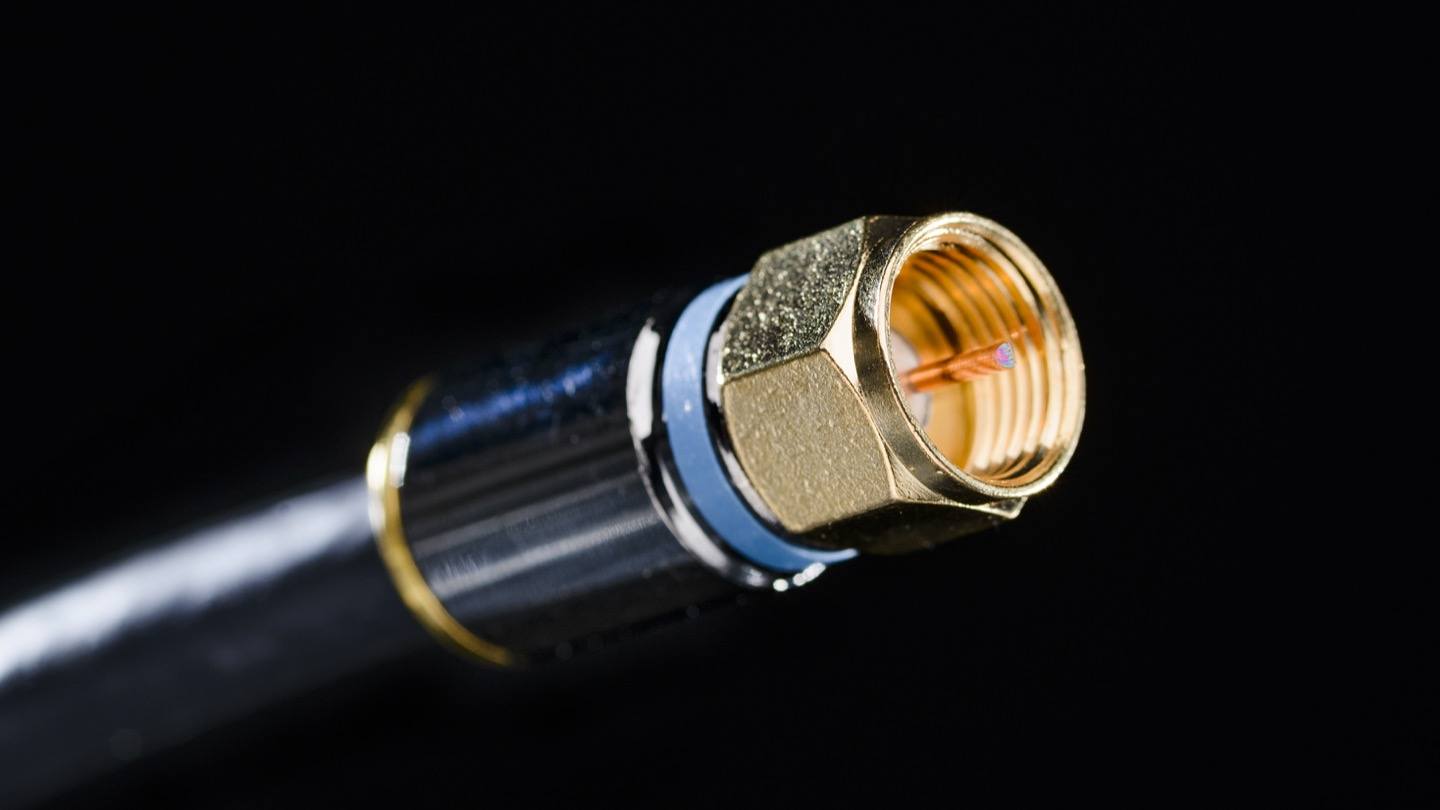
households Made primarily of copper, a coaxial cable transmits data from place to place through electricity.While cable internet doesn’t quite trump fiber internet it’s available in most parts of the country and often at a budget-friendly price.On the other hand, coaxial cables result in higher latency and are susceptible to electromagnetic interference (EMI) and the signal gets a bit weaker with distance.
You also may experience slowed speeds during peak usage times with coaxial service since you share bandwidth with your neighbors.How fast are the data speeds with coaxial cables? Unfortunately, in most cases, coaxial cables fall short in terms of data speed.Some internet service providers are able to get up to 2 Gbps (2,000 Mbps), but it’s not too common.
1 gig is about it for cable connections.The coaxial cable that runs a connection into your home might be shared, too.When multiple customers in the same neighborhood are online at the same time, throttling could occur and lead to reduced speeds.
You can sign up for cable internet with these companies: ProviderSpeeds up to Cox2,000 Mbps Mediacom2,000 Mbps Xfinity1,200 Mbps Optimum1,000 Mbps Spectrum1,000 Mbps When fiber is worth the upgrade, and when cable is enough When choosing between fiber and cable, the question isn’t really about what technology is better (because fiber is always the answer)—instead, it’s whether one is better for your home than the other.We’ll hit on some real-world examples to help you decide the right choice for you.A household with two people streaming TV nightly and browsing the web: Cable is sufficient A home with remote workers: Fiber is ideal since it offers faster upload speeds (important for video chatting) A household with a content creator: Fiber can better support consistent video and photo uploads When fiber may not be worth it If you live alone – One person can get by just fine with a cable connection You rarely upload videos or video chat – These activities require more upload speed; if you don’t really find yourself doing them often, cable’s upload speeds should suit you If fiber is more expensive – If a fiber plan in your area is significantly more expensive than cable, then opt for the more affordable option if you don’t need the speed If you can get the speeds you need with cable – If a cable provider near you offers the speed you need for a good price, you don’t need to upgrade to fiber unless you really want to Why fiber isn’t available everywhere Fiber internet technology is much newer than cable.
Cable internet is so widely available because it operates on existing infrastructure that’s been used for decades to deliver cable TV service to millions of homes.Fiber, on the other hand, needs to be built out by the providers themselves, which is expensive and time-consuming.While fiber availability is consistently expanding, it still falls behind other tech types. What about hybrid networks? Hybrid fiber-coaxial (HFC) networks combine both fiber and cable technologies to deliver service.
Xfinity and Spectrum are two popular cable providers that use HFC networks, which allow them to deliver faster speeds.HFC networks use fiber-optic cables to transmit data from the provider to the service area or neighborhood.From there, the data then travels to your home through a coaxial cable (this is known as the “Last-mile”).
This method is cheaper for the providers than installing a 100% fiber-optic network, and also allows them to deliver faster speeds than a purely coaxial network. Enter your ZIP code to find cable plans near you When it comes to latency, fiber reigns supreme High latency is what you actually notice when your internet isn’t performing as expected.It’s the time it takes for data to travel from one point to another.When that number is high, you’ll notice your video chat freezing up or a lag in your video game.
While good download and upload speeds are important, high latency (measured in milliseconds) can significantly affect your online activities.This is where fiber really shines.It offers extremely low latency since it uses light instead of electricity to deliver internet and its users don’t share bandwidth with others in their area. A 500 Mbps fiber plan and a 500 Mbps cable plan can perform very differently once a fiber latency of less than 5 ms and a cable latency of 10 to 20 ms are factored in. If you frequently video chat, play online games, or livestream, you need to prioritize low latency.
If fiber is available to you, it’s your best option. Enter your ZIP code to view fiber internet plans available near you Why your neighbors can slow down your cable internet Cable internet delivers internet over shared neighborhood infrastructure originally built for cable TV.The tech was originally designed to broadcast TV to entire areas, not just one single home.This means that cable internet customers essentially share bandwidth (think of this like a highway) with those in their area.
When all your neighbors are online at once, it can cause a “traffic jam” and slow down your internet speeds.This traffic jam is known as network congestion. Thinking of upgrading your internet? Find out if fiber or cable is available where you live.Fiber vs coaxial cable FAQs Do I need a coaxial cable for internet? If you are using cable internet, you will need a coaxial cable, which a technician would bring along when installing your internet.
Does fiber use coaxial cables? No, you’ll need a fiber optic cable for fiber service.Coaxial cables are for cable internet connections.What is the max speed of a coaxial cable? How much speed you can get from a coaxial cable depends on your plan.
However, most cables will max out at 1 Gbps down and 35 Mbps up.Is fiber always more expensive than cable? No, sometimes fiber plans are actually cheaper than cable, depending on the provider.Overall, however, fiber offers better value.
Can I upgrade my cable to fiber myself? No.If you want to upgrade to a fiber network, you’ll need to first find out if it’s available where you live.If it is, you can sign up and have someone come out and help you install your equipment.
What to read next Read more Featured The best Wi-Fi routers of 2026 Lisa Iscrupe — 5 min read Featured Ethernet cable speed categories explained Camryn Smith — 5 min read Featured Why are millions still without internet access? Lisa Iscrupe — 4 min read Latest Monday, June 8, 2026 Your internet speed comes down to what’s running through your walls Camryn Smith — 7 min read Monday, June 8, 2026 Your router is the weakest link; how to keep your home internet secure Camryn Smith — 5 min read Monday, June 1, 2026 DNS servers are not all the same; find out which ones are the best option for you Camryn Smith — 6 min read
Read More