There was a time when AIO (All-In-One) liquid coolers were the perfect middle ground between expensive and complex custom loops and loud and ineffective air coolers.No matter which AIO you chose, it was probably better than most air coolers you could have used in the same build.But, nothing in the world of PCs ever stands still, and those air coolers have been getting better and better.
So good, in fact, that the smaller classes of AIO (such as 120mm) have a hard time justifying their existence.There are still uses for the smaller AIOs, but they're quickly becoming niche tools.Air coolers now outperform most 120mm and many 240mm AIOs Big time air versus small-time water Close Today's air coolers have come a long way.
Technologies like heat pipes and vapor chambers bring many of the same benefits as liquid cooling to a sealed, passive system with very little that can go wrong.Improvements in fan blade design, better motors, and several other areas of improvement have made these coolers quieter and more efficient than ever.I think the state of liquid and air coolers is probably best demonstrated by a video Gamers Nexus did late in 2025.
If you look at the charts, bigger AIOs in the 360mm class do offer better numbers than high-end air coolers, but the practical difference is debatable given that both types of coolers keep hot modern high-performance CPUs within the safe temperature range.Bring that AIO down to 120mm or even 240mm in some cases, and the air cooler will either beat or match their respective results.Related Noctua's brown fans became the status symbol of PC building—here's why it actually worked The ugly color became the brand's biggest marketing advantage.
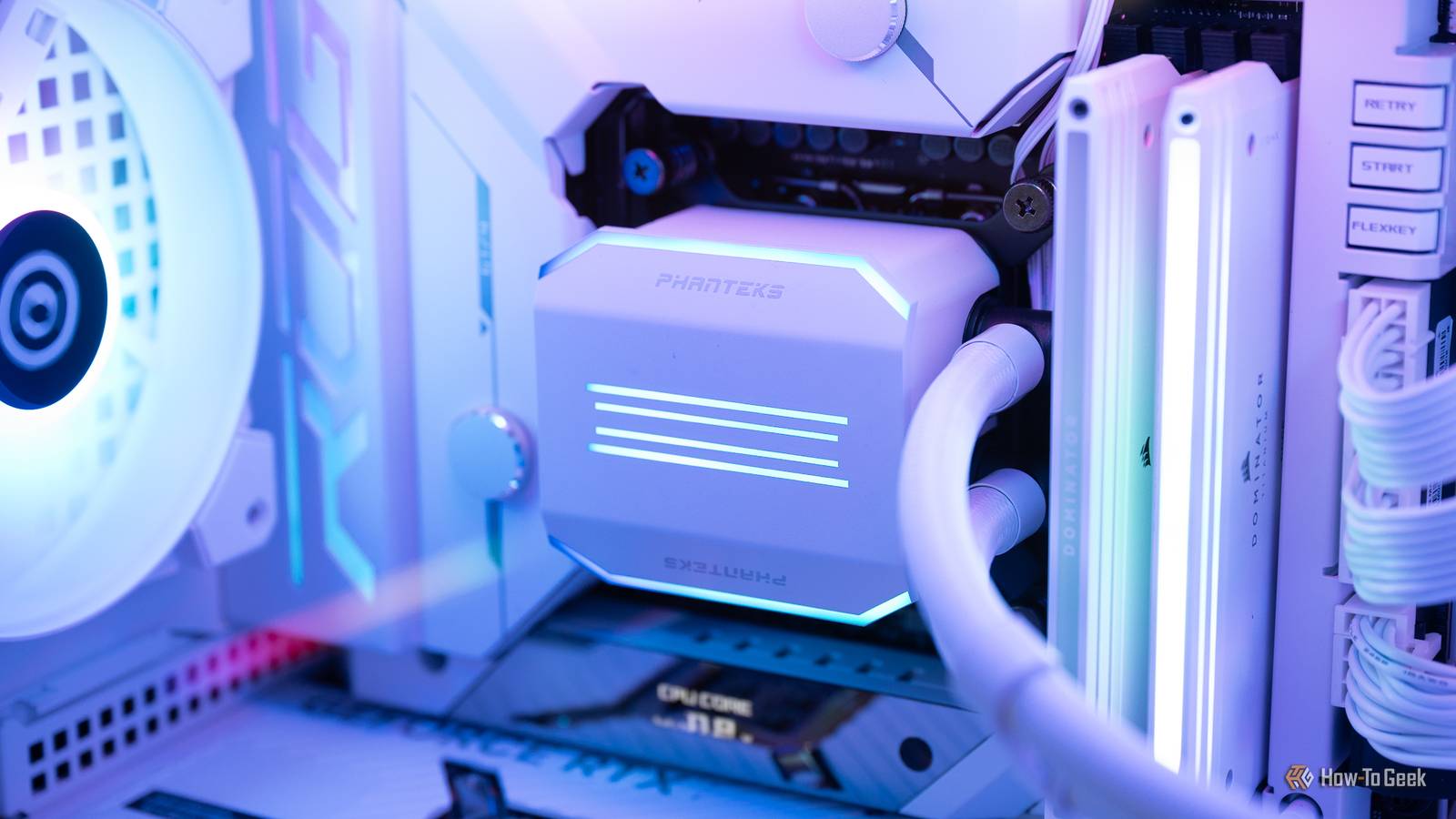
Posts By Sydney Butler Small radiators create more problems than they solve There's no room to breathe The biggest issue here comes down to the radiator and its total surface area.Small radiators have less surface area and airflow to transfer heat from the coolant to the air, so under sustained high heat loads the coolant temperature will rise more than with a larger radiator, reducing thermal headroom.The water is just a transport mechanism, it's the air that has to carry all that heat away, and with too little radiator surface area, it's like the cooling equivalent of those Japanese subway videos where people are forcibly crammed into the trains.
If you're buying liquid cooling, go big—or don't bother Radical solutions for radical heat So how big should the radiator be if you go down the AIO route? The answer is that it should be as big as you can afford, and your case can accommodate.If your case can handle a 360mm radiator, then make use of that facility.Even if a smaller 240mm or 280mm radiator can handle the temperature, you still want to keep your fan and pump noise to a minimum.
So bigger is usually better.It's at this larger end of the AIO spectrum where liquid coolers are still objectively better than air coolers when it comes to temperature control and noise.Remember those niche cases I mentioned where small AIOs still make sense? Well, that's pretty much just true for compact systems that don't have any room for a tall tower cooler, but also only have room for a 120mm radiator.
Because case airflow doesn't matter quite as much to the liquid cooler (the liquid is carrying the heat away to the outside of the case directly), you also have the side benefit of not dumping waste heat into the case.Even if a 120mm AIO is the only thing that will fit in your small PC build, you should also look at the latest low-profile air coolers.Some of them have surprisingly good performance, and if you're not running a particularly hot CPU, it's cheaper, safer, and more reliable.
Noctua NH-U12S Brand Noctua Cooling Method Air The Noctua NH-U12S is a premium slim-tower air CPU cooler.Equipped with a high-performance NF-F12 120mm fan and NT-H1 thermal paste, it’s designed to keep your CPU cool while remaining virtually silent.Integrated Lighting No Noise Level 22.4 dB Fan Speed 1500 RPM $85 at Amazon Expand Collapse The money is better spent elsewhere If I'm being honest, unless you absolutely must have the thermal and acoustic benefits of a properly-sized AIO in your PC, it's just so much less hassle to go with a modern air cooler.
Even the premium examples are going to be less expensive than a large AIO, and could end up saving you major headaches in the future.While AIOs are generally pretty safe and reliable, when liquid cooling goes wrong it goes wrong.You also have to consider that AIOs just don't last as long as air coolers on average.
While there have been some models that can be refilled, it's not the norm, and the pump will wear out no matter what.With an air cooler, you can easily replace the fan if it fails, and the rest of the device doesn't really have any failure points from normal use, unless you directly damage it.Even if you really have your heart set on an AIO to replace the one that you currently have, do yourself a big favor and don't take air cooling off the table.
Read More