If you’re like me, then you probably reach for Ubuntu as a default server distro out of habit.I’ve done that for nearly 15 years.The problem is, Ubuntu isn’t what it used to be, and Debian is.
Starting with Ubuntu 25.10, Canonical began the migration from using GNU’s core utilities to all-new Rust-based coreutils.Add How-To Geek on Google Add as Preferred Source Follow on Google Discover This might not sound like a big deal on the surface, but the new Rust utilities aren’t battle-tested like the GNU versions are, and it’s already caused problems, like with unattended-upgrades breaking in Ubuntu 25.10.Ubuntu’s latest changes have me rethinking whether I’m going to stick with Canonical’s tried-and-true operating system or move to something more stable.
Ubuntu used to be Debian with the rough edges sanded off Everything I use daily on Ubuntu came from Debian first Close While you might think Ubuntu is its own operating system, it might surprise you to find out that all Ubuntu development cycles start with Debian as a base.Ubuntu copies packages from Debian’s unstable branch and reapplies its own changes, which it calls Ubuntu Delta.So, at its core, Ubuntu is Debian with some changes.
This is why in Ubuntu, many utilities, like apt, dpkg, .deb packages, the /etc layout, and so much more feel like Debian—because they from Debian.This is honestly the reason I chose Ubuntu way back in 2011/2012 when I first started using Linux.Ubuntu was Debian, but easier to use.
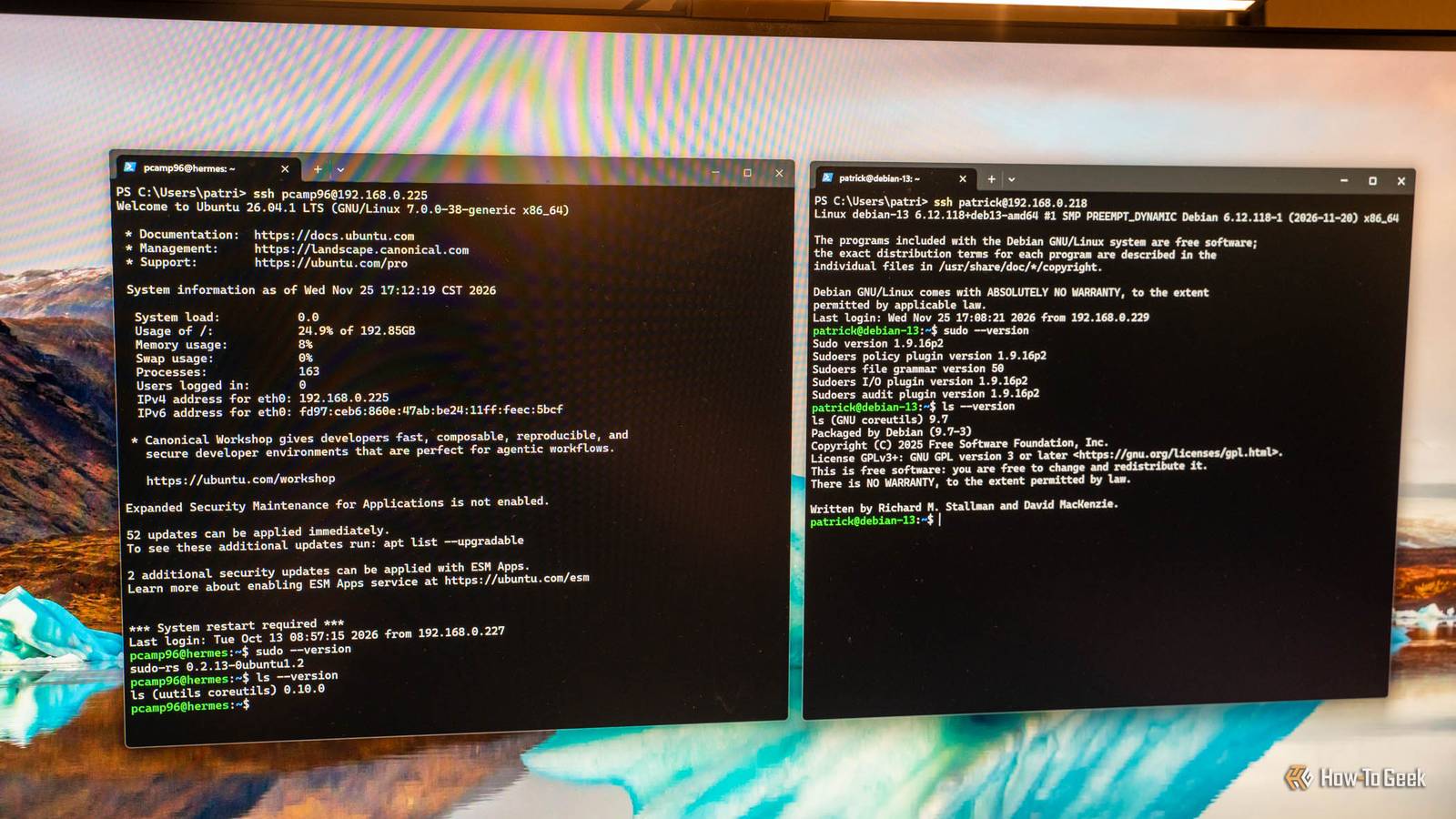
The problem is, with Ubuntu 25.10 and 26.04, the changes started, and Ubuntu 26.10 finished the move with more packages switching to Rust-built replacements that no longer line up with Debian.Ubuntu's extras now replace Debian's basics My Ubuntu installs now run Rust versions of ls and sudo It might not seem like that big of a deal, but Ubuntu is replacing core functions of the operating system with all-new Rust-based versions.This includes ls and sudo.
Yes, sudo, a core functionality of Ubuntu, is no longer the same command it used to be.It’s now based on sudo-rs, which is largely compatible with traditional sudo, but it still isn't the same that it always has been.The problem isn’t necessarily that Ubuntu is moving away from Debian’s tools, but that they’re moving to an essentially experimental replacement that isn’t a direct drop-in replacement for many situations.
While on the surface you still just type sudo or ls, the utilities function slightly different than they always have.This means that just because something works on Debian now, or worked on Ubuntu in the past, does mean that it will work on Ubuntu now.Also, these are just a few of the utilities that have moved to Rust-based versions.
Starting with Ubuntu 26.10, cp, mv, and rm are also moving to Rust-based utilities from the standard Debian versions they have been for decades.This move to uutils actually broke Ubuntu’s unattended-upgrades function in Ubuntu 25.10, which made users quite unhappy (for good reason).It technically is possible to move back to the GNU Debian-based utilities right now, but, at some point, it won’t be advisable to do so.
Debian asks a few more things of you on day one But it’s not changing who it is at its core Debian 13 is sticking to its roots because, well, it Debian.It’s the base that Ubuntu has always based itself on.There are definitely some differences between Ubuntu and Debian, though.
For starters, Debian doesn’t add your user to sudo if you set a root password during setup.Unattended-upgrades isn’t enabled (or even installed) by default.There are no PPAs and no do-release-upgrade available on Debian, either.
These are unique to Ubuntu/Launchpad, but you could always do something like change your sources and run apt full-upgrade to get a similar experience to do-release-upgrade.One other thing that you have to do on day one with Debian is install newer Nvidia drivers as it only ships with the 550 driver by default, which doesn’t support Blackwell graphics cards.However, these are all simple things to change and you might not even to change them.
For example, my Proxmox server runs on Debian and there’s no sudo because there’s no need for it.I only have a root user and it’s locked down to SSH authentication only so there’s no need for a sudo password in that environment.So, while Debian might require a little more up-front configuration, it still keeps its core utilities set to tried and true versions instead of trialing experimental versions on a production release.
I’ve been an Ubuntu Server user for over 14 years, but Debian might finally win me over here Back in 2011/2012 when I chose Ubuntu as my primary server operating system, it was because it took Debian, a well-supported and stable operating system, and added a few things that made it simpler to use.I’ve just stuck with it for a decade and a half out of convenience because I it.With the changes that Canonical is making here, though, I’ll be heavily considering making a change myself and moving to Debian as my main server operating system going forward.
Most of what I know about Linux is a direct transfer from Ubuntu to Debian, so it wouldn’t be like moving to Arch or Fedora, which is something I am up for.
Read More