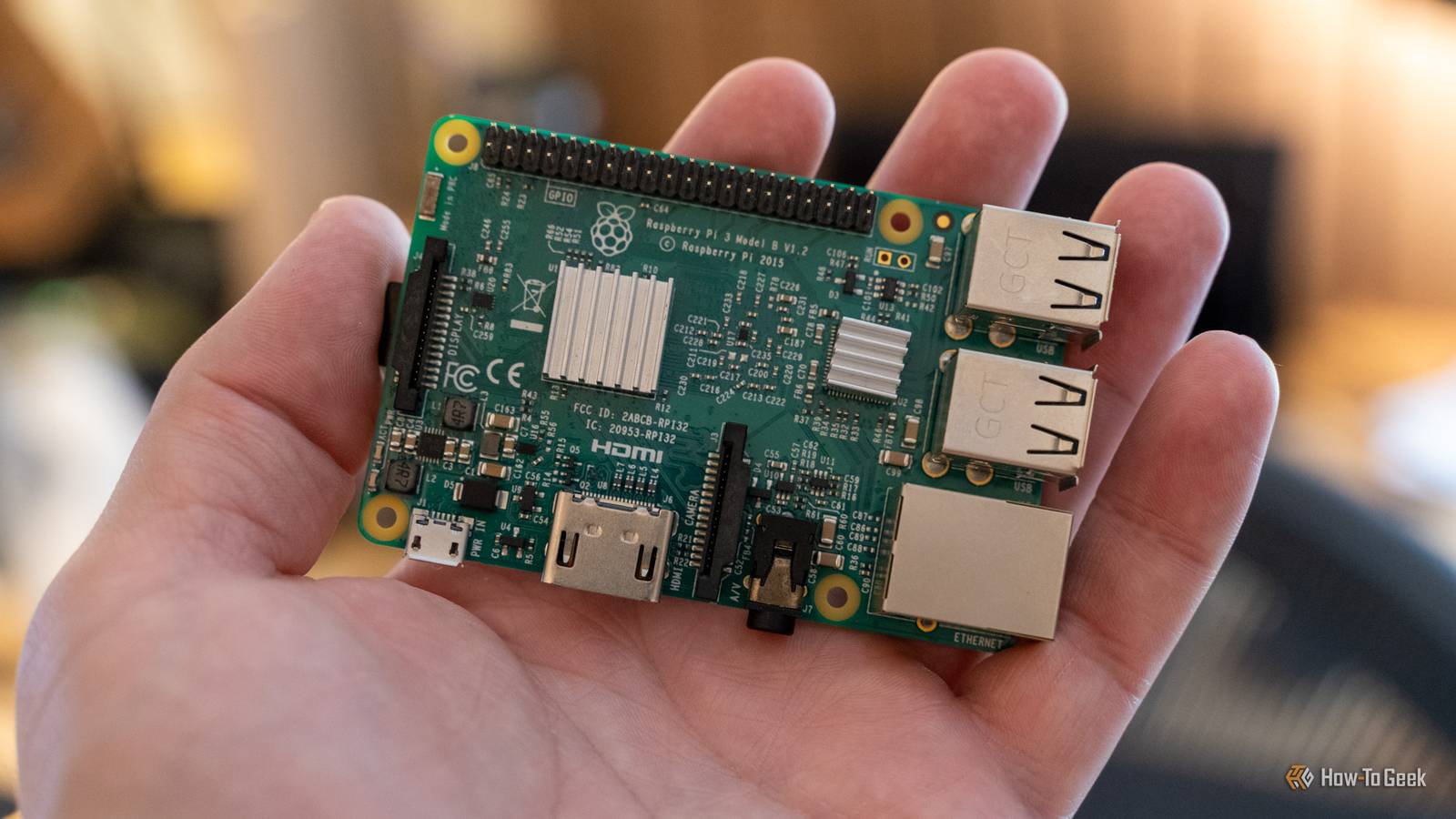
The community often recommends self-hosted apps like Pi-hole, Vaultwarden, Audiobookshelf, and more.These aren't the only options; plenty of other self-hosted tools can do truly ingenious things.Many of them are lightweight enough to run on that old Raspberry Pi you should still have in your drawer.
Identify the birds you can hear around your home BirdNET-Go can recognize birds by their songs Close BirdNET is a free tool that uses deep learning and neural networks to identify birds based on audio recordings of their singing.It's the same model used in popular birdsong recognition apps, but you can use BirdNET-Go to run your own open-source bird identification system on your Raspberry Pi.All you need to do is hook up a microphone to your Pi, and the software can listen continuously for birds outside your home and analyze the audio to identify species using its extensive database.
I have BirdNET-Go, an actively maintained alternative to the original BirdNET-Pi, running on a Raspberry Pi 3B+, and it works like a charm.I even built a game to help me learn the different bird calls.Related Here's how I turned a Raspberry Pi into an in-car media server You don't need a record player in your trunk to take your analog favorites with you.
Posts 12 By Nick Lewis Discover what wireless devices are broadcasting Use rtl_433 to decode radio signals from nearby gadgets A lot of everyday devices communicate using radio signals rather than Wi-Fi or Bluetooth.Products such as wireless weather stations, tire pressure monitors, and even some doorbells can transmit data over radio.You can use rtl_433 to receive and decode transmissions from these devices.
It's open-source software that you can run on a Raspberry Pi connected to a compatible software-defined radio (SDR).Your Pi can then publish the decoded data to an MQTT broker, so you can access the readings from your weather station or other radio devices in your smart home software.Save your computers when the power goes out Network UPS Tools can shut everything down safely An uninterruptible power supply (UPS) provides battery backup power that can keep your devices running in the event of a power outage.
For example, if your computer suddenly loses power instead of shutting down properly, it can lose data or corrupt the file system.A UPS can keep the computer running even if there's no power in your home.The problem is that even a UPS will run out of power eventually.
If your home's power hasn't returned, then your computer will still lose power at some point, with the same risk of data loss or corruption.Network UPS Tools (NUT) is open-source software that monitors compatible UPS hardware and can safely shut down hardware before the UPS power runs out.NUT can read information such as how much battery power remains in your UPS, so it doesn't have to shut down devices as soon as the UPS kicks in.
It's a great way to use a cheap Pi to look after your more expensive devices.Make your Pi watch websites for you Use changedetection.io to detect when something changes Promotional sales events such as Amazon Prime Day can often be misleading.Products that are discounted for these events may actually have been available at lower prices in the past.
What seems like a bargain may actually be more expensive than before.A simple solution is to use changedetection.io, which you can run on an old Raspberry Pi.It has one main job: watch designated web pages and identify when the page content changes.
You can monitor the price of a product on a web page, for example, and be notified when the price changes.It's useful for other things too, such as getting notified when a product comes back in stock, checking when tickets go on sale, or knowing when a software update is released.You can get alerts via email or other messaging platforms, so you don't have to keep checking the same pages over and over.
Turn your old Pi into a watchdog for your new tech Uptime Kuma can alert you when your other hardware fails This is another option that's similar to NUT.While NUT monitors power to your other hardware, Uptime Kuma checks whether your servers and network services are responding.You can run Uptime Kuma on a Raspberry Pi and use it to monitor multiple devices and services around your home.
It supports multiple monitoring methods, including HTTP requests, DNS queries, and TCP connections.When a monitored service can't be reached, Uptime Kuma can send notifications via email, Discord, and More.I have it set up to send me a message on Telegram when a monitored service goes down.
Even an old Raspberry Pi can do a lot We live in interesting times, where a Raspberry Pi can now cost over $300.You don't need a Raspberry Pi 5 with 16 GB of RAM to run the services above; that old Raspberry Pi in your junk drawer may be all you need.
Read More