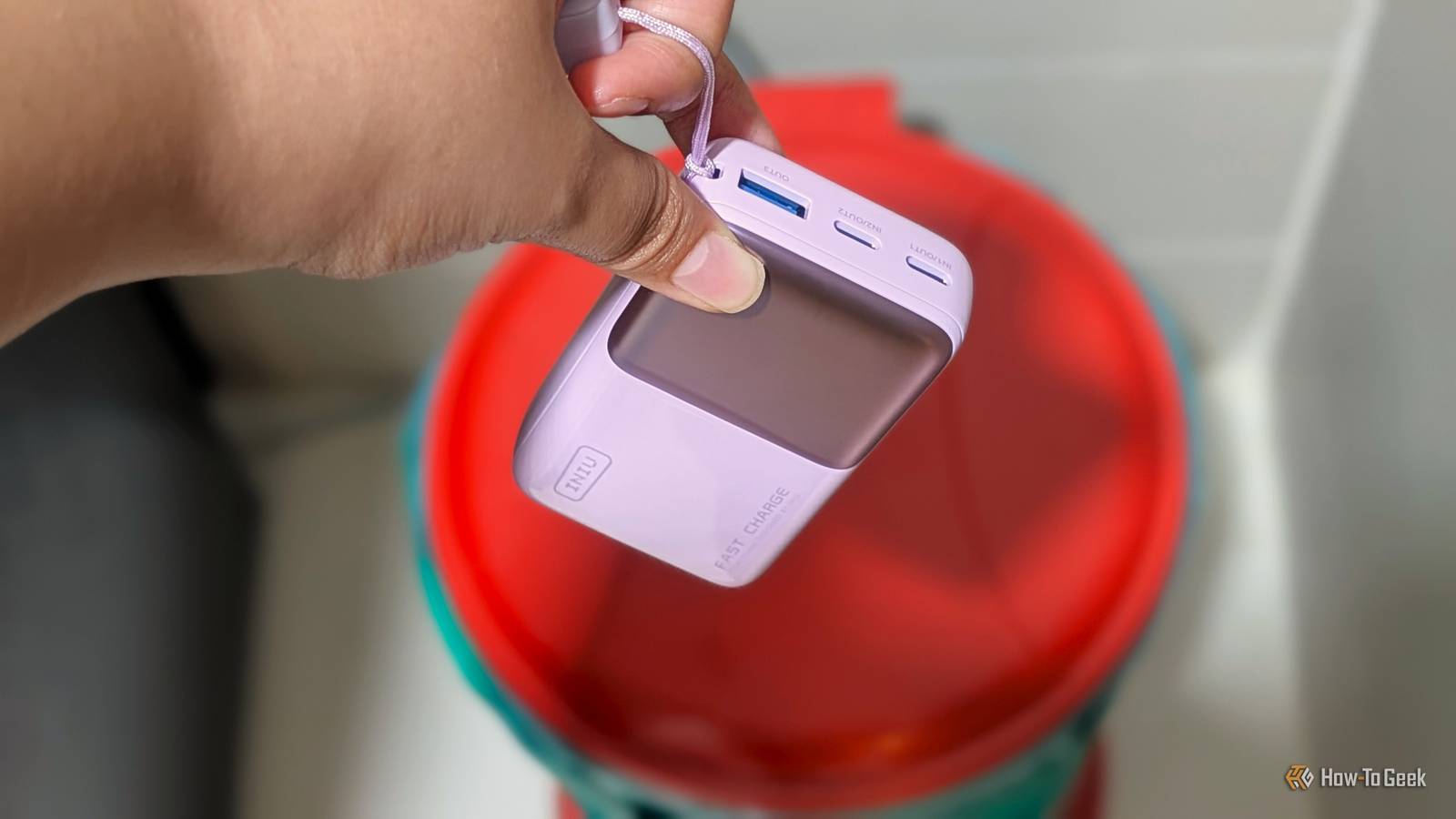
Batteries have a finite lifespan, even rechargeable ones.Unlike dry-cell batteries, though, you can't just chuck your old power bank in the garbage bin.Most power banks are made of lithium-ion.
They have a liquid electrolyte, which makes them highly flammable from the get-go, so tossing them in a bin could potentially cause a fire.There are several safe ways to dispose of an old power bank that you should follow.Add How-To Geek on Google Add as Preferred Source Follow on Google Discover Send your power bank to the battery graveyard The proper resting place for a dead battery Once you have confirmed that your power bank is unusable, the next step is to find the appropriate disposal site for it.
In the U.S., state laws regarding battery disposal vary state by state.Lithium-ion batteries, in particular, are singled out by law.Some states allow all types of batteries to be thrown with regular trash.
Most don't.Recycling laws also depend on the state you're in.This is why your first order of business is to head to the official website of your local town council and check the laws concerning lithium-ion battery disposal.
You can also ask the fire department about it.If there is a local lithium-ion battery disposal center or drop-off point, you're golden.If there are no official drop-off points or locations, look up recycling centers that accept lithium-ion batteries.
Lithium-ion batteries are recyclable, but the cost of doing so is high, so not many centers accept them.Do not go to a recycling center before checking with them beforehand.If they decline, you can look up other organizations that accept old lithium-ion batteries.
Hardware stores like Lowe's and Home Depot often partner with NGOs such as The Battery Network — previously known as Call2Recycle — to help you dispose of old batteries.Look for similar partnerships and events, or ask the retailer that sold you the power bank for guidance.Some power bank brands like Belkin even have buyback programs designed to cut down on e-waste.
Gauge the health of your power bank Not all that is old needs to be thrown away Close Unsure about the wellness of your portable battery? There will always be clear signs that the power bank you are using is dying on you.Once the clock runs out, a power bank or battery pack starts to swell up, overheat, or stop retaining charge.Swelling is a red flag and the most dangerous symptom of a dysfunctional power bank.
A battery like that could explode at any time, so you need to address it urgently.Overheating is almost as dangerous, because this could also lead to combustion.With lithium-ion batteries, all roads can lead to explosions.
A more subtle symptom of a failing power bank is the loss of its ability to retain charge.Over time, you might notice you need to charge your power bank more often.The amount of power it delivers will also decrease.
A power bank that once charged your phone to 100% might not do that anymore, even when it's fully charged.Also keep an eye out for charge time.If you need to recharge your portable battery for much longer than before, it's a sign that it needs to be canned.
Other obvious signs of degradation include strange noises, malfunctions, loose ports, dents and cracks, sparks, breakage, and other unusual behaviors.Related What Causes a Battery to Swell and How You Can Prevent It Keep your battery alive longer! Posts By Shan Abdul Important things to know about power banks Don't wait around for your power bank to fail.Make sure you buy a good-quality one that you can rely on.
A dependable power bank won't come cheap, but it's much safer and lasts longer.And even if you prefer a more affordable Chinese model from an off-brand retailer, look for the CCC logo when buying a power bank.Also called the 3C mark for short, the China Compulsory Certificate is considered the gold standard when it comes to portable batteries in China.
The Chinese government banned all non-CCC power banks on airplanes last year, so it really goes to show that uncertified ones pose higher safety risks.Other key logos or markings that indicate vital certifications include the Federal Communications Commission (FCC) logo and UL 2056 certification, which are legally necessary for a power bank to be sold in the U.S.market.
A lot of brands advertise their portable batteries as "TSA-approved", but the Transportation Security Administration doesn't actually issue any such certifications, so don't rely on such claims alone.All this signifies is that the manufacturer claims to have followed all the safety regulations and guidelines the TSA outlines for their product.There is no way to verify this, so don't take a power bank brand's word for it.
Read More