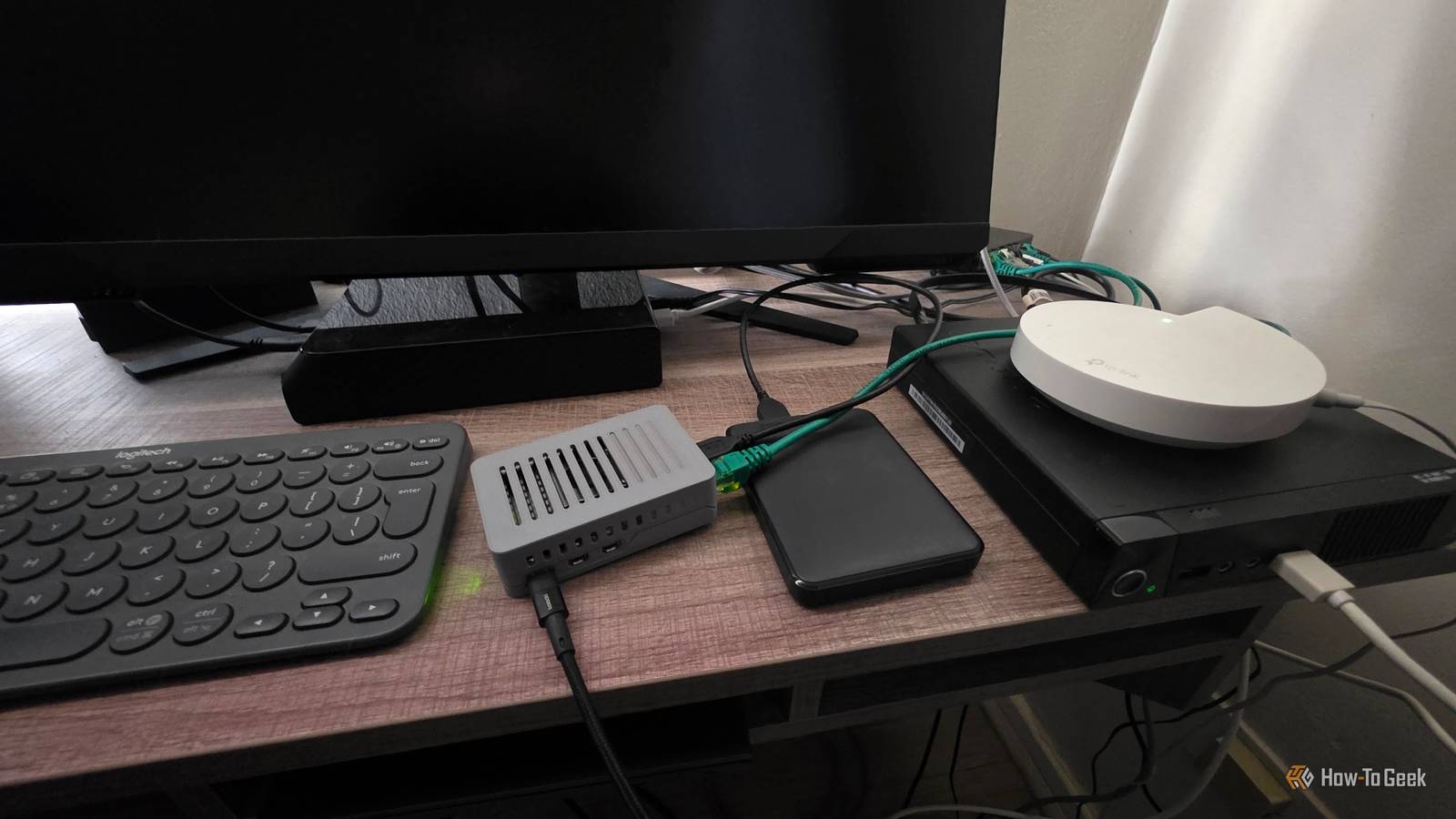
If you're like me, you have more Raspberry Pis than you have monitors, or even monitor inputs.They tend to pile up as you buy an old Pi 3 here or a cheap Pi Zero there.Add How-To Geek on Google Add as Preferred Source Follow on Google Discover Thankfully, you don't actually have to connect a monitor, keyboard, or mouse to a Raspberry Pi to make it useful.
Just give it power and an Ethernet connection, and you can run all sorts of services without ever directly connecting peripherals to the little machine.My preferred way to do this is via the official Raspberry Pi Imager app.I installed Raspberry Pi OS Lite (which has no GUI) and pre-configured the SSH setup.
Boot up the Pi and just connect to it using the terminal app of your choice.But what should you run? Luckily, I have some prime options for you.Block unwanted domains across your home network Throw those ads into the hole Close You may already have heard of Pi-hole, which is probably one of the most popular uses for a Raspberry Pi.
This software uses DNS filtering to block ad-serving domains and trackers.You can install Pi-hole completely headlessly and access the management dashboard remotely.Running services like these in headless mode with no desktop environment really helps performance on the Pis, especially if you're using a model with limited RAM.
It also makes it easy to get the optimal setup.Plug the Pi directly into one of the Ethernet ports on your main router and power it via USB.If your router has a USB port you don't use, you could theoretically just tap some power directly from that.
Give your smart home a permanent brain One step closer to Jarvis I've always believed that if your "smart" home needs an internet connection to work, then it's not smart at all.The "brain' of your home should live within its walls, and a headless Raspberry Pi can be the perfect solution to make that a reality.The key piece of software here is Home Assistant, which many of us at HTG swear by.
Once you install Home Assistant OS using the Raspberry Pi Imager, you'll complete the setup of the device remotely.Have a quick read of the official Home Assistant Raspberry Pi instructions to see how it works, but it's probably one of the easiest headless services to set up.Turn a USB drive into shared household storage Cheap and NASty Your Raspberry Pi has USB 3 ports, which means it can access fast USB storage.
Lots of people are realizing they need local network storage, especially with all the skepticism about cloud service reliability and privacy.But have you seen the price of a proper dedicated NAS? Luckily, with a Raspberry Pi and a USB storage device, you can just roll your own rudimentary NAS.My colleague Patrick Campanale built a portable battery-powered NAS using a Pi, and another colleague, Nick Lewis, built a low-power NAS using one.
The least sophisticated way to do this is simply by creating a network share on your Pi, the same way you would on any computer.The more interesting and sustainable method is to use openmediavault.Control a compatible 3D printer from your browser Keeping an eye out for that dreaded spaghetti Right now you might think that you can already control and monitor your 3D printer from your browser.
Yes, it's true that many modern, mid-range to high-end 3D printers run their own print server software and let you control what's going on from any browser on your LAN.The printers we're talking about here don't have Wi-Fi or even built-in cameras.These are the workhorse, bed-slinging machines that make up many a print farm.
Thanks to software called OctoPrint, a Raspberry Pi becomes an upgrade almost every 3D printer owner needs.This software, combined with a Raspberry Pi, effectively upgrades your "dumb" 3D printer to the same sort of device as the new slick smart printers.You can start and stop prints, attach a camera and monitor your prints in real time, and send G-Code remotely, instead of carrying a flash drive over and plugging it in.
Just don't lose your head Headless setups on Raspberry Pi computers are great because they save you both computational resources (RAM ain't cheap!) and the cost of peripherals.It can be a little weird using a terminal to SSH into a remote computer on your network at first, but if you just follow the step-by-step instructions for these projects, you'll be up and running in no time.It's even easier these days, because I cheat by having ChatGPT open next to my terminal, helping me through any troubleshooting as I follow the installation guides.
But once you get your headless SBCs running, you'll soon have a whole network of handy little machines.Serving up local goodness, with no dependency on the cloud.
Read More