Buying a hybrid is a major step toward saving money at the pump, but simply owning the vehicle is only half the battle.While the hybrid system and its corresponding technology do most of the work, you can put a few more fuel economy points on the board by having a thorough understanding of how to strategically use that technology to your advantage while driving.Keep in mind that maximizing your hybrid’s efficiency isn’t about being perfect on every single trip, but rather about building a new set of "muscle memories" behind the wheel.
It’s about finding places along your daily commute where you can make your vehicle’s hybrid technology work for you.From how you approach a red light to borrowing from the hypermiling playbook, here are five proven strategies to help increase the fuel economy of your hybrid.5 Master the art of regenerative braking Stay "in the zone" for as long as possible Think of regenerative braking as a hybrid’s way of recycling its own movement to maximize efficiency and give you additional fuel economy gains over time.
In a normal gasoline vehicle, braking creates friction between the pads and rotors that turns motion (i.e., kinetic energy) into heat.That heat disappears into the air and is, for all intents and purposes, lost.In a hybrid vehicle, the electric motor serves a dual purpose, helping recover energy that would otherwise be lost.
While driving normally, the electric motor helps propel the wheels forward, but when you slow down, it acts as a generator, converting the otherwise wasted energy and sending it back to the battery in order to charge it.To get the most out of regenerative braking, imagine you are coasting gradually into your stops.The goal is to keep the brake pedal pressed lightly and steadily for a longer distance.
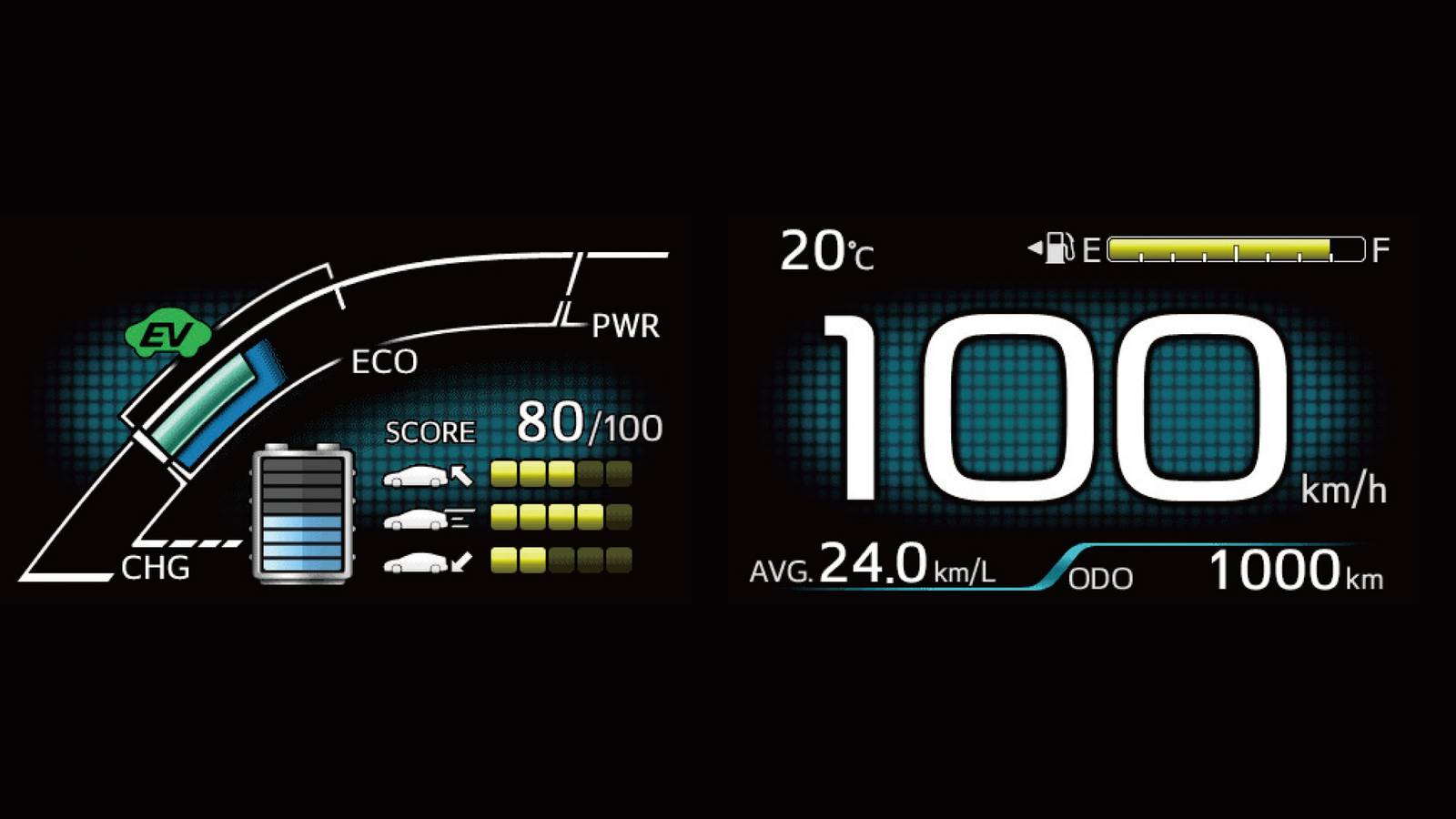
If you look at your dashboard, you will see a needle or indicator move into a charging zone.Try to stay in that zone for as long as possible, as you can use battery power gained from regenerative braking later for electric-only acceleration.Regenerative braking works best in the city and around town, where stop-and-go traffic is common.
If there are roads on your commute where you can look ahead a good distance as a light is turning red or before a stop sign, that’s an ideal time to use regenerative braking.In addition to increasing your gas mileage, regenerative braking will help your pads and rotors last longer.Like a gasoline vehicle, sudden braking in a hybrid will also affect your fuel economy over time, so try to avoid it if you can.
Regenerative braking cheat sheet Prompt Action Anticipate Stops Look two to three blocks ahead for red lights or stop signs.Light & Long Use light, steady pressure on the brake pedal for a longer duration.Coast Early & Often Lift off the gas as soon as you see traffic slowing down.
Monitor the Dashboard Keep your braking force within the "CHG" or green zone on your gauge.4 Practice the Pulse and Glide method Works best on an open road With a gasoline vehicle, one of the most efficient ways to drive is to maintain a steady speed and allow the transmission to stay in its overdrive gears.With a hybrid vehicle, focus instead on the "Pulse and Glide" technique, which leverages the hybrid's ability to shut off the internal combustion engine while in motion.
As the name suggests, it's a driving method in which the hybrid vehicle alternates between acceleration (Pulse) and coasting (Glide) rather than maintaining a constant speed.Generally speaking, the technique works best between about 25 mph and 55 mph on relatively clear roads, although it's possible to effectively Pulse and Glide with late-model hybrids at higher speeds.During the Pulse portion, look for stretches of open road where you can accelerate to a higher speed (similar to regenerative braking, think of acceleration as a linear and steady process rather than a sudden one).
Once up to speed, the Glide portion is just as it sounds.Take your foot off the accelerator and coast, which will cause the gasoline engine to shut off.Once you are coasting, reapply just enough pressure to the accelerator to keep your vehicle moving using only the electric motor.
Once your speed drops too low for the road you are on, just rinse and repeat.By mastering this rhythm, you reduce the total time your engine is running, which can add up in fuel savings over the course of a week (or month, year, etc.) on your daily commute.Use your vehicle’s hybrid-specific gauges and displays to fine-tune your technique.
Pulse and Glide cheat sheet Phase Action What Your Vehicle Does Pro Tip Pulse Accelerate (about 1/2 to 3/4 throttle) up to your target speed.Engine runs in its "efficiency sweet spot" to build momentum.Avoid flooring it, but don't be too lax; the engine is more efficient under a moderate load.
Trigger Briefly lift your foot off the accelerator.Signals the computer to shut down the gasoline engine.Lift up for a split second only—just enough for the "EV" light to pop on.
Glide Reapply light pressure on the accelerator to maintain speed.The car coasts using the electric motor and nothing else.Imagine there is an egg under the pedal.
Use just enough pressure to keep the car rolling.Reset Once your speed drops five to 10 mph below your target, start a new Pulse.Engine restarts to create more momentum for the next Glide.
As a whole, Pulse and Glide works best on flat roads or slight downhill grades.3 Think about the climate control You can always add another layer! Setting aside the comfort aspect here, you can pull a page from old-school hypermilers and keep your AC off during the summer and avoid using your heat during the winter.In essence, the hybrid system will engage the gasoline engine if needed in order to meet the temperature specified by the driver for the interior, be it cooler or warmer.
Personally, this seems a bit easier in the winter as you can bundle up with a big coat and gloves.In the summer, you might have to be prepared to sweat a little! If you don’t want to go that far, try adjusting the climate controls ever so slightly to reduce demand on the hybrid system.For example, instead of setting your cabin temperature to 70 degrees, try 72 degrees.
During the winter, rely on your heated seats over the cabin heater, if your hybrid is equipped with them.While the maheater may require the engine to maintain cabin temperature, the heated seats draw power directly from the battery.Try driving more often in Eco mode as well, which optimizes heat and AC output for fuel economy.
Related How hybrid vehicles are proving more reliable than gas-only cars Hybrid tech is quietly rewriting the reliability playbook.Posts By Tyler Dupont 2 Play with the drive modes Eco mode is ideal Most modern hybrids have a drive mode selector, but these are sometimes treated as "set it and forget it" features rather than tools for increasing fuel economy.As mentioned above, Eco mode is generally your best bet for daily commuting, as it intentionally tames throttle response to keep the gasoline engine from turning on.
While schools of thought vary on when to use Eco mode and its effectiveness in certain situations, in theory, you should be able to use it often.On many late-model hybrids, Eco mode can be engaged under a range of circumstances, from low-speed situations like navigating a residential neighborhood or rolling through a crowded parking lot, to highway driving.Eco mode may also encourage safer, more intentional driving, in addition to improving fuel economy.
Since Eco mode adjusts the engine’s parameters towards efficiency, it naturally lends itself to a defensive driving mindset.1 Check your tires Age-old advice is sometimes the best advice When a tire is under-inflated, it loses its rigid shape and "slumps," creating a larger contact patch with the road.This increases what is known as rolling resistance, meaning the hybrid system works harder to overcome the added friction from under-inflated tires.
While some degree of rolling resistance happens each time you drive, the idea is to keep it as minimal as possible.One of the best ways to reduce rolling resistance is by keeping your tires at the correct pressure.Doing so can improve your gas mileage by up to 3.3%, according to the U.S.
Department of Energy.AstroAI L7 Mini Tire Inflator Max Pressure 150 psi Capacity Up to 8 car tires (single charge) This AstroAI mini tire inflator is perfect for keeping in your glove box when traveling.It's portable and battery powered, meaning you don't have to plug it in to use it.
Plus, you're able to set the exact tire pressure you want it to inflate to and it'll automatically stop when it reaches that pressure. Weight 560 Grams Battery Type Lithium-ion $43 at Amazon Expand Collapse The recommended tire pressure for your vehicle is on a placard or sticker inside the driver’s side door jamb.Heat from your tires while driving can alter the pressure reading, so it’s better to check your tires in the morning after your vehicle has been sitting (if you have already driven, wait a few hours and then try again).Investing in an affordable battery-powered inflator with a digital gauge can make this process easier.
Once you attach the hose to your valve stem, the digital gauge will give you an instant reading.Most tire inflators work by pressing a single button and can even shut off automatically once the target pressure is reached.Most also come with a range of attachments, a built-in flashlight, and a storage bag.
A common mistake is inflating tires to the pressure listed on the tire sidewall.That number is actually the maximum pressure the tire can hold, not the optimal pressure for your hybrid.Combine these tips for more MPG from your hybrid vehicle As we discussed at the beginning, maximizing your hybrid’s efficiency isn’t about being perfect on every single trip, but about building new habits behind the wheel.
Although techniques like Pulse and Glide might feel a bit strange at first, they will become second nature after a while.Over the course of a year, these small adjustments can add up to countless miles of "free" driving and significantly fewer trips to the gas station.By working with your car’s hybrid technology instead of against it, you’re not just saving money—you’re mastering a smarter, more sustainable way to drive.
Read More