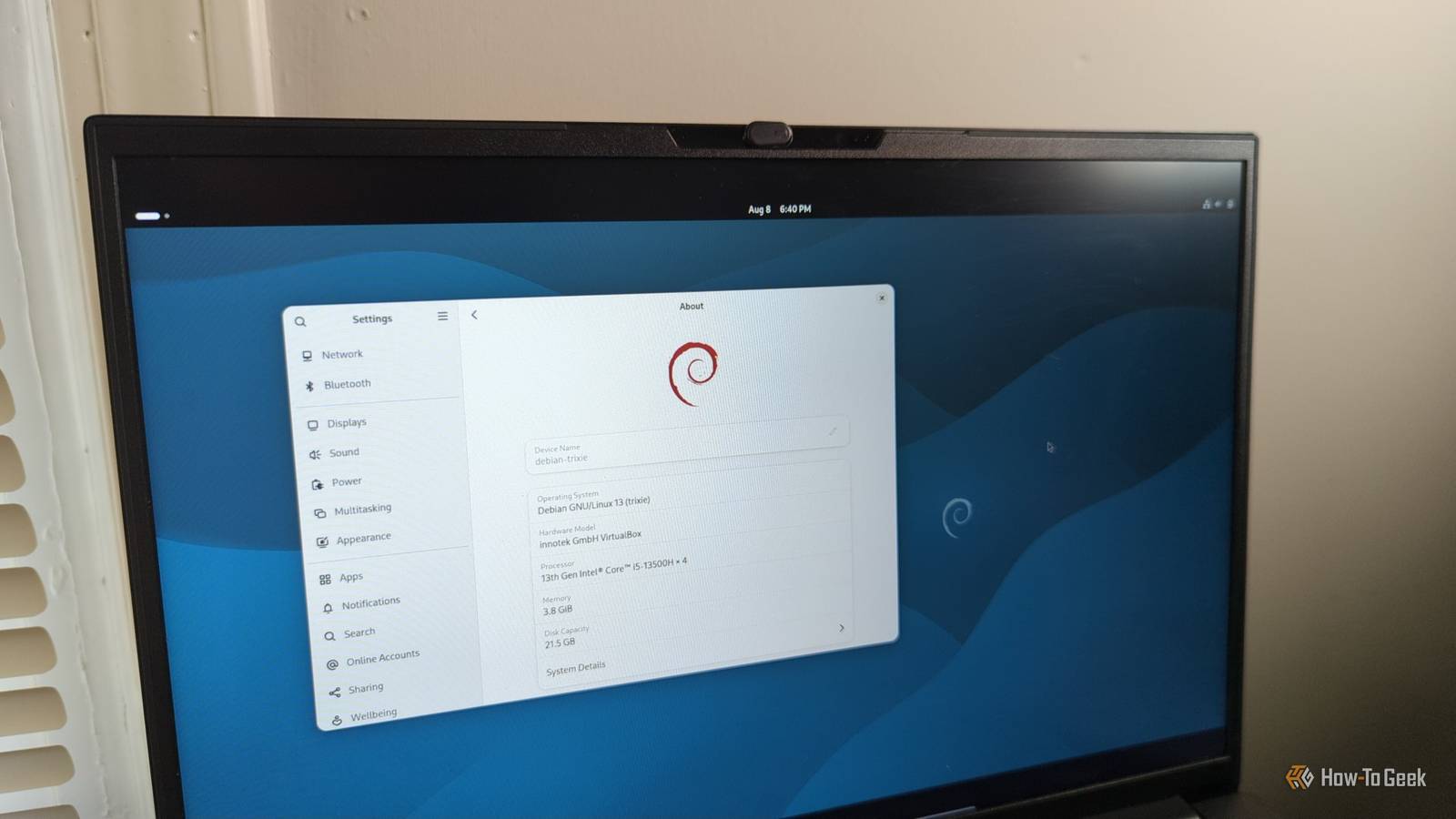
Ubuntu has long been the standard recommendation for people new to Linux, though in recent years that advice has come into question.While more people are touting Fedora as "the everything distro", I think that the title really belongs to Debian.Its tagline, "the universal operating system," is no hyperbole.
Debian is easier to install than ever Graphical install and Wi-Fi drivers simplify things Debian in the past has had a reputation of being difficult to install.I have some first-hand experience.Debian was the first distro that I actually installed on my computer.
While I was comfortable with the text-based installation program that was the default back then, I could see how people used to Windows could be intimidated.Now Debian has an optional graphical installer.It still requires some technical knowledge, such as how your disks are laid out, but that's true of any operating system installation.
While Debian has been known in the past for its strong stance toward free software, it's made a compromise by allowing proprietary Wi-Fi drivers in the installation program.This is helpful because more people install it on laptops, and this makes it possible to use the smaller "netinst" images.Choice of desktop environments Your favorite desktop is right there in Debian Unlike other Linux distros that are tied to a particular desktop, Debian makes fewer assumptions about your environment.
In the installation menu, you have a choice of GNOME, KDE Plasma, Cinnamon, MATE, and Xfce.GNOME is the default choice, but my go-to is Xfce, because it can be installed on less powerful machines.You can even install it without a desktop if you want to.
This makes Debian a popular choice for servers.It's possible to install any desktop on any distro, but Debian, leaving the choice up to you, is why so many Linux power users swear by it.Choice of different versions You can choose Debian fast or slow What makes Debian great is that you don't have to just install the stock "stable" version.
While the stable version is great as a daily driver because it's reliable and runs on a wide range of hardware, you can get versions with newer software.You can install the "testing" and "unstable" versions to get more bleeding-edge software.This appeals to developers and power users.
The former actually do need newer versions of the software they work with daily, such as libraries and programming tools.Other people just need the latest and (supposedly) greatest.You don't have to go to another distro to get this.
You just tweak some configuration files, update your packages, and reboot.With the testing and unstable versions, Debian is not only an alternative to its offshoot Ubuntu, but can also compete with Arch Linux.I like Arch Linux, but Debian offers much of the same advantages with a system that takes care of more housekeeping tasks and has a standard installation process.
With newer tools like Pixi, you can install more programming tools on top of a stable system, which lets you have the best of both worlds.Package management Not just APT anymore Debian popularized the idea of a package management system in the Linux world with its APT system.Instead of downloading source files and compiling them, and doing the same with libraries and programs that a program needed, you could have APT download precompiled binaries and deal with any dependencies automatically.
While APT is still very good, other alternatives have come on the scene, including Flatpak and the controversial Snap system developed by Ubuntu's developer, Canonical.The latter two package the dependencies together with the main program.They also offer newer versions of programs, which appeals more to desktop users.
There are also developer-focused package managers such as Anaconda and Pixi.These keep common programming tools updated more quickly than Debian's packages.I'm partial to Pixi for managing my Python data science environment.
This makes Debian a viable alternative to distros like Fedora that have a faster cadence for base packages.With another package manager, I can have the advantage of newer packages for things I care about while maintaining a reliable, stable system.Basis for other distros Debian can take many shapes Ubuntu is the best-known distro that's based on Debian.
Ubuntu has some variants of its own, including Kubuntu, Xubuntu, and Linux Mint, Debian is still well-known as a basis for other Linux distros.Deals Save Big on Computers & Work Setup Deals Today Explore discounts on laptops, desktops, monitors, keyboards, docking stations, and developer-friendly peripherals to build a Debian-ready workstation.Browse offers on networking gear, storage, and productivity software to stretch your savings.
Deals Explore Computers & Work Setup Deals This is likely because Debian still has a reputation as a "difficult" distro, though it's getting easier to install and manage.Debian's malleability also means that people are willing to customize it and share the results.Some popular variants include MX Linux, Linux Mint Debian Edition, Raspbian, and others.
The very first distro I ever booted was Knoppix, a Debian-based distro that was one of the first "live" distros.This was called a "live CD," because that was the most popular OS installation medium back then.That would be a CD-ROM and not a DVD, as most operating system images even in the 2000s were able to fit on a single 700MB CD.
Apart from custom tools and programs, you can get similar experiences from the stock Debian, but these variants can be convenient when you don't have enough time for a standard Debian installation.The quiet, reliable everything, everywhere distro While Debian is still trying to shake its reputation as a distro for Linux and free software diehards, its flexibility means it can handle almost anything you can throw at it.It can handle anything from a Raspberry Pi to a rack-mount server with aplomb.
Debian as a community project will be around for a long time.Dell XPS 13 Plus with Linux Operating System Ubuntu Linux 22.04 LTS CPU 13th Gen Intel Core i7-1360P GPU Intel Iris Xe Graphics RAM 16GB DDR5 Storage 512GB SSD Weight 2.71 lbs The Dell XPS 13 Plus with Linux combines powerful hardware and a great screen in a lightweight, great-looking chassis to create a fantastic Linux laptop.$1399 at Dell Expand Collapse
Read More