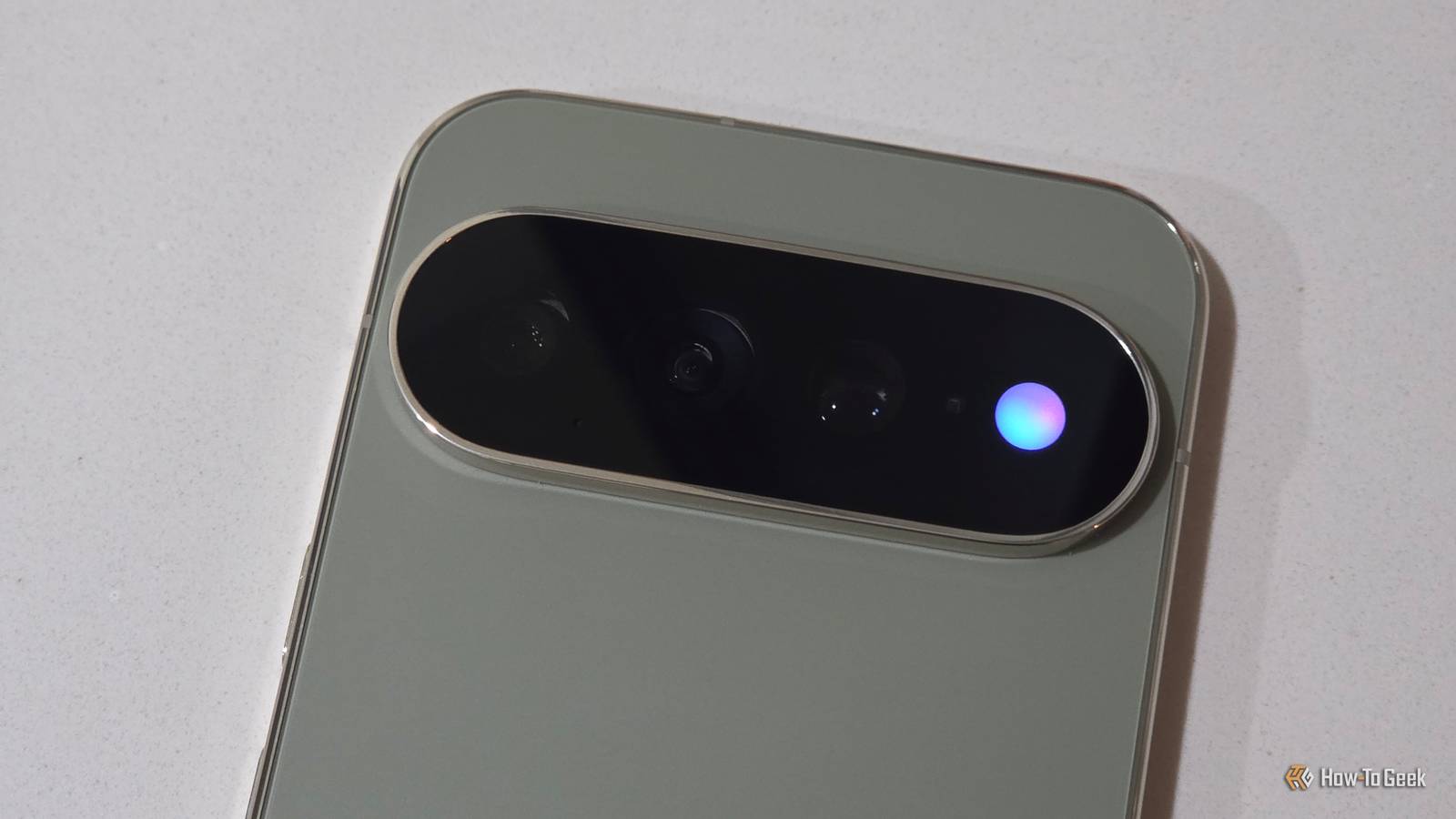
The Pixel 11 Pro and Pro XL bring back notification lights with a feature called HiLight.It's a nice touch, but Google isn't the first to modernize this idea, and its version currently trails what's already on the market.What is HiLight? A glowing ring built around the Pixel 11 Pro's camera flash HiLight is Google's attempt to revive the notification LED, a feature that used to be common on phones before AMOLED displays and always-on screens made it feel unnecessary.
On the Pixel 11 Pro and Pro XL, Google repurposed the LED built into the camera flash housing so it can glow in different colors and patterns, giving you glanceable information without lighting up the entire screen or requiring you to pick up the phone.The most visible use case ties into Gemini.When you prompt the assistant, the light shifts through different patterns to indicate whether it's listening, thinking, or responding, turning what used to be a purely audio or on-screen interaction into something you can register out of the corner of your eye.
Google is also using HiLight for calls, letting you assign custom colors to specific contacts so you can tell who's calling without turning the phone over.Google frames this as a way to stay connected without distraction, especially when the phone is resting face down on a desk or nightstand.Instead of a buzzing, screen-lit interruption, you get a quiet pulse of color that only escalates to something more if you choose to engage with it.
The company has also said more capabilities are coming, including notifications for messages from favorite contacts, suggesting HiLight is meant to grow into a broader notification system over time rather than launching as a finished one.It's a clever piece of hardware reuse, since Google didn't need to add new components to bring the feature to life.But as it stands today, HiLight is a fairly narrow implementation of an idea that other companies have been building out for years.
Where does HiLight fall short? Limited to three phones and a small handful of triggers The first limitation is availability.HiLight is exclusive to the Pixel 11 Pro and Pro XL, as well as the Pixel 11 Pro Fold, so anyone buying the standard Pixel 11 doesn't get it.That's a reasonable way to differentiate the higher-end models, but it also means the feature Google is using to market the whole lineup is unavailable to most buyers.
The second issue is scope.At launch, HiLight only reacts to two things: Gemini's listening and response states, and incoming calls from contacts you've assigned a color to.It still doesn't support the kinds of notifications people rely on most, like messages, calendar reminders, or third-party app alerts.
Google has said this is coming, but for now, HiLight functions more like a proof of concept than a fully useful feature There's also the matter of hardware design.HiLight uses a single LED zone wrapped around the camera flash, which limits how expressive the lighting can be.You get color and pulse patterns, but not the kind of segmented, multi-zone lighting that can represent more complex information at a glance, like a countdown or a progress indicator.
Finally, HiLight only works when the phone is face down, which mirrors the same constraint that made old notification LEDs less useful once phones started living in pockets and bags rather than sitting screen-up on a desk.If your phone isn't positioned just right, the feature does nothing, and no companion app or settings menu lets you customize behavior beyond the contact colors Google has already built in.What are competitors doing? Nothing's Glyph interface set a much higher bar already Close Google isn't the first phone maker to bring notification lighting into the modern era.
Nothing Phone has built its entire brand identity around the idea with its Glyph Interface, which debuted on the original Nothing Phone in 2022 and has been refined across several generations since.Instead of one lighting zone, Glyph uses (depending on the phone) multiple independent LED segments on the back of the phone, allowing far more expressive patterns than a single ring around a camera lens.Nothing also went further on functionality.
Its Glyph Toys let you turn the lighting system into small interactive tools, including a visual countdown timer, a battery meter, and a flip-to-silence indicator, all controlled through light segments rather than the screen.Perhaps more importantly, Nothing opened a Glyph Developer Kit, letting third-party apps hook into the lighting system and trigger their own custom patterns.That means the feature isn't limited to whatever notifications the manufacturer decided to prioritize at launch, which is exactly where HiLight currently falls short.Other companies have experimented with similar ideas in different forms.
Asus has used RGB lighting on its ROG gaming phones for alerts and ambient effects, and we've seen some phones do full-blown back displays.None of these approaches are identical to HiLight, but they demonstrate that the general concept of ambient, screen-free notifications has already had several years to mature elsewhere.Google Pixel 11 Pro Brand Google SoC Google Tensor G6 Display 6.3-inch Super Actua display RAM 12 or 16GB Storage 256GB, 512GB, or 1TB Battery 4850 mAh The Google Pixel 11 Pro brings improved cameras, a faster Tensor G6 chip, and the HiLight notification LED to Android's official flagship phone.
See at Amazon $1099 at Best Buy $1099 at Google Store Expand Collapse Compared to Nothing's approach in particular, HiLight looks like a first attempt rather than a fully realized feature.It's restricted to two phones, a narrow set of triggers, and a single lighting zone, with no way for developers or users to expand it.Google may well build HiLight into something more capable, but for now, it's playing catch-up to an idea the rest of the industry already validated.
HiLight is a promising start, not a finish HiLight is a genuinely nice idea, and it's easy to see it growing into something useful.But in its current form, it's a narrower, less flexible take on a concept Nothing and others have already spent years perfecting.
Read More