My old 2-in-1 convertible laptop had been sitting unused for a couple of years.It's an old, underpowered machine with a cracked screen, so there wasn't much point in trying to sell it.It wasn't worth selling even for parts, and I couldn't find an affordable replacement screen to fix it so that I could at least watch movies on the go.
Add How-To Geek on Google Add as Preferred Source Follow on Google Discover I didn't know what to do with it until I realized I could install Ubuntu Server and turn it into a headless home server.It started as a little experiment to get me into homelabbing, but it turned out to be one of the best decisions I've made.That supposedly worthless laptop is now something my entire household relies on.
My old Windows 10 laptop was too slow, too hot, and eventually too broken to use It had been collecting dust for two years Close Before I get into how I repurposed this old laptop, let's go over the hardware.It's a Lenovo Miix 510 from 2016, equipped with an Intel Core i5-7200U, 4GB of RAM, and a 128GB NVMe SSD.By modern standards, it's an outdated, underpowered laptop.
Its processor isn't even officially supported by Windows 11.To be honest, it struggled with Windows 10, too.Its two-core, four-thread CPU is quite slow by modern standards, with a maximum boost clock of 3.10GHz.
The tiny heatsink and fan in this 2-in-1 convertible only make matters worse.The laptop constantly ran hot when I used it as a regular laptop (even after I replaced the thermal paste), but I didn't care too much.I bought it second-hand for cheap and just needed a basic machine to run a couple of Chrome tabs and watch movies, and its crisp 1920×1200 display was perfectly suited to the latter.
So, when the screen started intermittently turning black, and I accidentally cracked it while trying to pry the laptop open to reseat the display cable, I didn't miss it all that much.Its underwhelming performance and worn-out battery gave me a good excuse to replace it with a more powerful laptop.I wrote it off as e-waste, chucked it and its charger into a laptop bag, and put it away.
Ubuntu Server turned my underpowered, broken laptop into a proper home server It was time for a completely different purpose As it turns out, the old laptop I had dismissed as e-waste was way more useful than I initially thought.Someone with homelabbing experience would've recognized its potential immediately, but I had only gotten into the hobby that year, and this laptop was actually what got me started.I did some research and realized that its hardware was much more capable than I thought.
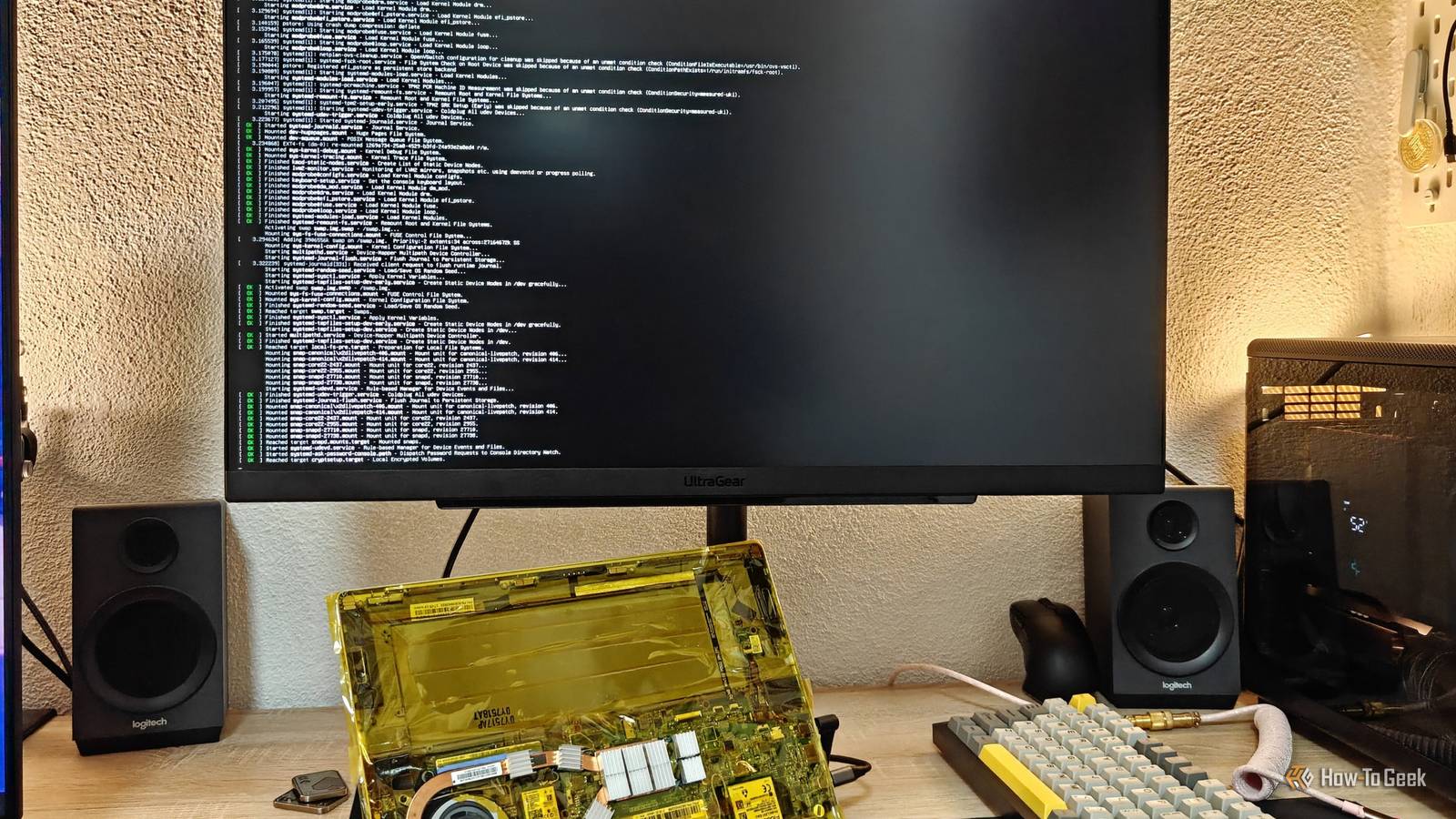
All it needed was Linux to make better use of its limited resources.I opted for Ubuntu Server because it's a lightweight version of Ubuntu that comes without a GUI (graphical user interface) by default, making it perfectly suited for a headless server (a server without a monitor or keyboard).Since it doesn't have a GUI, most things have to be done through the command line, but the advantage is that I can make the most of the laptop's limited hardware.
Related This $11 adapter turned my useless old laptop into a powerful home server The leap from e-waste to a home server is only a cheap dongle away.Posts 2 By Ismar Hrnjicevic The initial setup was a little challenging because a black bar took up a massive portion of the display, but I was able to work around it using a cheap USB-C hub with an HDMI output.After I was done, I immediately typed in a few commands ChatGPT suggested to check system resource usage in real time.
To my great astonishment, the OS was using only a few hundred MB of RAM and occupying around 7GB of storage space, while the CPU was practically idle.It was a drastic contrast to my previous experience of booting into Windows and seeing resource usage hit the maximum across the board in Task Manager when I wasn't even running anything.My abandoned laptop is now the backbone of my homelab It now runs practically everything in my home When I first set up Ubuntu Server, I didn't have many ideas for what to do with it besides storing backups of my most important work files.
I started by installing Docker and Jellyfin, and since I didn't have much storage space, I used a couple of flash drives to store my favorite shows on the server.This worked, and I could stream them from my laptop to my phone, PC, and TV.The laptop struggled to transcode 4K content, even after I enabled QSV for hardware transcoding, but my shows played perfectly smoothly with direct play.
I liked the experience way more than I expected, so I upgraded the storage with a 6TB external hard drive and started collecting media to fill it up.This prompted me to install a few more apps to help manage my media library, namely Sonarr, Radarr, and Bazarr.Related How I built a functional Linux system with just 50MB of disk space It can even browse the web.
Posts 3 By Nick Lewis I kept installing more and more apps as time went on, which the laptop's meager two-core CPU and 4GB of RAM somehow managed to handle.I added Immich for automatic photo uploads, AdGuard Home for network-wide ad and tracker blocking, Home Assistant to manage my smart home, and a few other services that I've become increasingly reliant on.Despite its limited hardware, the i5-7200U handled the growing workload surprisingly well, with very little downtime or noticeable slowdown in day-to-day use.
The only time I ran into issues was when the poor thing overheated during summer, much like it did with Windows installed.I added a few heatsinks and pointed a fan at the laptop, which helped it keep running all the services my other devices had come to depend on.I also removed the battery at this point to eliminate the risk of it swelling while the laptop was running on AC power.
Sometimes you just need to give your old hardware a new purpose I've now reached a point where I don't know how I'd manage without a home server, and it's all thanks to this little laptop that I'd written off and left collecting dust for two years.AdGuard Home makes everyday browsing snappier across all my devices, while Immich gives me easy access to my phone's photos through a browser.Jellyfin and the *arr apps make organizing and watching my media effortless.
It's surprising how much this old laptop can handle, and I don't think I could go back to life without it.
Read More