As someone who has used Samsung phones for a while, I can't help but feel like the brand is slowly but surely drifting away from its roots.While all smartphone brands copy one another, Samsung seemingly ditches things that already work really well in favor of a layout that is considered to be more popular.Add How-To Geek on Google Add as Preferred Source Follow on Google Discover While these changes can sometimes be undone, and occasionally the new features are actual improvements, the problem is that Samsung continuously feels like it is losing its identity.
The latest update to their operating system, One UI 9, makes a few subtle changes that push devices further in this direction, with the difference between Samsung and Apple phones becoming harder and harder to detect.Samsung is ditching things that worked in favor of a more iOS-like look A loss of identity is a serious problem Over the last couple of years, Samsung phones have begun to change in a pretty obvious way.Where once it felt like the brand felt confident in its own ideas and designs, it has lately begun to stray.
While some of the changes made might seem small, it is the overarching philosophy that worries me.They are ditching things that work well in favor of a suspiciously iOS-like design for a reason that feels hard to understand.There are a couple of examples of features that have been introduced over the last couple of years that demonstrate this well.
One of the things that irritated me the most was when they decided to split the notification and Quick Settings panels.By default, you have to swipe down from the middle for notifications and from the far right of the screen for Quick Settings.This isn't the biggest of deals, but it demonstrates how Samsung tried to fix something that wasn't broken, and they were blatantly "inspired" by the iOS way of doing things.
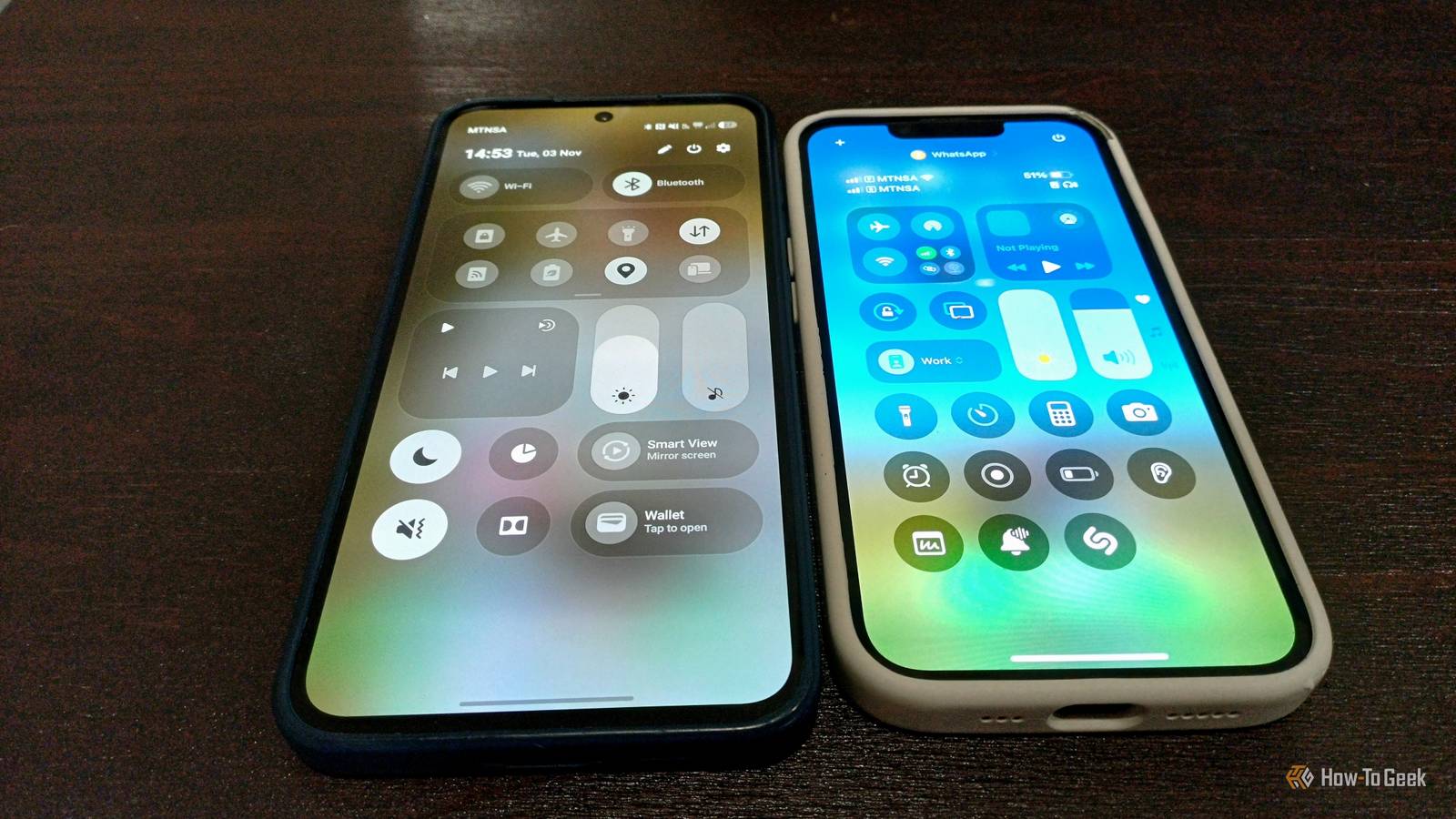
The Quick Settings panel has also slowly become more like iOS' Control Center over time, with One UI 9 furthering this with more rounded sliders, blur effects, and animations.The new Now Bar also feels quite a lot like Apple's Dynamic Island.These changes aren't necessarily worse, but they are making One UI feel like a less unique operating system.
This isn't exclusively a Samsung issue Everyone copies everyone As the owner of a number of Samsung devices over the years, I've definitely noticed how the Korean brand has become more and more like iOS over the years.However, they aren't the only ones following trends rather than trusting their own designs.The easiest way to see how similar things have become is to open the quick settings panels on a number of different devices side by side.
Hide the brands, and you'd be hard-pressed to tell which one is which.Apple isn't innocent in this either.Features like the introduction of the App Library, which is very similar to app drawers on Android, and the home screen customization in more recent versions of iOS show this pretty clearly.
The latest Samsung One UI update may be stealing the spotlight right now, but smartphones are becoming hard to differentiate, and the gap between Android and iOS is shrinking by the day.Apple's foray into the world of foldables with the iPhone Duo, which feels like a product that just wasn't thought out at all before it was launched, is another example.Samsung foldables have been doing quite well, and Apple jumped on the bandwagon despite the product not really fitting their brand identity.
Again, not all of these changes are necessarily bad, but they signify a loss of identity.The homogenization of smartphones sucks The death of creativity Close Back in the day, when my device was due for an upgrade, I remember how much weight my choice felt like it carried.It felt like every manufacturer was trying something new and looking for creative ways to innovate.
I would jump around from brand to brand, coming away with a list of pros and cons for each manufacturer, and even when I got stuck with a phone that I didn't end up loving in the long term, there were enough interesting things about it that I still felt satisfied.For the average buyer right now, all the choices feel pretty similar, with very little differentiating one brand from the other.At first, it felt like it was just Android phones that were becoming somewhat homogenized, but now iOS doesn't feel all that different from Android either, at least not as much as it used to.
Even small things that used to make individual brands feel unique are now being ditched for the sake of what manufacturers think is "optimization".Samsung needs to have faith in its own brand before it's too late The reason this issue feels like such a problem is that Samsung is slowly but surely losing its unique selling points.The more they go down this road, where they prioritize generic systems and features from other brands, the less reason there is for me to choose Samsung when I buy my next phone.
It's particularly sad because they get so many things right, but it doesn't feel like they're even able to identify the things that they are doing well.
Read More