The Raspberry Pi may have fallen out of favor among homelabbers and hobbyists for its high price-to-performance ratio, but the single-board computer still has some compelling use cases.Detecting earthquakes and other seismic activity is up there with the best of them.Introducing Raspberry Shake A single-board earthquake computer Raspberry Shake is a company that develops and sells kits and pre-built devices that focus mostly on seismic activity.
The company first emerged in 2016, with the Raspberry Pi Shake 1D Kickstarter project.It met its funding goal and went on to capture the attention of scientists, educators, and curious hobbyists.Designed to measure Earth’s “moans and groans,” the 1D uses a high-precision vertical seismometer sensor to detect up-down ground motion activity associated with earthquakes and similar seismic events.
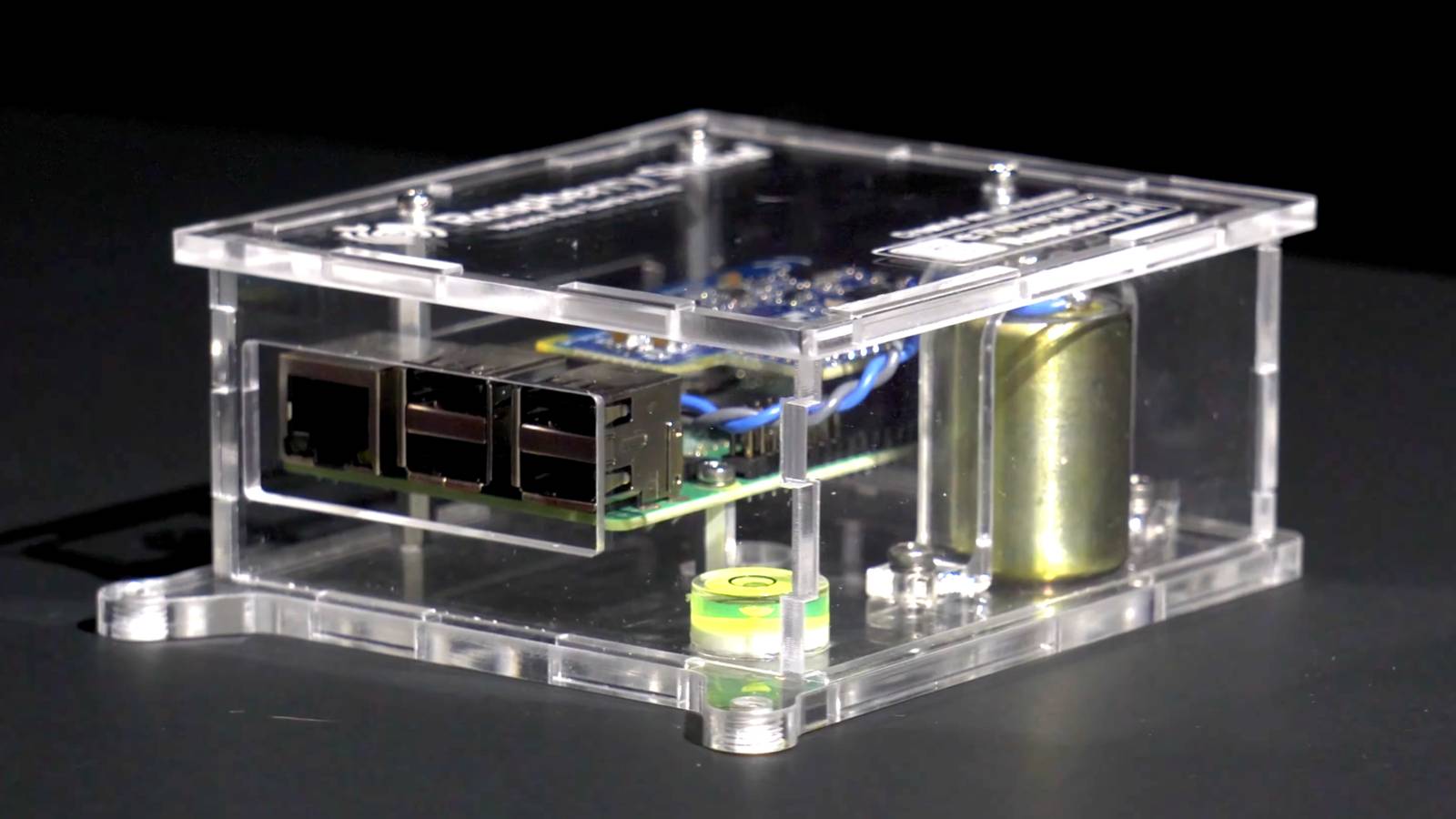
The device comprises a Raspberry Pi, custom printed circuit board (PCB), a professional-grade seismometer sensor, and an 8GB microSD card.Also included are an enclosure, cables, and a power supply.Since the success of the 1D, Raspberry Shake has expanded its lineup.
This now includes the Raspberry Shake 3D, which records both up-down and side-to-side activity; the Raspberry Shake 4D, which is described as a “strong” seismograph for use in active earthquake areas (up-down activity only); and the Raspberry Shake &BOOM, which can measure infrasound by detecting “atmospheric phenomena such as storm systems, aircraft, and auroras.” Infrasound has been in the news a lot recently as data centers go up all over the world, emitting potentially harmful sounds that are undetectable to the naked human ear but can cause all manner of unpleasant symptoms like nausea, insomnia, vertigo, and more.Of course, there are other sources of infrasound too.All Raspberry Shake offerings come with indoor and outdoor enclosures, with the latter costing more for an IP67-rated enclosure that can withstand full immersion for 30 minutes at a depth of 1 meter.
Install a Raspberry Shake and share your data Where do you put a personal seismograph? Close Raspberry Shake devices need to be placed on the ground, but not anchored to the floor.They should sit on a level surface, though the project’s FAQ notes that: “From 0 to 3 degrees of tilt we could not see any significant difference in the output.It was not until 6 degrees that we could see a change.” According to the Raspberry Shake quick start guide, the best place for your Shake to live (after the initial setup) is in the “quietest” place possible.
Choose something like a concrete slab in your basement, a spot near a foundation wall, and somewhere that’s as far away as possible from sources of vibrations and sound like washing machines and air conditioners.The microSD card that comes with the Raspberry Shake is ready to go; simply slide it into your Raspberry Pi and boot it up.Each Shake operates as a headless device, which means it needs no display or peripherals and is controlled and accessed remotely over the network.
Shake devices plug directly into your router, and the setup takes place by pointing a web browser at http://rs.local/.After following the setup, you’ll have access to a control panel that works on a computer or mobile device on your network.Within the control panel, you can enable forwarding of your data to help early detection of earthquakes, and also contribute your data to ShakeNet, a browsable index of all Raspberry Shake devices all over the world.
Buy it or build it yourself Available in kit form or as preassembled units Raspberry Shake devices are available in both kit form and as turnkey pre-assembled devices.Kits give you a chance to save some money by bringing your own Raspberry Pi, while flexing your assembly skills.None of the Raspberry Shake kits require any soldering.
If you’re going to provide your own Pi, check out the list of supported models.Raspberry Shake recommends the Raspberry Pi 3b in most cases, noting that “you will likely need to clip the PoE header pins before mounting the Shake board” if you opt for the Raspberry Pi 4b.Considering the price of newer Raspberry Pi models, using an older board will help to keep the price down.
The most basic Raspberry Shake 1D kit starts at $385, or $585 pre-assembled with a Raspberry Pi.Considering you can get your hands on a Pi 3b for around $45 (at the time of writing), opting for a kit can get you up and running for a significant discount (DIY kits also omit a power supply and Ethernet cable, things you might already have).Another option is the Board and Sensor option, starting at $295, which omits everything except the custom PCB and seismometer sensor.
Choosing an advanced model like the 3D, 4D, or infrasound-capable SB model will push the price up, though similar discounts are available for kit-only and sensor-only bundles.Raspberry Shake RS1D kit The RS1D is a high-sensitivity, vertical-axis seismograph that offers an exceptional balance between simplicity and professional-grade performance.Designed for hobbyists, educators, and researchers alike, it delivers powerful seismic monitoring in an affordable, easy-to-use package.
Whether you are interested in detecting local earthquakes or analyzing global seismic events, the RS1D provides an all-in-one, highly portable solution.$385 at Raspberry Shake Expand Collapse If having a personal earthquake, ground vibration, and infrasound detector sounds good, check out some of the other neat things you can connect to a Raspberry Pi.
Read More