If you ask most people what’s holding back 3D printing in aerospace, they usually think the answer is better hardware; mainly faster machines, bigger build chambers, and tighter process control.But Jason Sebastian wants users to look somewhere else.“People have no idea how important materials are,” he told 3DPrint.com.
Sebastian is Executive VP at QuesTek Innovations, a materials design and engineering company based near Chicago.QuesTek designs and develops new metal alloys for demanding manufacturing applications, especially when parts need to survive extreme heat, pressure, and oxygen-rich environments.And in space, “extreme conditions” are unavoidable.
When metal 3D printing became a materials problem QuesTek has been around for about 25 years, long before metal additive manufacturing (AM) became mainstream.Sebastian said the company started in the world of traditional metallurgy, with steels, aluminum, and nickel, all tied to casting and forging.Then AM arrived, and it changed the rules.
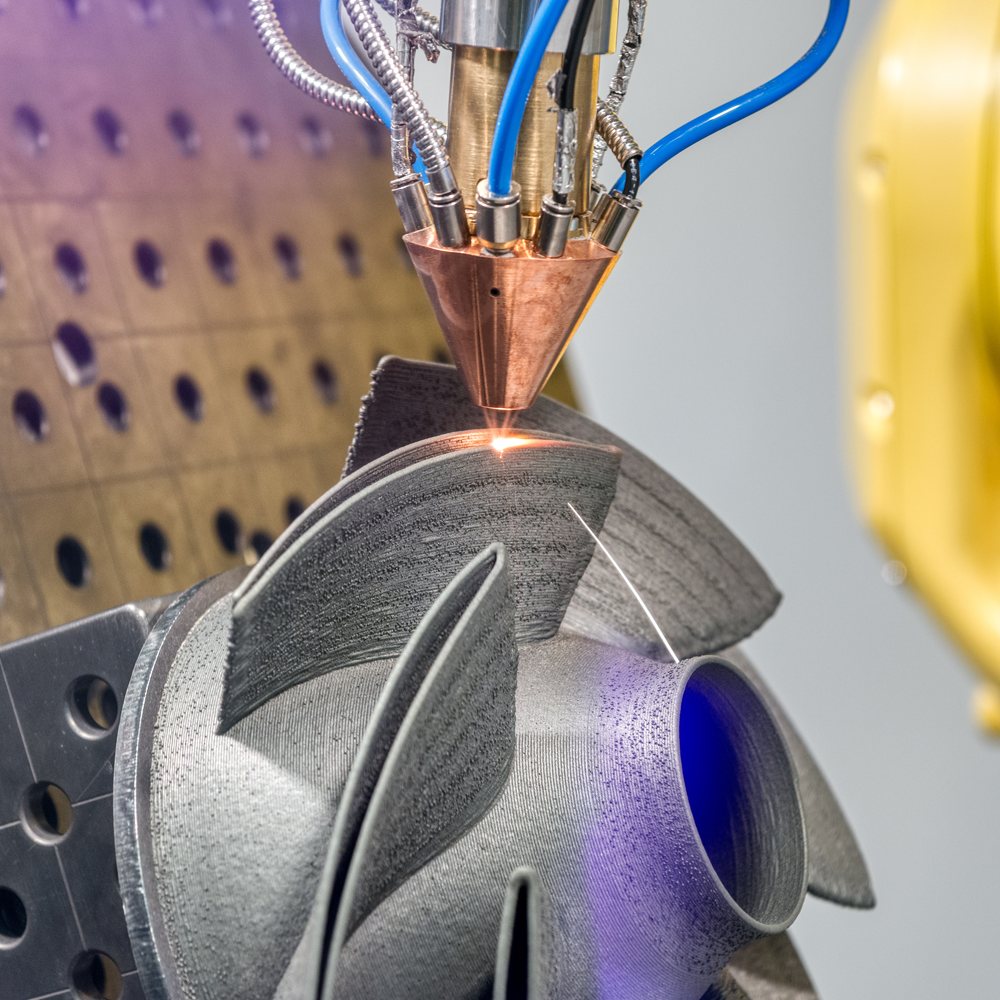
He explained that AM isn’t just “the same metal, shaped differently.” To print, you typically turn metal into powder or wire, then melt and solidify it quickly, layer by layer.That process creates a different internal structure than the material would get in a mold or a forge.“It’s a whole new paradigm of material science.
You’ve got to make it into a powder, and then you’ve got to print it, which is kind of like a very rapid solidification.And so that leads to really interesting things with the material and the microstructure.” In the early days, he said, the industry was mostly focused on simply getting machines to work, making layers consistent, spreading powder reliably, and reducing porosity.But as companies started pushing printed parts into serious applications, they ran into a harder reality: materials behave differently when printed.
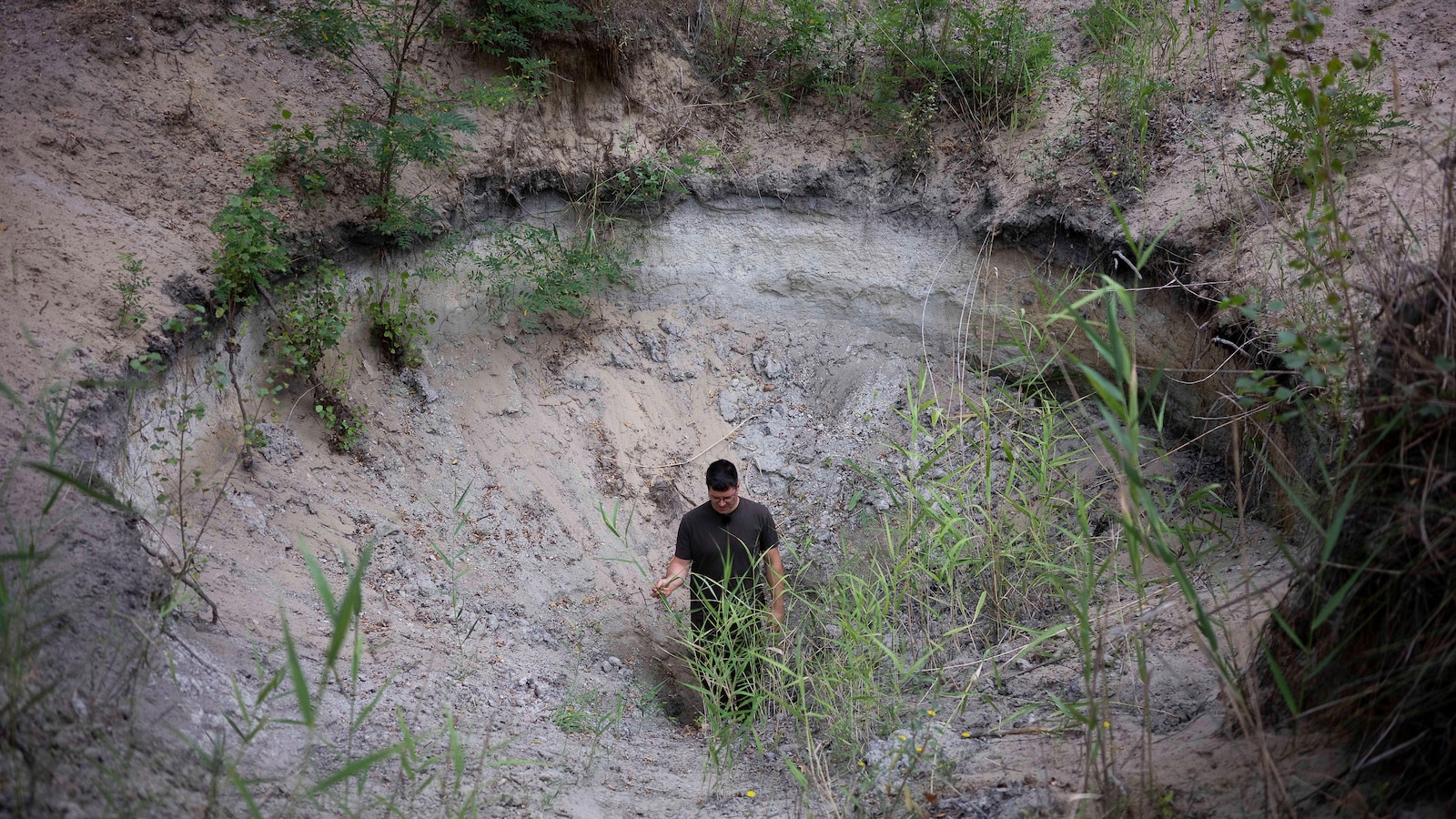
“It’s not a surprise that alloys that were designed for regular casting or forging don’t quite operate the same way in additive,” he said.“So you need to design new materials for additive.” That sentence is the core of QuesTek’s pitch to the space world: don’t force old alloys to behave inside a new process.Instead, “design alloys that want to be printed.” Jason Sebastian.
Image courtesy of QuesTek Innovations.“Materials by design,” not trial-and-error QuesTek’s approach is sometimes described as “materials by design” (in fact, “Materials by Design” is one of the company’s trademarks), building alloys using computational modeling and then validating them with targeted testing, rather than relying on brute-force trial and error.Sebastian described AM as a “perfect place for that mindset,” because the process creates new structures inside the metal, and those structures determine performance.
When I asked how QuesTek’s approach is different from traditional materials development, he pointed out that materials scientists often talk about the relationship between process, structure, and properties.Most people, he said, skip the “structure” part and jump straight from process to properties.But in aerospace, structure is everything.
And in additive, structure can shift dramatically, with rapid solidification patterns, layered features, and microstructures that don’t look like anything you’d get from a conventional route.A DARPA moment that helped “de-mystify” AM Sebastian traced a big part of QuesTek’s additive manufacturing history back to a U.S.Defense Advanced Research Projects Agency (DARPA) program around 2010–2011, when qualification and certification were big unknowns for printed metal parts.
The program included teams led by major aerospace and defense players.QuesTek worked on a Honeywell-led effort focused on a high-performance nickel superalloy called 718Plus, which was used in hot sections of engines.The question was simple but pretty big: what happens when you print it? “We built models around rapid solidification, microstructure, and expected strength, then used limited test data to estimate how strength would vary across builds and powder lots.
Our models allow us to establish that minimum, with much less experimental data,” Sebastian said.For aerospace, that “minimum” property value matters because it’s what designers trust when lives and missions are at stake.Once you can predict that behavior, Sebastian said, additive manufacturing no longer has to be “treated like black magic.” “It established the role of computational modeling at the center of all this additive stuff,” he said.
Gas turbine rotor being serviced at the workshop.Image courtesy of QuesTek.The Stoke Space example: a printable rocket alloy in under a year QuesTek’s most recent space example is its work with Stoke Space, one of the new wave of rocket startups trying to move quickly and print aggressively.
Stoke wanted to print reusable engine components using new nickel superalloys.But the target wasn’t just strength.It also needed burn resistance and had to be printable.
“We worked with them on the design of a nickel alloy,” Sebastian noted.“They had a need: let’s go design a new alloy for additive, and then we’ll use it.The timeline is what jumps out.
The path from first contact to a designed composition to atomized powder to printed and tested parts took less than 12 months.” “That speed matters because aerospace development is usually much slower.It used to be that it took 10 to 20 years to develop and certify a new material,” he said.“Modeling and smarter validation methods can compress that cycle, though full certification for commercial aerospace is still slow and expensive.” Sebastian suggested that the bigger idea is that modern rocket companies don’t always need to wait for the traditional, decades-long pathway.
Some organizations can qualify materials internally for their use cases and iterate rapidly, especially in propulsion, where performance demands are severe, and the development culture is fast.Where rockets are getting printed A lot of space 3D printing attention goes to combustion chambers and nozzles, but Sebastian pointed to another area where AM can shine: the complex “plumbing and turbomachinery at the top of a rocket engine.” Those components deal with high pressure, high temperature, and extremely oxidizing conditions, especially around liquid oxygen.Jason Sebastian.
Image courtesy of QuesTek Innovations.“That apparatus is where I think a lot of the components can be printed,” he said.“There are complex channels and piping that have wild shapes.
So the more complex the internal pathways, the more additive starts looking like a design tool, not just a manufacturing method.” Looking further ahead, Sebastian said 3D printing on the Moon or Mars is still very early-stage, but likely unavoidable in the long run.If future missions can’t, or don’t want to, ship metal powders from Earth, they’ll have to work with what’s already there.But lunar regolith and Martian soil are messy chemical mixes, rich in oxides and far from clean aerospace alloys.
“You’re kind of just taking what’s there, it’s like a garbage alloy,” Sebastian explained.“But even that can be improved with real metallurgy: understanding the mix, optimizing compositions, and predicting how those materials might behave when printed.For now, it remains a long-term idea — “X-project type stuff” — rather than something close to deployment.” The real takeaway: AM success in space starts with materials In aerospace and space applications, advances in 3D printing are increasingly tied to materials engineered for additive manufacturing.
“Printability is a property like strength and like burn resistance.There are trade-offs.That’s the QuesTek lens in one line.
If the industry keeps trying to push yesterday’s alloys through today’s additive processes, it will keep hitting walls.But if more companies design metals specifically for additive manufacturing, especially for rocket engines and other extreme environments, 3D printing becomes something completely different.Not just a faster way to make parts.
But a faster way to invent what parts can be made of in the first place,” concluded Sebastian.Subscribe to Our Email Newsletter Stay up-to-date on all the latest news from the 3D printing industry and receive information and offers from third party vendors.Print Services Upload your 3D Models and get them printed quickly and efficiently.
Powered by FacFox
Powered by 3D Systems
Powered by Craftcloud
Powered by Xometry
3DPrinting Business Directory
3DPrinting Business Directory