We’re covering medical and dental news in this weekend’s 3D Printing News Briefs, starting with a new innovation at Boston Children’s Hospital that could become standard practice in orthopedics: 3D imaging.SINTX Technologies signed a supply agreement with EVONIK to make a silicone nitride-PEEK compound for patient-specific implants, and Texas A&M researchers are working to 3D print living lung cells in extreme environments.Finally,, Planmeca has launched a new 3D printer for reliable dental 3D printing in laboratories and clinics.
Boston Children’s 3D Imaging Software Generates Better Orthopedic 3D Models “We trained an AI model to create 3D geometries of bones at different stages of development,” says Ata Kiapour, director of the Musculoskeletal Digital Innovation & Informatics Program.(Images: Michael Goderre/Boston Children’s Hospital) Orthopedic surgeons have been using 3D images for years to more easily visualize complex conditions and accurately identify musculoskeletal issues, but it can take at least a week to generate them from CT or MRI scans.But 3DModeler, an extension of the VirtualHip software program developed at Boston Children’s Hospital, could change that.
VirtualHip, rolled out in 2023, uses 3D imaging and AI to support diagnosis and treatment of hip conditions, but the Orthopedics and Sports Medicine Department wanted to make 3D imaging a standard of care in all areas of sports medicine and orthopedics.This meant developing a whole-body 3D system, which would need to be good enough to model complex structural abnormalities, while also considering a patient’s bone maturity, and be able to print the models quickly, for little cost.As Ata Kiapour, PhD, director of Boston Children’s Musculoskeletal Digital Innovation & Informatics Program, explained, they “trained an AI model to create 3D geometries of bones at different stages of development,” and to model patients’ soft tissues accurately as well.
Some of the models can be created from CT and MRI data within minutes, and 3DModeler has been released for beta testing in the Orthopedics and Sports Medicine Department.“Having a better visualization tool improves both diagnosis and surgical planning.You can see very clearly what the problem is and how to fix it,” explained Young-Jo Kim, MD, PhD, director of the Child and Young Adult Hip Preservation Program.
SINTX & EVONIK Sign Supply Agreement to Make Silicon Nitride-PEEK Compound Ceramics and biomaterials company SINTX Technologies, Inc.signed a supply agreement with high-performance polymers leader EVONIK.Under this agreement, EVONIK will manufacture SINTX’s patented, proprietary silicon nitride–PEEK (SiN/PEEK) compound, which was developed specifically for AI-assisted 3D printing of patient-specific implants.
EVONIK will produce the material to SINTX’s specifications, using its commercial-scale capability, while SINTX will print the implants using machines at its U.S.-based production facility.The company’s silicon nitride material has good osteogenic properties and antipathogenic behavior, and adding PEEK to the mix enables radiolucency mechanical tunability.With this compound material, SINTX hopes to deliver implants with improved visualization as opposed to what standard PEEK offers, in addition to design freedom and a scalable, consistent filament to support low-volume, high-mix production.
SINTX has already received requests from physicians to provide 3D printed humanitarian‑use vertebral body replacement (VBR) implants for neurosurgical oncology and orthopedic patients have spinal tumor resections.With this supply agreement, EVONIK and SINTX hope to make the SIN/PEEK compound available to other qualified manufacturers as well.“This agreement with EVONIK is another pivotal moment for SINTX and for the field of patient‑specific implants,” explained Eric K.
Olson, Chairman, President, and CEO of SINTX.“By combining EVONIK’s industrial‑scale PEEK polymer manufacturing expertise with SINTX’s silicon nitride biomaterial manufacturing capabilities, we can deliver next‑generation implants that address critical needs in trauma, spine, oncology, and beyond.We believe SiN/PEEK offers compelling advantages over standard PEEK, including antipathogenic surface characteristics, osteogenic potential, and improved visualization—features that matter in complex, high‑risk procedures.” TAMU Researchers 3D Printing Living Lung Cells in Extreme Environments Heat takes a toll: fluorescence images reveal that as the 3D bioprinted samples are exposed to higher temperatures, their stress levels rise and their survival is reduced.
Credit: Dr.Hongmin Qin/Texas A&M University.Astronauts and pilots face extreme conditions when flying, and traditional cell cultures can’t completely replicate these conditions, so research can be difficult.
But researchers at Texas A&M University (TAMU), with support from the U.S.Air Force Office of Scientific Research, are using 3D bioprinting to more accurately model them, which could improve safety in spaceflight and aviation, as well as how scientists study and treat respiratory diseases.That’s because they’re studying how living human lung cells respond to limited oxygen and extreme heat and pressure, which are the potentially life-threatening conditions flight crews and space personnel have to deal with when operating their craft.
The team printed samples for testing, loading cartridges embedded with a gel-like bioink containing these living cells to get a more accurate idea of how human cells behave under these specific types of stresses.Their work also provides a realistic model for more in-depth studies of respiratory diseases like chronic obstructive pulmonary disease, and could drive new drug discoveries.“With our 3D approach, we can closely mimic native tissue and their microenvironments, enabling accurate studies of viability, proliferation and stress responses,” explained Dr.
Zhijian “ZJ” Pei, Professor, Industrial & Systems Engineering, TAMU College of Engineering. “Our findings shed light on how lung cells respond to physiological and mechanical stressors, including variations in pressure and temperature.Potential applications could enhance safety protocols for pilots and astronauts in low-orbit conditions.” You can learn more about their work in this Biomimetics study, another published in Bioengineering, and a second in Bioengineering.Planmeca Launches Creo X 3D Printer for Reliable Dental Printing A decade ago, Finnish company Planmeca got its start manufacturing digital dental units, CAD/CAM solutions, 2D and 3D imaging devices, and dental software solutions, with the ultimate goal of transforming dental manufacturing workflows by making them more reliable.
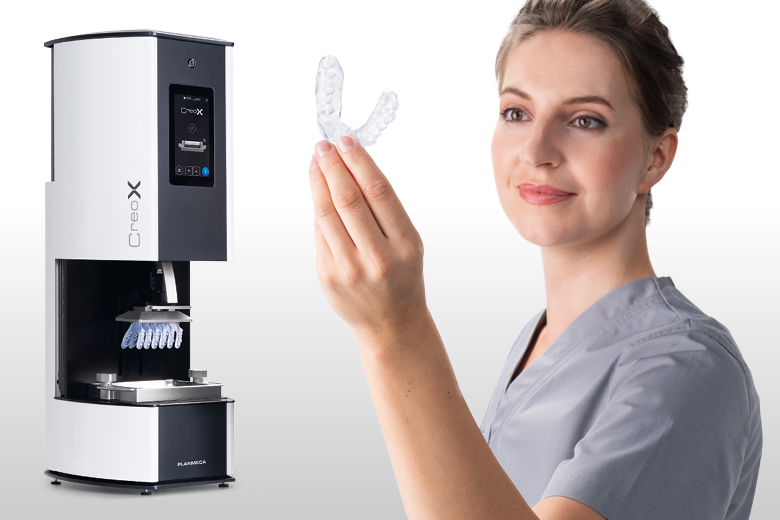
Now, the company has launched its high-precision Planmeca Creo X, a dental 3D printer for making surgical guides, models, dental restorations, and custom appliances like impression trays, night guards, and bite splints.Using continuous user feedback, the system builds on the proven mechanical design of the Planmeca Creo C5, adding new core components and redesigned technology.At its core is a next-generation light source that uses chip-on-board (COB) LED technology; when this is combined with a new monochrome LCD panel, Planmeca says the new Creo X can achieve a pixel size resolution of just 34 microns.
The printer also has an integrated heater for resin temperature control, which can optimize print results for multiple materials in clinical environments.All of these features equal what seems to be a durable, reliable printer that can help streamline workflows and enable accurate prints in busy dental laboratories and practices.“With Planmeca Creo X, even beginners can start 3D printing with confidence, knowing their printer will meet their expectations and deliver reliable results every time,” said Pontus Degerlund, CAD/CAM Director at Planmeca.
“Reliability was the key factor in the product development, which is why we have ensured the printer is capable of meeting the evolving requirements of various printing materials, both now and in the future.The combination of advanced mechanical components and new optics ensures perfect results every time, guaranteeing reliability even in the busiest environments.” Subscribe to Our Email Newsletter Stay up-to-date on all the latest news from the 3D printing industry and receive information and offers from third party vendors.Print Services Upload your 3D Models and get them printed quickly and efficiently.
Powered by FacFox
Powered by 3D Systems
Powered by Craftcloud
Powered by Xometry
3DPrinting Business Directory
3DPrinting Business Directory