AI can be a useful tool, but does it belong in 3D printing? I think it has its place, but you definitely should keep an eye out for AI-designed 3D prints—they might not be as great as they seem on the surface.AI can now design 3D models from scratch All it takes is one prompt, and you have an STL file AI has come a long way in the last few years.Where AI used to struggle to even write a good sentence, it can now edit videos, generate realistic images, build complete apps from scratch, and so much more.
The other thing AI has recently gained the ability to do is 3D CAD (computer-aided design) work.There are a number of platforms out there now for generating 3D models with AI prompts, including Meshy and Tripo3D.The platforms all work the same.
You give it a prompt, it generates the 3D model, and then you refine it from there.This is actually something I have wanted for quite some time.When it comes to basic shapes or models, I can design them myself in my CAD of choice, Shapr3D.
However, more intricate models are definitely more difficult for me to create, so I typically just rely on other people to do it for me.With AI, I can just write a prompt and receive a model in mere seconds.Some AI-designed 3D files are actually pretty great As a starting point I love that it's possible now to use AI to generate 3D printable models, but I fear people are using them in ways they shouldn't.
When it comes to designing a quality 3D print file, it's about more than just designing something in CAD.A proper 3D printing file will be designed 3D printing.This means taking the limitations of FDM (filament-based 3D printers) or SLA (resin-based 3D printers) into account.
An FDM printer, for example, can't print a 90-degree overhang without support.Even with support, the joint at that 90-degree overhang will be pretty subpar.If you're making a wall hook, you shouldn't have the joint where the hook meets the wall mount at 90 degrees.
It'll fail quickly.While AI be taught these things, it's not always so black and white.That's why AI-designed 3D printing files are a fantastic starting point, but they shouldn't be used as a final product in every scenario.
For things like game piece models, an AI-designed 3D model might be the perfect solution.But, if you're trying to design something that's structural in any way, or that has any form of weight-bearing need, then AI design is definitely not the be-all, end-all—and that's where the big problems start to come into play.The problem comes from people generating files and publishing them No testing required? If are generating 3D models to print, then you can work on prompting things in a way that will give you your own desired output.
The problem arises when other people start publishing 3D printing models online for you to download, and you have no idea if they're actually quality or not.With the rise of AI-generated 3D printing files, it's inevitable that some people will just prompt, publish, repeat.Sites like MakerWorld reward you for the number of downloads your models get—not the quality of the model itself.
So, I can definitely see people just flooding the market with all kinds of "cool" 3D printing files that haven't even been tested.All they did was generate it and upload it.This has been a problem in the laser engraving and CNC communities for years.
People generate SVGs and just upload them without testing, and then only when people go to use them do they realize that the file isn't made right.I've been a victim of that myself.With 3D printing, it's only going to happen more and more.
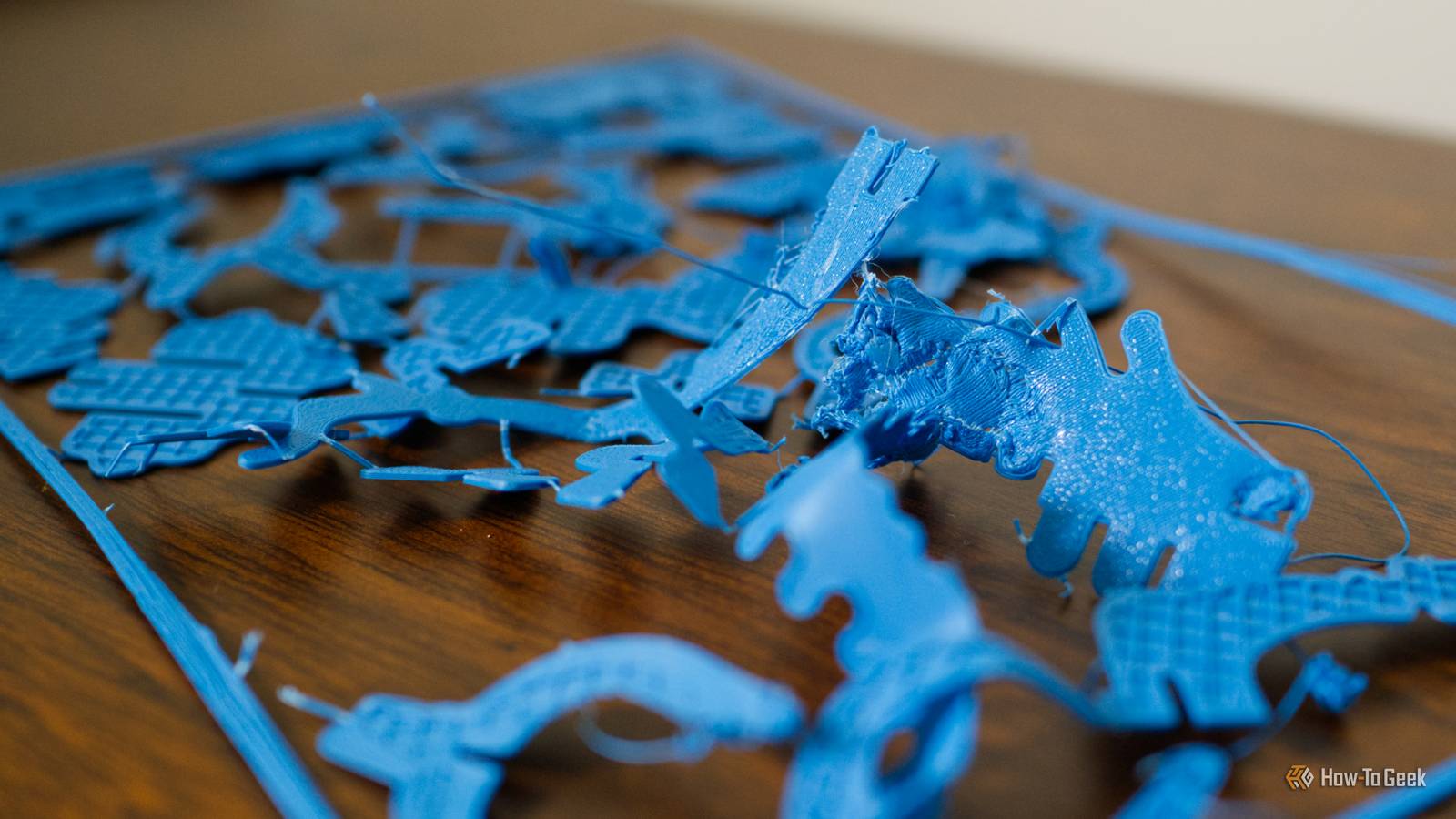
3D printers are way more affordable than lasers or CNC machines, meaning that a lot of people own them, and not everyone knows the ins and outs of them.So, it's only a matter of time before these AI-generated 3D models start to flood the market and people start to experience bad files and print failures—not at the fault of their printer, but at the fault of the bad file.You should definitely keep an eye out for these AI-generated files.
I wish there was a clear-cut way of knowing if a 3D print file was AI-generated.Maybe there will come a time when 3D printing file websites will be able to know if a file is AI-designed, and they can put a warning up.But, until that happens, just keep an eye out.
If a file seems like it might be a little off, or too good to be true, then I would just avoid it and find another file to print.Bambu Lab P2S Build Volume 256x256x256mm Printing Speed 600mm/s Brand Bambu Lab Max Hot End Temp 300C Max Bed Temp 110C Nozzle Hardened 0.4mm The Bambu Labs P2S 3D printer is ready to go out of the box and can have you printing within 15 minutes.It features up to 20-color printing with the AMS unit, has an upgraded built-in camera for remote monitoring and time lapses, and has an enclosed body for printing even high-temperature filament.
$549 at Bambu Lab $549 at bhphotovideo P2S Combo $550 at Micro Center Expand Collapse Always be careful what you 3D print Even if a file isn't AI-designed, a human-designed file might not print perfectly on your first try.As someone who has been doing 3D printing for years, and who has friends in the 3D printing industry, finding files that were designed 3D printing instead of just be 3D printed is not easy.You 3D print almost anything, but whether it will print well or not is entirely up to how it was designed.
Read More