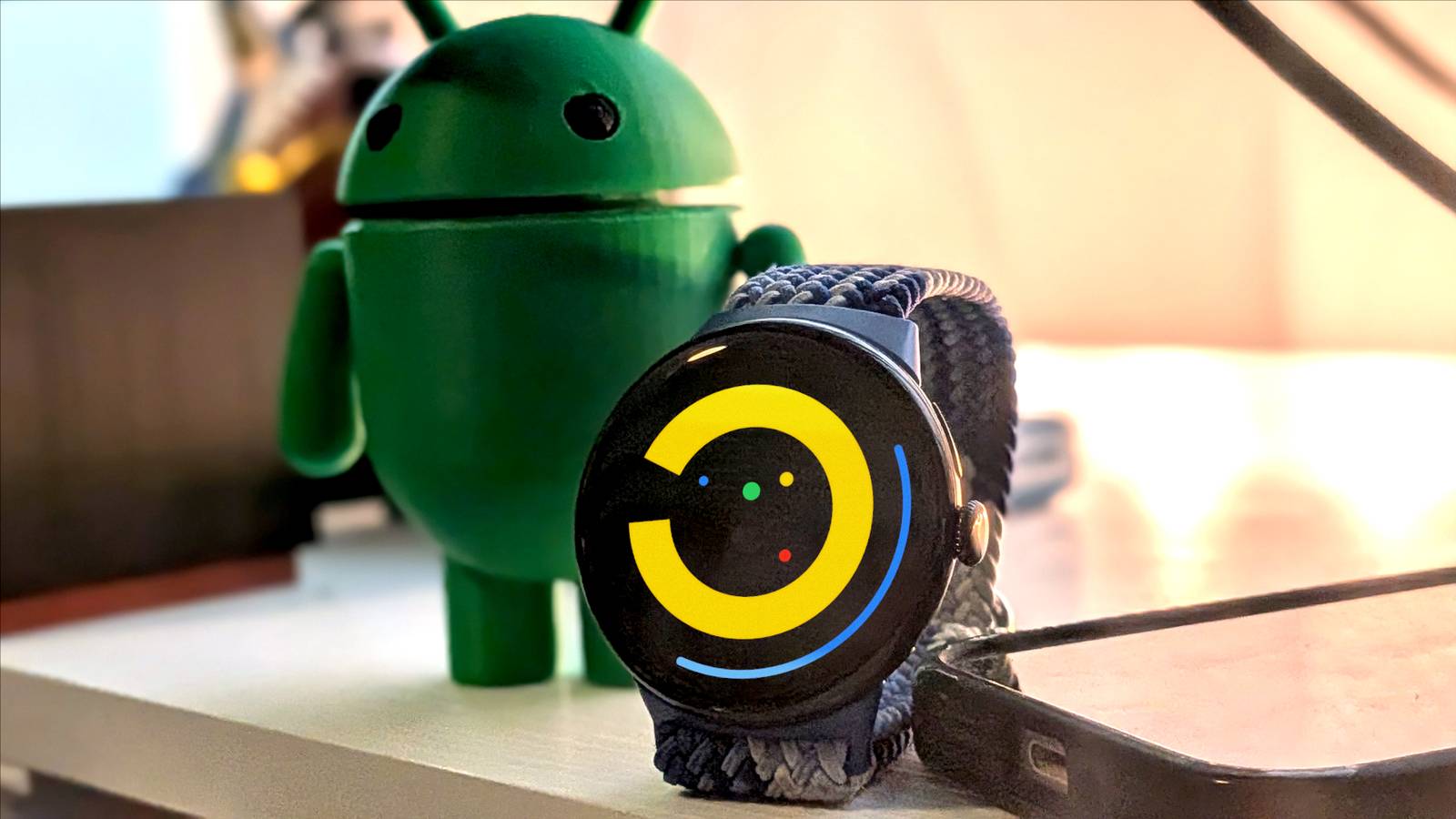
It’s hard to believe that Android Wear arrived over a decade ago.Google had great ideas for the platform that would eventually be renamed to “Wear OS,” but somewhere along the way, they were abandoned.To this day, Android Wear got a lot right.
The first version of Android Wear was released in March 2014.It would get 13 updates in the four years before Google launched the big “Wear OS” rebrand.However, by that time, many of the original features had already been ditched.
It worked with iPhones, too Before Google had fully given up on cross-compatibility Nowadays, the phone you carry has a huge impact on your smartwatch options.An Apple Watch only works with an iPhone, and a Galaxy Watch or Pixel Watch only works with an Android phone.It wasn’t always this way, though.
At first, Android Wear only supported Android phones, but in 2015, Google released Android Wear for iOS to the App Store.It allowed iPhone owners to connect Android Wear smartwatches and receive notifications, track fitness activities with Google Fit, and access Google Assistant.iPhone compatibility stuck around for several years, even making the jump to Wear OS in 2021.
However, it was removed in 2022 with version 3.5.In a perfect world, you would be able to use any smartwatch with any smartphone.Let’s be honest, whether you’re using an iPhone or an Android phone, we’re all basically using the same apps.
Android Wear showed there’s no technical limitation stopping this from happening—just walled gardens.Context-aware cards instead of apps Why did smartwatches become tiny phones? The original version of Android Wear was drastically different than what we have on Wear OS watches today.There was no row of widgets.
No app drawer.Using a keyboard was heavily frowned upon.The entire experience was built upon Google Now cards.
Google Now was the predecessor to Google Assistant.It was a personalized feed that populated with cards throughout your day.The idea was that these cards would appear when you needed them.
It could display boarding passes from Gmail when you arrive at the airport, package tracking details, weather alerts, sports scores, nearby events, and much more.The Google Now feed was essentially the Android Wear “home screen.” The current weather card would peek up above the watch face at all times.Scrolling up on the watch face revealed the list of Now cards and your notifications.
It was purely about surfacing important information when you needed it.That’s fundamentally different than how the Galaxy Watch, Pixel Watch, and any other Wear OS device operate today.Android Wear felt like an experience explicitly designed for a glancable display.
Now, our smartwatches aren’t much different than our phones.They’re more powerful, but also more distracting.Related The Pebble Smartwatch Is What Smartwatches Should Have Been Before the days of tiny wrist computers trying to do everything your phone can do, there was Pebble.
It was a very different experience from smartwatches today, and I can’t help but wish that the philosophy of Pebble watches had been more popular.Posts 8 By Joe Fedewa A consistent UI across all models Android Wear was Android Wear I recently switched from a Pixel Watch to a Galaxy Watch, and it was also my first time using a Galaxy Watch with a Galaxy phone.One thing was made very clear in the process: Wear OS can be drastically different from device to device.
Subscribe to the newsletter for smarter wearable insights Interested in deeper context on smartwatches and platform shifts? Subscribe to the newsletter for clear, evidence-based analysis of wearable history, compatibility decisions, and how device ecosystems evolve, with similar coverage across consumer tech.Get Updates By subscribing, you agree to receive newsletter and marketing emails, and accept our Terms of Use and Privacy Policy.You can unsubscribe anytime.
This wasn’t the case with Android Wear (and early versions of Wear OS).There was only one interface and it was on every watch.The software on the Moto 360 looked and worked exactly the same as it did on the Samsung Gear Live and LG G Watch.
It was as if every device ran “stock Android.” Now, I don’t mind the visual changes between Wear OS on a Galaxy Watch and a Pixel Watch, but the discrepancy in features is a bit lame.I can sync Do Not Disturb modes to my phone, but only if that phone is made by the same company as the watch.Galaxy Watches have gestures that aren’t available on Pixel Watches.
Google Wallet on a Pixel Watch is better than Google Wallet on a Galaxy Watch.You get the idea.I miss when you could focus on buying the smartwatch you wanted, and your phone was not really part of the equation.
Android Wear just worked with whatever you had—even an iPhone, as I mentioned already.It was a simpler time in technology, and in some ways, that made it better.Quiz Challenge yourself with this quiz about the article Your Top Score -- Attempts -- Start Quiz 0 0 Report Error Found an error? Send it [email protected] so it can be corrected.
Related After two years with a Pixel Watch, I realized Samsung's smartwatch approach is still unbeatable Android owners have two main smartwatch brands to choose from: Samsung Galaxy Watch or Google Pixel Watch.I’ve spent extensive time with both, but I just recently switched back to a Galaxy Watch after wearing a Pixel Watch for the last couple of years.I’ll explain why.
Posts 11 By Joe Fedewa
Read More