It's always been hard to really stand behind any one brand when recommending a networking setup to friends or family—especially those without a ton of technology experience.UniFi has changed that though, and it's now the only network that I recommend to anyone who asks me.Good Wi-Fi systems used to be hard to find (and recommend) eero was a solid option, but it lacked a lot of advanced features Anytime someone asked me what Wi-Fi system to get for their home, eero was my go-to.
The system was simple to use, it was well-supported by Amazon, and it had a lot of affordable options.My issues became that eero was basically the only easy-to-use Wi-Fi platform that I would recommend to non-techy people.Some people don't like Amazon, and want to avoid purchasing products made by them.
Others want something that has more features, even if that means a bit more setup.Others still just want something that can be used without having to rely on an app for setup.The problem was that eero was really the only full-featured network I could honestly recommend to people.
Netgear's quality just isn't what it used to be and TP-Link has issues with port forwarding (in my experience).It was just hard to find a full-featured networking option to recommend to people for the longest time.Quiz8 Questions · Test Your KnowledgeMesh WiFi networks: history, tech, futureTrivia challengeFrom military roots to whole-home coverage — how well do you really know mesh WiFi?HistoryTechnologyBrandsFuture TechFun FactsBegin01 / 8HistoryThe concept of mesh networking was originally developed for use in which field before it reached consumer homes?AHospital patient monitoring systemsBMilitary and battlefield communicationsCSatellite television broadcastingDEarly cable TV infrastructureCorrect! Mesh networking grew out of military research, particularly DARPA-funded projects aimed at creating self-healing, decentralized communications that could survive partial network destruction.
The idea was that if one node went down, traffic would reroute automatically — a very useful feature on a battlefield.Not quite.Mesh networking has its roots in military and DARPA-funded research, designed to create resilient, self-healing communications networks for battlefield use.The decentralized nature meant no single point of failure — a concept that later translated beautifully to home WiFi coverage.Continue02 / 8TechnologyWhat is the primary technical difference between a traditional WiFi extender and a true mesh WiFi system?AMesh systems use a dedicated backhaul channel to communicate between nodesBMesh systems always require ethernet cables between every nodeCWiFi extenders operate on the 6 GHz band while mesh uses 5 GHz onlyDMesh systems broadcast multiple separate SSIDs for each nodeSpot on! True mesh systems use a dedicated backhaul — often a separate radio band — exclusively for node-to-node communication.
This keeps the bandwidth used by your devices separate from the bandwidth used to pass data between nodes, resulting in far less congestion and much better performance than a traditional extender.Not quite.The key differentiator is that true mesh systems use a dedicated backhaul channel between nodes, keeping device traffic and inter-node traffic separate.Traditional extenders reuse the same band for both, effectively halving available bandwidth — which is why they often disappoint in practice.Continue03 / 8BrandsWhich company is widely credited with popularizing consumer mesh WiFi when it launched its first product in 2015?ANetgearBTP-LinkCEeroDGoogleCorrect! Eero launched in 2015 as one of the first consumer-focused mesh WiFi systems and essentially kicked off the home mesh revolution.
Its simple app-based setup and attractive hardware stood out in a market dominated by ugly router boxes covered in antennas.Amazon later acquired Eero in 2019.Not quite — Eero gets the credit here.Founded in 2014 and launched to consumers in 2015, Eero was a pioneer in making mesh WiFi accessible and appealing to everyday users.
Its clean design and smartphone-based setup felt revolutionary compared to traditional router management interfaces.Continue04 / 8Fun FactsA mesh WiFi network behaves similarly to which surprisingly ancient human communication system?AThe Pony Express relay systemBRoman signal fire chains along Hadrian's WallCGossip spreading through a village — each person tells the nextDThe semaphore flag relay towers of Napoleonic FranceGreat analogy — and you got it! Mesh networking mimics the way gossip spreads: each node receives information and passes it along to the nearest neighbor, with multiple paths available if one route is blocked.Computer scientists actually call one mesh routing method 'gossip protocol' for exactly this reason.Fun guess, but the best analogy is gossip spreading through a village.In mesh networking, data hops from node to node along the best available path — just like a rumor finding its way through a crowd.
Computer scientists even formally named one routing approach 'gossip protocol' in honor of this similarity.Continue05 / 8TechnologyWiFi 6E and WiFi 7 mesh systems introduced support for which frequency band that older mesh hardware cannot use?A900 MHzB3.6 GHzC6 GHzD10 GHzCorrect! WiFi 6E opened up the 6 GHz band for consumer use, giving mesh systems a much less congested slice of spectrum to use — especially valuable as a clean, fast backhaul channel.WiFi 7 expands on this further with multi-link operation, letting devices use multiple bands simultaneously.The answer is 6 GHz.WiFi 6E was a significant leap because it unlocked the 6 GHz band — a largely empty, high-capacity range of spectrum that dramatically reduces interference, especially in apartment buildings packed with competing networks.
Mesh systems use it as a super-clean backhaul highway.Continue06 / 8HistoryBefore dedicated mesh systems existed, some creative users built their own mesh-like home networks using open-source firmware called what?AOpenWrtBFreeNASCpfSenseDDD-WRTWell done! DD-WRT was the go-to open-source router firmware for enthusiasts who wanted to squeeze extra performance and features out of consumer routers — including running multiple routers in coordinated configurations that resembled mesh behavior.It's still actively developed today and has a devoted following.Not quite — the answer is DD-WRT.This legendary open-source firmware let tech-savvy users replace the factory software on routers from brands like Linksys and Netgear, unlocking advanced features including multi-router setups that approximated mesh networking years before polished consumer mesh products existed.Continue07 / 8Future TechWhich emerging concept would take mesh networking beyond the home and create a massive, self-organizing internet built from billions of everyday devices?AEdge computing clustersBThe Wireless Web (WWW 2.0)CDecentralized People-Powered Internet (DPPI)DThe Internet of Things (IoT) meshExactly right! The Internet of Things vision includes smart devices — thermostats, lights, sensors, appliances — forming spontaneous mesh networks with each other, passing data along without relying on a central router or ISP infrastructure.
Standards like Thread and Matter are already pushing this concept into real homes today.The answer is the IoT mesh.The Internet of Things roadmap envisions billions of smart devices forming organic, self-organizing mesh networks — communicating peer-to-peer without needing a traditional router as a middleman.Protocols like Thread (used in Matter-compatible smart home devices) are making this a reality right now.Continue08 / 8Fun FactsWhat quirky real-world project demonstrated mesh networking by connecting an entire island community with a DIY WiFi mesh built mostly from recycled hardware?AThe Faroe Islands Fiber Mesh ProjectBGuifi.net in Catalonia, SpainCProject Loon in New ZealandDThe Aloha Network in HawaiiCorrect! Guifi.net, launched in rural Catalonia in the early 2000s, grew into one of the world's largest community-owned mesh networks with tens of thousands of nodes.
It was built by volunteers using cheap or recycled hardware to bring internet access to areas ignored by commercial ISPs — a remarkable grassroots achievement still operating today.The answer is Guifi.net.This incredible volunteer-built mesh network in Catalonia, Spain, started in the early 2000s and eventually grew to over 35,000 active nodes, making it one of the largest community mesh networks on the planet.It proved that determined communities could build their own internet infrastructure without relying on big telecoms.See My ScoreChallenge CompleteYour Score/ 8Thanks for playing!Try Again UniFi has been a fantastic networking option for enterprise for a long time It was just never all that user-friendly for non-techy people I have been a big fan of Ubiquiti's UniFi platform for many, many years.
UniFi used to really only focus on SMB (small to medium businesses) and enterprise installations.UniFi offers the whole package, though.There's fantastic port forwarding control, an extensive (and high-quality) firewall system, and it even offers fully managed networking.
There's really not much that UniFi do.Related I Switched My Network to Unifi and I’m Hooked Unifi really unifies my network.Posts 14 By Patrick Campanale So, then, why didn't I recommend UniFi to people in the past? It's complicated to set up.
Being an SMB and enterprise networking platform at its heart, UniFi simply wasn't easy to set up.Ubiquiti understood this and eventually spun off a sub-brand called AmpliFi that was aimed at more casual users, but it also lacked some features that I liked from the UniFI platform.Eventually, UniFi canceled the AmpliFi brand and merged everything under its UniFi brand and that's when I really fell in love with UniFi for more than enterprise deployments, and what really sealed the deal for it becoming my go-to recommendation for everyone.
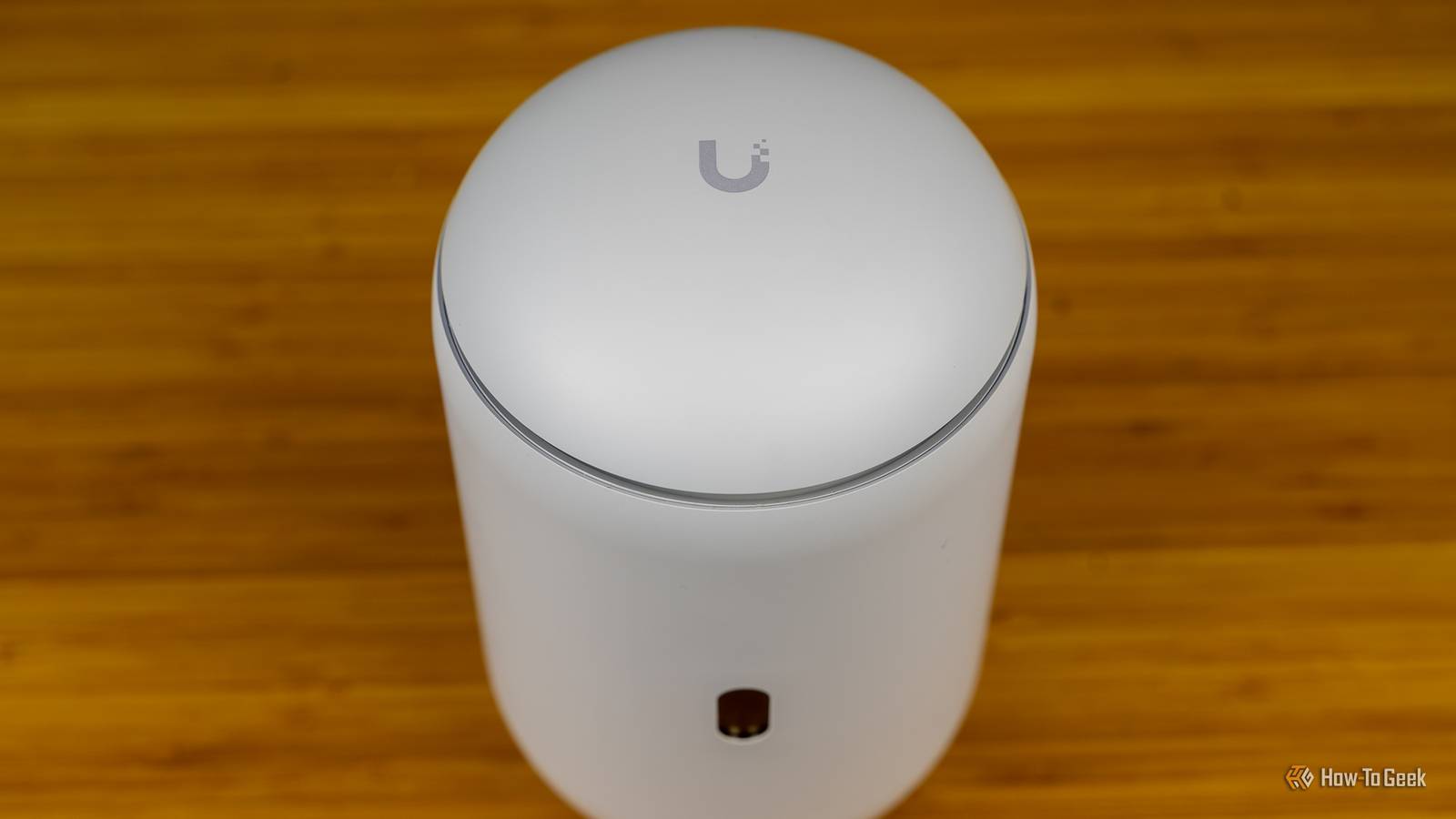
The latest UniFi updates and hardware make Ubiquiti my go-to recommendation now The Dream Router 7 is one of the best routers on the market In February 2025, UniFi released the Dream Router 7—and I immediately bought one.I had personally held off on going with UniFi's networking gear in my house because it would quickly become a $1,000 endeavor with buying a Dream Machine, access points, and other equipment.The Dream Router 7 solved all that.
It offers Wi-Fi 7, 2.5GbE, a 10G SFP+ port, and full support for everything UniFi has to offer.It really is the Router.I used my Dream Router 7 for about a year before I started recommending it to friends and family.
I wanted to make sure it really was as good as I thought before it became my go-to recommendation—and it definitely lived up to my expectations.Recently, my uncle wanted to replace his 10-year-old Netgear Orbi Wi-Fi setup and I recommended he go with the Dream Router 7.It was within budget, and I know the system well.
With my uncle, myself or my dad are often the ones maintaining his tech gear.We remote into his computer to fix issues he has, remotely help with his networking problems, and just try to help him whenever there's a problem with his technology.UniFi actually allows me to do that better than ever before.
The initial setup is something I walked my uncle through over the phone and he was able to accomplish within just a few minutes, which is something that most other routers haven't been able to do for him.Then, we were able to get remote management set up for me to handle everything else from there.Because UniFi is made for remote management on the enterprise side, I was able to set up myself as a super user on his UniFi network and remotely manage his entire network from my home.
I no longer have to remote desktop into his computer, as him for the access code on his router, and try to do everything through a laggy RDP.Instead, I'm able to just open the UniFI app on my phone or the website on my computer and manage it as if I was in his home.Not only that, but he's now set up for so much more down the road.
For starters, the Dream Router 7 offers better coverage than most other routers in the price range.It also has a built-in PoE port on the back to power an access point if you need additional coverage.There's multi-gig WAN support if you have a multi-gig WAN connection, and all the Ethernet ports are 2.5Gb, too.
Plus, he can add security cameras, VoIP phones, and more to his home should the need ever arise.His wife works from home, so that's a real possibility for something they might want to do in the future.Really, the Dream Router 7 offers everything that a home network needs, as well as everything that a remote family technician call would want.
UniFi Dream Router 7 Brand Unifi Range 1,750 square feet Wi-Fi Bands 2.4/5/6GHz Ethernet Ports 4 2.5G USB Ports None MU-MIMO 2x2 MU-MIMO The Unifi Dream Router 7 is a full-fledged network appliance offering NVR capabilities, fully managed switching,a built-in firewall, VLANs, and more.With four 2.5G Ethernet ports (one with PoE+) and a 10G SFP+ port, the Unifi Dream Router 7 also features dual WAN capabilities should you have two ISP connections.It includes a 64GB microSD card for IP camera storage, but can be upgraded for more storage if needed.
With Wi-Fi 7, you'll be able to reach up to a theoretical 5.7 Gbps network speed when using the 10G SFP+ port, or 2.5 Gbps when using Ethernet. $295 at B&H Photo Video $279 at Unifi Expand Collapse UniFi Express 7 Brand UniFi Range 1,750 square feet Wi-Fi Bands 2.4GHz, 5GHz, 6GHz Ethernet Ports 2.5GbE, 10GbE MU-MIMO 2x2 Mesh Network Compatible Yes, UniFi The UniFi Express 7 Wi-Fi router is the perfect way to get started in the UniFi ecosystem.Packing the UniFi network application, this router will handle all of your home networking needs.It can function as a standalone router or an access point, depending on what you need it to do.
It also has both a 2.5GbE port as well as a 10GbE port, depending on how fast of networking you're working with at home.$199 at Unifi $210 at bhphotovideo Expand Collapse A feature-packed home network no longer has to be complicated to manage The great part about UniFi is it can be as complex or simple as you want it to be.It's entirely possible to just set up a UniFI network like you would any other platform, and leave it on auto for everything.
That's how we started with my uncle's system.The power of UniFi comes in that it do so much more, even if it doesn't have to at first.I'm able to choose what band his Wi-Fi operates on, because I know what I'm doing and it gives him a better experience.
I can really dial in what features his Wi-Fi is/isn't using, or he can leave it stock.If you know what you're doing, UniFi can be an extremely powerful tool to have in a home network.Or, if you don't know what you're doing, it still is just as powerful of a tool, offering fantastic coverage, lots of features, and ease of use—all at the same price that the other companies charge.
At this point, if budget allows, I will only recommend UniFi for someone's home network.The ideal router would be the Dream Router 7, however, for those on tighter budgets, I'll definitely point them toward the more budget-friendly Express 7.Either way you go, you can't go wrong with a UniFi network.
Read More