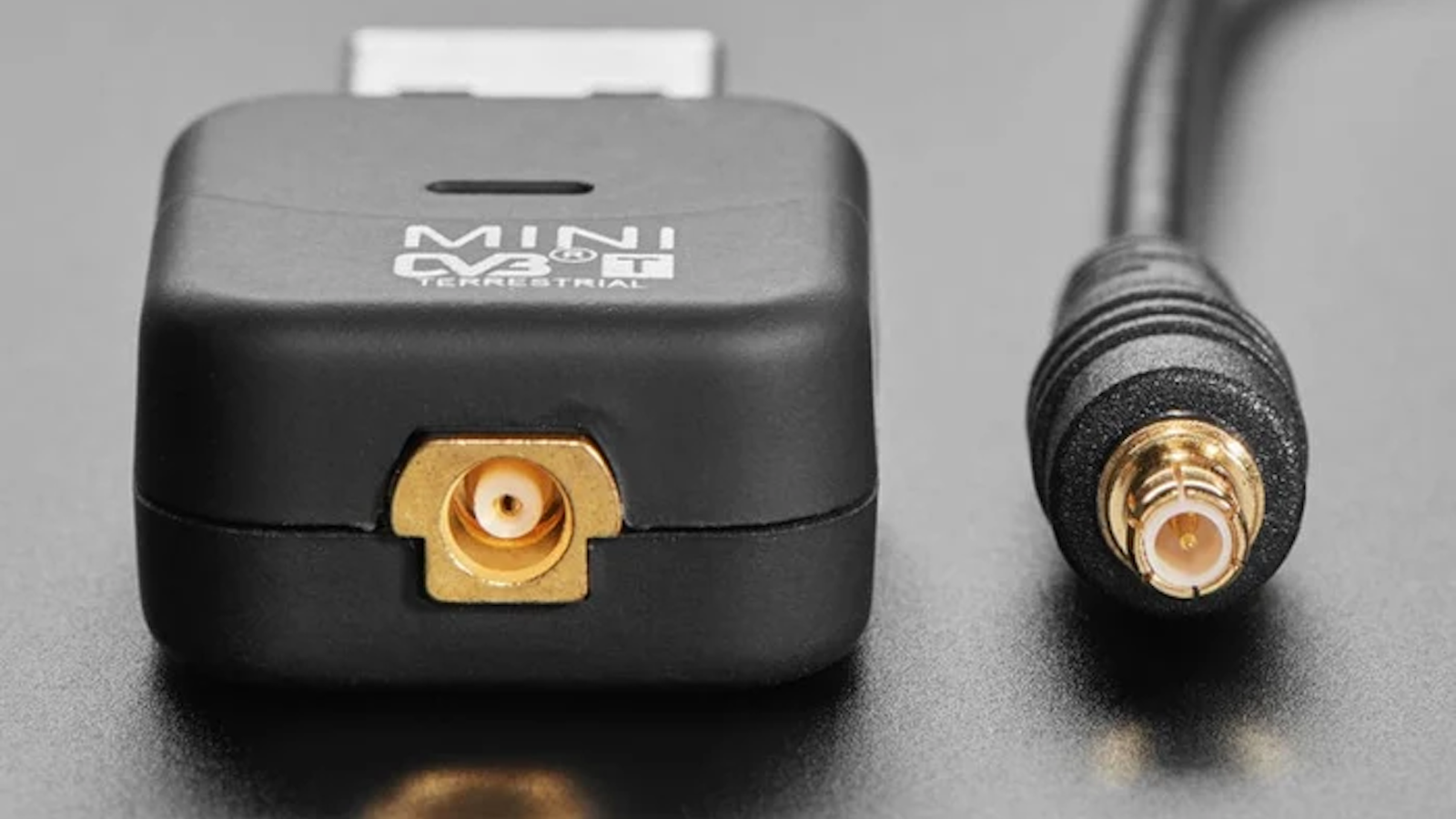
The air around us is full of signals that we can't see.Despite the technology being more than 100 years old, radio waves are still frequently used by music stations, satellites, aircraft, and more.You don't need expensive equipment to pick up these signals; you can do it with a dongle that can cost as little as $25.
Add How-To Geek on Google Add as Preferred Source Follow on Google Discover The RTL-SDR dongle is the offspring of USB TV tuners It's like hundreds of radios in a single device One of the easiest ways to pick up these radio signals is with an RTL-SDR dongle.The RTL part refers to the RTL2832U chips used in these devices, and SDR stands for Software-Defined Radio.As the name suggests, instead of relying on hardware to process radio signals, a lot of the work is handled by software running on your computer.
It means that a single dongle can detect standard FM radio, aircraft comms, satellite signals, and more, all by changing the settings in the associated software.Interestingly, these dongles started life as cheap USB TV tuners that could pick up TV broadcasts and display them on computers.Enthusiasts discovered that these dongles could pick up a far wider range of signals than TV broadcasts.
Not every RTL-SDR dongle is the same.You may spot much cheaper RTL-SDRs online, but there are different versions available.The RTL-SDR V3 is a popular option, with newer V4 models offering better shortwave reception and filtering, but cheaper generic dongles may lack some of the more useful features.
The dongle isn't enough on its own.You also need an antenna, a computer, and compatible software, such as SDR++.Your SDR can listen to aircraft flying above you You can track planes and even hear pilots Aircraft use VHF radio to communicate with air traffic control, usually on a band between 118 and 137 MHz.
With an RTL-SDR and a good, well-positioned antenna, you can receive the radio signals from planes that are passing above you without the need for any specialist software.You may be able to pick up communications such as pilots talking to nearby airports to request clearance to land or receiving instructions from air traffic control.The quality of the reception depends on multiple factors, including the distance of the planes, the local terrain, the placement of your antenna, and more.
Distance isn't always as much of an issue as terrain; if an aircraft is at high altitude, you may be able to pick up signals more easily than from a plane that's descending towards an airport.As well as communications, you may be able to pick up other radio signals such as location, speed, and identification signals.Software such as dump1090 can decode these signals and turn them into data you can see on your computer.
Access images from space Download pictures of Earth from weather satellites Close Picking up signals from an aircraft thousands of feet in the air is impressive, but with an RTL-SDR, you can literally pick up messages from space.Weather satellites use radio to send back their images of weather systems, and with the right equipment you can pick up these transmissions and convert the signals into real images.In the past, the NOAA polar-orbiting satellites were a good starting point, as you could pick up the Automatic Picture Transmission (APT) signals from these satellites at around 137 MHz.
However, many of these satellites have now been decommissioned, and some newer satellites require decoding software or better antennas.If you want to try this yourself, the Meteor M2-4 is a good option.It's a Russian weather satellite that broadcasts at roughly 137.9 MHz.
Using an RTL-SDR, a good antenna, and the free SatDump software, you should be able to turn the received signals into real images from space.The key is to determine when the right types of satellites will be passing overhead.You can then set up your antenna for the best possible reception, capture the transmission, and use software to turn the captured data into images.
Pick up local radio traffic Find stations that your FM radio is missing Picking up signals from space is very cool, but you're not limited to signals that are coming from beyond the atmosphere.There are plenty of signals being broadcast right here on the ground.With an RTL-SDR, you can pick up radio transmissions far beyond what your FM radio can capture.
You might be able to hear amateur radio broadcasts, weather radio stations, broadcasts from local businesses, or even marine broadcasts if you live near the sea.NOAA Weather Radio is a classic example.It broadcasts forecasts and weather alerts on multiple frequencies between 162.400 and 162.550 MHz, and you can often pick these up with an RTL-SDR.
Don't expect to listen in on local police chatter so that you can fight crime dressed as a bat or a spider.Many emergency services use digital trunked radio that requires special software to decode, or encrypted signals that a standard RTL-SDR can't decrypt.One thing that's worth keeping in mind is that an RTL-SDR is receive-only.
You can't set up your own pirate radio station from your bedroom.On the plus side, it means that you don't need a radio license to own one.Related 5 off-grid mesh builds that go way past texting, starting with a $30 board From pocket messengers to solar repeaters, these builds go way beyond texting.
Posts By Patrick Campanale An invisible world waiting to be discovered In a world built around Wi-Fi, there are plenty of other invisible signals out there just waiting to be discovered.With a cheap dongle, you can start to uncover exactly what's being broadcast through the air around you.
Read More