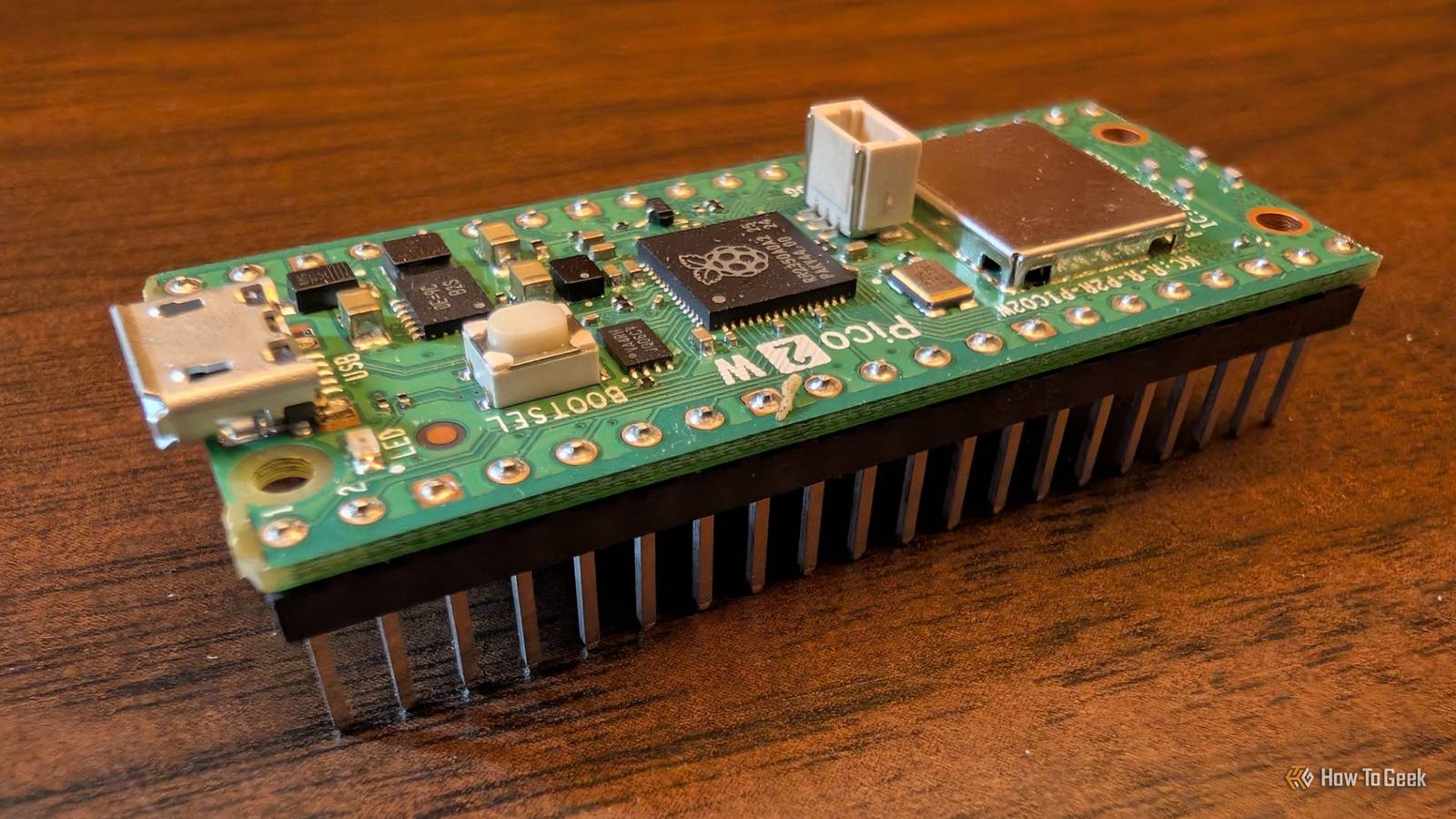
This weekend, you should definitely spend some quality time with your Raspberry Pi.Whether you build an offline media travel kit, NFC-powered jukebox, or an automatic chicken coop door, these three Raspberry Pi projects are sure to keep you busy.Raspberry Pi 3 B Brand Raspberry Pi Storage SD card CPU Quad-Core Broadcom BCM2837 64bit ARMv8 processor 1.2GHz Memory 1GB RAM The Raspberry Pi 3 B is a single-board computer (SBC) with a 1.2GHz quad-core processor and 1GB RAM.
With Gigabit Ethernet and HDMI output, it makes for a great small, low-power device to run smart home or homelab services like Home Assistant, Homebridge, Pi-Hole, or other software on.$35 at CanaKit Expand Collapse Raspberry Pi Zero 2WH Brand Raspberry Pi The Raspberry Pi Zero 2 WW is super tiny and super affordable, but it packs enough computing power for a variety of DIY projects.You can use it to create a handheld retro gaming console, for Klipper/Mainsail, a super compact home or media server, and more.
Plus, the GPIO header pins come pre-soldered for ease of use.$21 at Sparkfun $36 at Amazon Expand Collapse Raspberry Pi 4 Model B Brand Raspberry Pi CPU Cortex-A72 (ARM v8) Memory 2 GB With the Raspberry Pi 4 Model B, you can create all kinds of fun projects, and upgrade gadgets around your home.Alternatively, install a full desktop OS and use it like a regular computer.
$38 at CanaKit See at Amazon Expand Collapse Build an offline media travel kit All you need is Plex or Jellyfin with some storage If you've ever gone on vacation and been let down by hotel Wi-Fi for streaming your media server's content remotely, you're not alone.I've definitely been there myself, and that's exactly where an offline media travel kit comes in clutch.It's actually pretty simple to make an offline media travel system.
The two things you need are a Raspberry Pi (3B or newer) and a portable hard drive.Yes, you can use a portable hard drive for your portable media server.Even on USB 2.0, a portable hard drive can reach up to 480Mb/s, which is more than enough to stream a 1080p or even 4K movie off of.
With USB 3.0, you're looking at 5Gb/s transfer speeds, which is five times faster than Gigabit Ethernet, so you're definitely good there.Simply install Plex, Jellyfin, Kodi, Emby, or any other media platform that's supported on Raspberry Pi.You should be able to direct play any content since it'll be playing locally, so transcoding shouldn't be an issue.
From there, load up your favorite movies and TV shows on the external drive and you're ready to go.It really is as easy as plug-and-play whenever you get to the hotel at that point.Plug the Raspberry Pi in, hook up a keyboard and mouse, connect the drive, and you're ready to go.
Get your jam on with an NFC-powered music jukebox The 90s have never looked so good I still remember going into Denny's and Shoney's as a kid and begging my parents for a quarter to go put in the jukebox to turn a song on.In 2026, you're going to be hard-pressed to find a jukebox in any restaurant, so why not build one at home? This project can be as simple or difficult as you want.You could simply hook up a Raspberry Pi to a touchscreen and use that to pick the songs to play on a connected speaker.
However, the way that I would do this project if I were building it is far more complex.For starters, I would 3D print a jukebox housing for the Raspberry Pi to sit in.Then, I would 3D print some records and embed NFC tags in them.
I'd also hook an NFC reader up to the Pi and embed that in the housing.Then, whenever I wanted to listen to a song, I'd grab the record for the album I wanted, scan it, and watch the custom animation on the screen spin up the record.It'd be a fun piece of nostalgia built from modern tech.
Keep your backyard chickens safe with a coop door controller Never forget to open or close the coop door again My wife and I kept backyard chickens for about two years, and in that time we went from having to open the coop door every morning and close it every night, to having a system that did it for us based on when the sun came up and went down.Our system was based purely on a light sensor, but you actually can use a Raspberry Pi to make something much smarter and easier to control.That's what I'd do now if we got chickens again.
The build is a bit complicated, and you'll need proper power in the coop (or a solar system capable of driving everything).You're going to need quite a bit here, including drawer slides, brackets, rope, a pulley system, and more.However, you're not left out in the cold on this project.
There's a full tutorial for making your Raspberry Pi-powered chicken door right on the BackyardChickens website, so you can follow that guide and let your hens roam without worry in no time.Let your Pi do the hard work for you While some of the projects above will require a good bit of work on your side to complete, once it's done, you'll be able to sit back and relax.The chicken coop door is one such example.
It got really tiring having to wake up early to put the chickens away and then also having to be home at night to make sure they were closed up.With an automatic door, you only have to put a lot of effort in one time, and then you can relax the rest of the time.The same can be said for the offline media server—it takes a bit of time to build it, but then you can just simply enjoy it from then on.
So, let your Pi do the hard work for you.Put the effort in up front to create the project, and then just sit back and enjoy it.
Read More