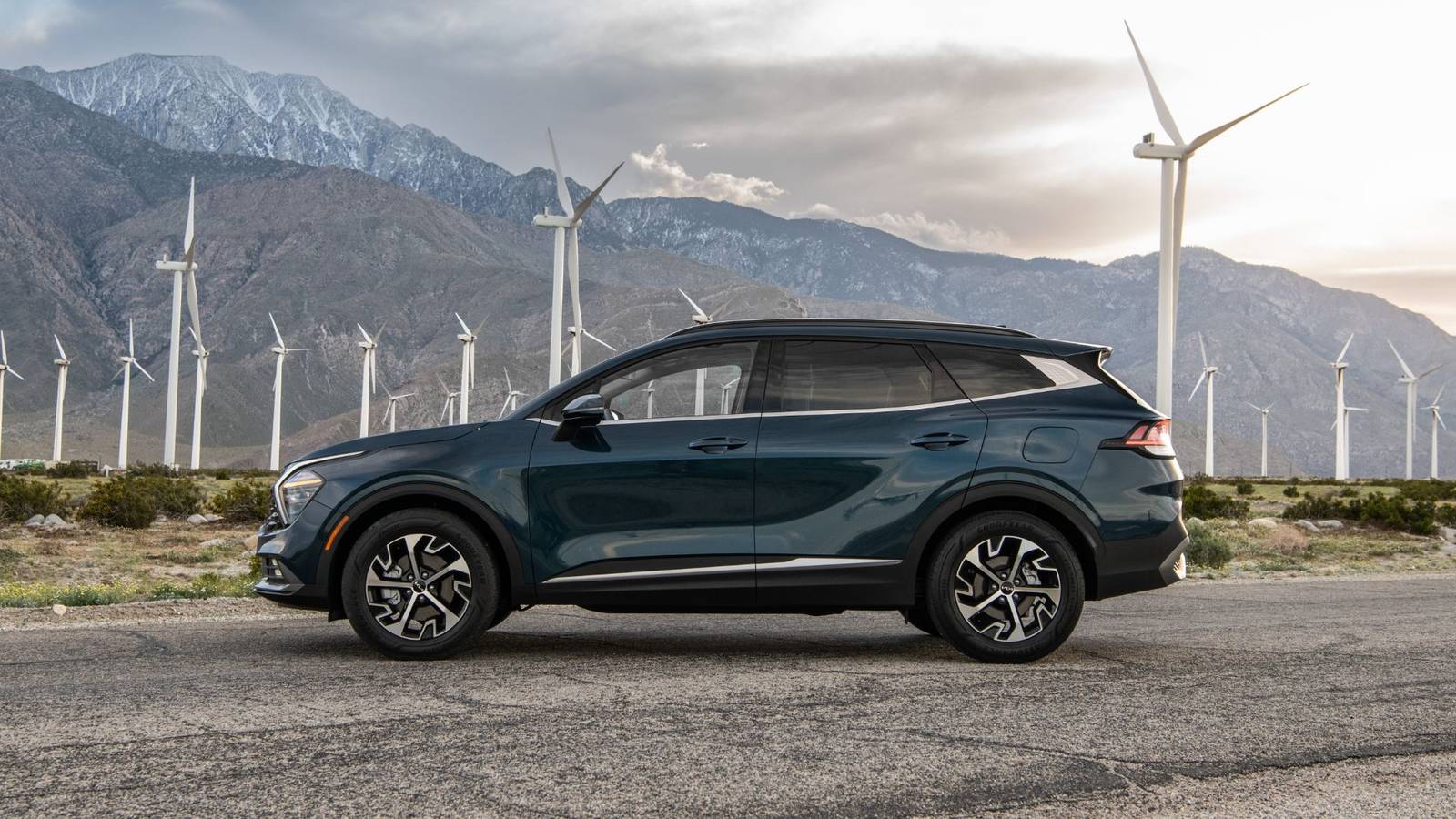
For years, Toyota and Honda were the go-to names for cars that just keep running.Their long-standing reputation for reliability made them the default choice for many buyers.Kia, once seen as the budget pick, has completely turned heads.
With bold designs, nicer interiors, and improving reliability, it’s winning over customers who used to stick with Japanese favorites.The gap between Japanese and Korean brands is shrinking fast.Toyota and Honda still have their legacy, but Kia’s latest models, from the Telluride to the EV9, prove it’s now a serious contender.
How Kia went from budget pick to dependable favorite Once the underdog, now a leader Kia’s journey from a struggling budget brand in the early 2000s to a respected global automaker is one of the biggest turnarounds in recent car history.Back then, Kia cars were cheap, simple, and often struggled with mechanical problems that gave the brand a “just okay” reputation.The early U.S.
lineup, with models like the Sephia and first-generation Rio, focused more on price than durability.After Hyundai Motor Group took over and poured resources into R&D, Kia started reshaping its image and aiming higher than “good enough.” The launch of the ten-year/100,000-mile powertrain warranty made it clear Kia was serious about reliability.That bold move signaled the brand’s new focus on building cars people could trust for the long haul.
Fast-forward to today, and Kia’s dependability tells a very different story.Recent J.D.Power Vehicle Dependability Studies show the brand consistently beating industry averages and even topping Toyota and Honda in some years.
Models like the Sportage, Sorento, and Telluride earn praise for solid build quality and lasting performance.Meanwhile, electrified models like the EV6 prove Kia can innovate without sacrificing reliability.The brand’s transformation shows that smart engineering, tight quality control, and earning customer trust can turn a once-overlooked name into a serious reliability contender.
Toyota’s legacy of longevity and why it still leads the pack An automaker that has maintained its focus Toyota’s reputation for reliability is legendary, built on decades of careful engineering and a commitment to continuous improvement, or “Kaizen.” From the Corolla to the Camry, the brand has stuck to a simple formula: proven mechanical systems, minimal unnecessary complexity, and quality over gimmicks.The payoff is cars that often go well past 200,000 miles with little trouble.That track record keeps Toyota at the top of long-term dependability rankings year after year.
It’s no surprise the brand consistently dominates reports from J.D.Power, Consumer Reports, and RepairPal.Toyota’s focus on doing things right has made reliability more than a feature—it’s the standard.
What really sets Toyota apart is its careful, conservative approach to change.New technology only makes it into cars once it’s proven, tested, and reliable.Take hybrids, for example.
Since introducing the Prius in the late ’90s, Toyota’s hybrid systems have become the global standard for durability and efficiency.From a ten-year-old Tacoma still on the road to a Highlander Hybrid outlasting its peers, Toyota continues to set the bar for what reliability looks like today.Quiz8 Questions · Test Your KnowledgeThe history of Toyota SUVsTest your knowledgeFrom rugged off-roaders to family haulers—how well do you know Toyota's SUV lineup?OriginsModelsMilestonesOff-RoadInnovationBegin01 / 8OriginsWhat was the first Toyota vehicle widely considered to be the foundation of its SUV lineage?AToyota HiluxBToyota Land CruiserCToyota 4RunnerDToyota BlizzardCorrect! The Toyota Land Cruiser, introduced in 1951 as the BJ series, is widely recognized as the vehicle that launched Toyota's SUV legacy.
Originally developed for military use, it proved its durability on rugged terrain and became Toyota's longest-running series.Not quite — the Toyota Land Cruiser is the correct answer.Dating back to 1951, the Land Cruiser was Toyota's original off-road workhorse and the foundation upon which its entire SUV heritage was built.Continue02 / 8ModelsIn what year was the Toyota 4Runner first introduced?A1979B1982C1984D1987Correct! The Toyota 4Runner debuted in 1984 as a compact SUV based on the Hilux pickup truck platform.Early models featured a removable fiberglass rear top, blending pickup practicality with SUV versatility.Not quite — the 4Runner launched in 1984.
It was built on the Hilux pickup chassis and was notable for its removable rear roof section, giving it a unique identity among early compact SUVs.Continue03 / 8MilestonesWhich Toyota SUV was the first from the brand to offer a hybrid powertrain option?AToyota RAV4BToyota HighlanderCToyota SequoiaDToyota VenzaCorrect! The Toyota Highlander Hybrid, introduced in 2005, was Toyota's first hybrid SUV offering.It brought the fuel-saving technology pioneered by the Prius into a three-row family vehicle, marking a significant shift in SUV efficiency.Not quite — the Toyota Highlander Hybrid was the first Toyota SUV with a hybrid option, launching in 2005.While the RAV4 Hybrid came later and became hugely popular, the Highlander led the way for Toyota's hybrid SUV segment.Continue04 / 8OriginsWhat was the original name of the vehicle platform that gave birth to the Toyota RAV4 when it launched in 1994?AIt was based on the Corolla platformBIt was based on the Camry platformCIt used a purpose-built SUV chassisDIt was based on the Celica platformCorrect! The original RAV4 was built on a version of the Corolla's front-wheel-drive platform, making it one of the first true compact crossover SUVs.
This car-based architecture gave it a more car-like ride compared to traditional body-on-frame SUVs.Not quite — the RAV4 was underpinned by a platform derived from the Corolla.This decision was groundbreaking at the time, as it helped define the modern crossover SUV formula that dominates the market today.Continue05 / 8Off-RoadWhat does the name 'Land Cruiser' model designation 'FJ' stand for?AFour-wheel drive JeepBF-series engine, J-series vehicleCForward JourneyDFuji seriesCorrect! 'FJ' refers to Toyota's internal designation system — 'F' denotes the F-series engine fitted to the vehicle, while 'J' stands for the Jeep-inspired vehicle series.The FJ40, for example, became one of the most iconic and beloved Land Cruiser variants ever made.Not quite — FJ stands for the F-series engine combined with the J-series (Jeep-inspired) vehicle classification in Toyota's internal coding system.
The iconic FJ40 Land Cruiser, which ran from 1960 to 1984, helped cement this naming convention in automotive history.Continue06 / 8ModelsThe Toyota Sequoia is named after the giant sequoia trees of California, but what full-size SUV did it effectively replace in Toyota's lineup when it launched in 2000?AToyota Land Cruiser 80 SeriesBToyota T100CToyota Land Cruiser 100 SeriesDToyota 4Runner full-size variantCorrect! While the Land Cruiser 100 Series continued to be sold alongside it, the Sequoia was introduced as a more affordable, truck-based full-size SUV option for the American market, built on the Tundra platform.It filled a segment gap between the pricier Land Cruiser and the mid-size 4Runner.Not quite — the Sequoia was positioned alongside and partially in place of the Land Cruiser 100 Series for budget-conscious buyers wanting a full-size Toyota SUV.Built on the Tundra pickup platform, it offered three-row seating and V8 power at a lower price point than the Land Cruiser.Continue07 / 8InnovationWhich generation of the Toyota RAV4 first introduced the option of a fully electric variant, known as the RAV4 EV?AFirst generation (XA10)BSecond generation (XA20)CThird generation (XA30)DFourth generation (XA40)Correct! A limited RAV4 EV was actually first offered in the late 1990s, but the third-generation RAV4 (XA30 platform) saw a collaboration with Tesla to produce a more modern RAV4 EV in 2012.
It used Tesla's electric drivetrain and was sold exclusively in California.Not quite — the notable modern RAV4 EV was built on the third-generation XA30 platform and launched in 2012 as a result of a partnership between Toyota and Tesla.It was only available in California and used Tesla's battery and motor technology.Continue08 / 8MilestonesToyota discontinued the Land Cruiser for the US market after which model year, before announcing its return?A2019B2020C2021D2022Correct! Toyota stopped selling the Land Cruiser in the United States after the 2021 model year, citing slow sales relative to its high price.However, Toyota later announced the return of the Land Cruiser nameplate for 2024 with an entirely new, more affordable design on a different platform.Not quite — the Land Cruiser's last model year in the US was 2021.
Despite its legendary off-road reputation, high pricing hurt its sales figures.Toyota revived the nameplate for 2024 with a dramatically redesigned, more accessibly priced version that generated enormous excitement among fans.See My ScoreChallenge CompleteYour Score/ 8Thanks for playing!Try Again Honda’s engineering precision and why consistency drives its success Predictability can be a good thing If Toyota’s strength is steady consistency, Honda’s comes from precise engineering.The brand has earned praise for engines and transmissions that deliver both performance and reliability, a rare combination.
From VTEC-equipped Civics in the ’90s to today’s turbocharged Accords, Honda has always balanced fun-to-drive cars with long-lasting dependability.Its “Man Maximum, Machine Minimum” philosophy keeps vehicles reliable without sacrificing driver enjoyment or practicality.This careful balance has made Honda a favorite for enthusiasts and families alike, offering cars that are both engaging and dependable day after day.
Honda built its reputation on solid mechanical engineering rather than flashy tech, and it’s adapted over the years without losing reliability.While infotainment has sometimes lagged behind, engines, transmissions, and suspensions remain among the most dependable in the industry.J.D.
Power consistently ranks Honda near the top alongside Toyota, and models like the Accord, CR-V, and Civic still lead in resale value.Even as the brand explores electrification and advanced driver-assist features, its reliability remains rooted in precise engineering.It’s proof that smart innovation and long-term dependability can go hand in hand when done with care.
How Kia’s current lineup compares with its Japanese competitors The Korean brand is innovating at a rapid pace Kia’s current lineup shows a level of reliability and polish that would have been hard to imagine twenty years ago.Models like the Telluride, Sorento, and K5 earn top marks for dependability and owner satisfaction, putting them on par with Toyota and Honda.J.D.
Power’s 2024 Vehicle Dependability Study even ranked Kia among the top five most reliable brands in the U.S., ahead of both Japanese giants.This rise isn’t by chance—Kia’s parent company has poured resources into quality testing, advanced materials, and manufacturing practices that rival the best in Japan.Kia’s rise hasn’t come without a few bumps.
While its drivetrains are solid, some owners report issues with electronics and infotainment, especially on newer, tech-heavy models.Toyota and Honda take a slower approach, introducing new features only once they’ve been thoroughly proven.Kia’s bold innovation gives it style and appeal, but it can sometimes carry reliability risks that the Japanese brands avoid.
Still, when it comes to value and warranty coverage, Kia stands out.Its long-term peace of mind often surpasses what Toyota and Honda offer.Related This reliable Japanese four-cylinder engine has powered cars for 25 Years A quarter-century of dependability — this four-cylinder just keeps going.
Posts 1 By Tyler Dupont Has Kia finally caught up to Toyota and Honda? In many ways, yes The gap between Kia and its Japanese rivals has never been smaller, though whether it’s fully closed depends on how you look at it.On paper, Kia’s reliability scores now match or even surpass Toyota and Honda in several key segments.Its ten-year warranty adds extra peace of mind, helping ease any lingering doubts about long-term durability.
Models like the EV6 and Telluride prove Kia can make cars that are both dependable and aspirational—a feat once reserved for Japan’s top brands.With a focus on constant improvement, customer satisfaction, and standout design, Kia has moved from underdog to serious contender in the reliability race.When it comes to decades-long longevity, Toyota and Honda still lead the pack.
Both brands have countless vehicles surpassing 300,000 miles, while Kia is still building that track record.Times are a' changing Time-tested reliability remains a major factor, especially for used car buyers who think of Toyota and Honda as nearly indestructible.But if Kia keeps up its current pace, it’s not a matter of if, but when it will reach the same level.
The old reliability hierarchy is starting to shift.Kia’s rise shows that long-term quality and dependability no longer belong solely to Japan’s automakers.
Read More