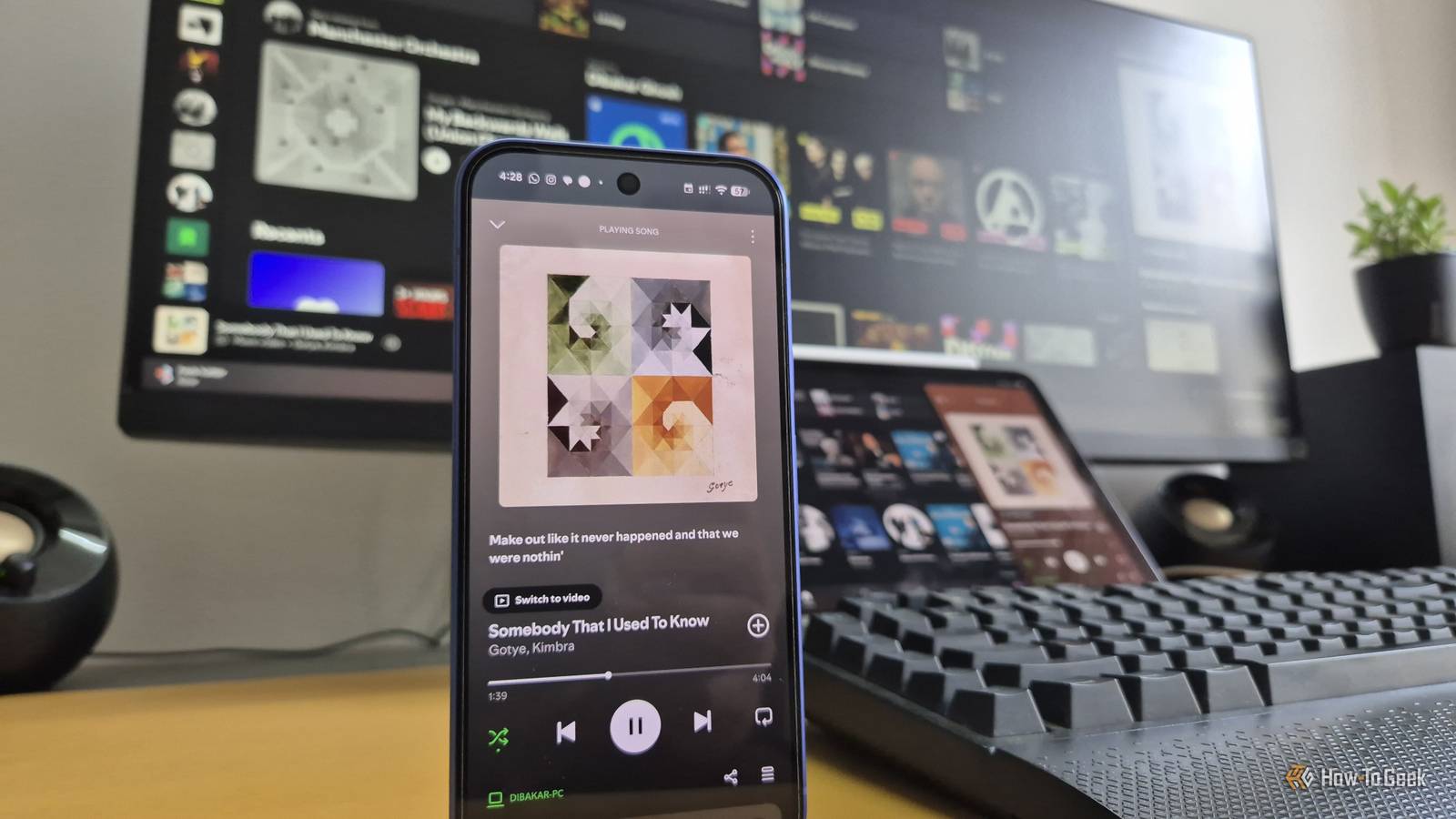
There was a time when Spotify was the easy, obvious, and definitive choice for people who cared about music.It was well-designed, helped you discover music you'd fall in love with, felt fairly priced, and nothing else really made you want to switch.It genuinely earned its position as the most popular — and arguably the best — music streaming app.
Unfortunately, it just hasn't done much to hold onto that position.What makes a music streaming app the “best”? The checklist Spotify used to ace Before we talk about why Spotify is no longer the best music streaming app, it helps to define what a service needs to offer to earn that title.Here’s what I think most people would agree matters: A deep, diverse catalog spanning genres from around the world Hi-Res Lossless audio quality Good playlist and library management Smart search — like finding a song from a lyric fragment A discovery algorithm that surfaces music and artists you’ll actually like A clean interface that gets out of the way and lets you listen A price that feels justified for the experience Of course, you could add more to that list, but if a service genuinely nailed everything above, few people would argue against calling it the “best.” The problem is that no single app checks all those boxes right now — and for a long time, none of them even came close.
Except Spotify.Related Why I Prefer This Old-School Alternative to Streaming (It's Not Physical Media) We all used to pay for MP3s.I still do.
Posts 1 By Bertel King What made Spotify the best? For years, Spotify was the only service that felt like it was seriously trying to hit most of those marks — at least for the way I listen to music.Its catalog was enormous and still is, to be fair.Playlist management worked well and stayed out of your way.
And the pricing felt fair for what the service offered.It didn’t leave much room for complaints.But what made Spotify genuinely special for me wasn’t any of that.
It was the discovery algorithm.I was never particularly interested in whatever was playing on the radio.I like experimental music, niche artists, and people doing genuinely interesting things.
Those artists aren’t always easy to find—but Spotify found them for me.Discover Weekly genuinely felt like it understood my taste, and it kept introducing me to music I probably wouldn’t have discovered otherwise.That also fed into another reason I stuck with Spotify: I wanted to support those artists.
Listening on an ad-supported platform like YouTube always felt like a weaker form of support compared to paying for a subscription service that was sending money back to the people making the music.The problem is that, at the time of writing, most of what made Spotify stand out isn’t exclusive to the service anymore.Other services have caught up, and some have pulled ahead.
Meanwhile, Spotify has been moving in a direction that makes it harder and harder to recommend. Spotify doesn’t have the best discovery algorithm anymore What made Spotify irreplaceable got replaced Music discovery was always the biggest reason I subscribed to Spotify.More than the catalog, more than the interface—Spotify’s ability to find music I didn’t even know I was looking for is what made it feel irreplaceable.I probably wouldn’t know artists like Benjamin Clementine, The Marías, Devin Townsend, Marillion, or Atoma if it weren’t for Spotify’s recommendation engine.
But over the past few years, the recommendations have noticeably declined.The algorithm increasingly feels optimized for pushing viral TikTok songs.Then there was the recent controversy around AI-generated music being pushed into playlists, which feels like the complete opposite of what once made Spotify’s discovery special.
Strangely enough, YouTube has started picking up that slack.I’m still not entirely sure how I feel about that in principle — Google knowing enough about me to serve music I’ll love is a little unsettling — but credit where it’s due.I discovered Manchester Orchestra and Gregory Alan Isakov through YouTube, and those artists genuinely stayed with me.
Spotify hasn’t given me discoveries like that in a while.Even YouTube Music’s curated playlists for specific moods and situations — study, sleep, workouts — have been noticeably better lately.Spotify’s often feel like they exist to fill a category, while YouTube’s feel more thoughtfully curated, at least to my taste.
And this isn’t a small problem.Discovery was Spotify’s identity for me and a lot of my friends.It’s what justified the subscription over every other service.
Losing that edge isn’t just another complaint.It feels like the foundation cracking.Related I used both Spotify and YouTube Music for a month, and the winner wasn’t even close Round and round I go again.
Posts 12 By Sydney Butler Spotify isn’t helping me support artists anymore Your money isn’t going where you think it is I hate seeing artists I love stop making music because they can’t sustain themselves financially.One of the main reasons why I subscribed to Spotify was because I wanted to support the artists I listened to.I assumed that paying for a subscription was doing more for musicians than listening on ad-supported YouTube ever could.
If I remember correctly, artists themselves used to actively encourage people to stream their music on Spotify, so I assumed the arrangement was at least reasonably fair.That assumption didn’t age particularly well.At this point, it’s hardly a secret that Spotify’s artist payouts are widely criticized.
The issue has been covered extensively by journalists, musicians, and even economics researchers.I’d be more willing to excuse it if low payouts were just an unavoidable industry-wide problem — but that's not entirely true.Exact payout figures are difficult to pin down because streaming royalties vary based on region, contracts, and listening patterns.
The consensus is that artists earn significantly more per stream on Apple Music than they do on Spotify, sometimes close to double.What’s more, Apple Music actually costs less than Spotify in most regions, including where I live.As such, I’m paying more, while the artists I listen to are getting paid less.
How does that make sense? Bandcamp is one of the best platforms for discovering indie artists and supporting them more directly and meaningfully.Spotify is no longer about music anymore The slow creep of everything that isn't music Somewhere along the way, Spotify decided it wanted to become an audio platform rather than just a music app.The default interface is now filled with podcasts, and the company is even expanding into voiced long-form articles — sometimes using AI-generated voiceovers.
I get the business logic.Spotify wants to be the one-stop app for all your audio.But that’s not what I want from a music streaming service.
I want music.Other services have added podcasts too, but few of them make podcasts feel as dominant as Spotify does.When I open Spotify now, it increasingly feels like I’m being sold a vision for the platform that doesn’t align with why I subscribed in the first place.
Related Apple Podcasts vs.Spotify: Which Is Better? Choose what's best for you.Posts 3 By T.M.
Amrita What about Hi-Res Lossless audio? Truthfully, it was never about audio quality Most people, including me, were calling Spotify the “best” music streaming service long before hi-res lossless audio became part of the conversation.I mostly listen to music from my phone using Bluetooth earbuds, so in practical day-to-day use, I probably wouldn’t notice much of a difference anyway.That’s why I’m judging Spotify more heavily on everything else.
That said, if Hi-Res Lossless audio matters to you, then yes — it’s absolutely another reason Spotify no longer feels like the clear best option.The company announced they’d offer lossless audio back in 2021, and we only got it in 2025.On top of that, they're only offering 24-bit/44.1 kHz FLAC, whereas with Apple Music you get 24-bit/192 kHz.
As such, if using the music service with the higher number is important to you, switching services makes sense. Related Lossless vs.Hi-Res Audio: What's the Difference? And which one is more important if you're looking for the best listening experience? Posts By Kris Wouk So, what’s the best music streaming app right now? There’s no clear winner—but a pretty clear direction Here’s the uncomfortable truth: there isn’t a single “best” music streaming app right now.Some services offer excellent audio quality but weaker catalogs.
Others excel at music discovery and variety but fall short elsewhere.No platform currently dominates across every category that matters.That said, if you were trying to build the best overall setup today, the combination of Apple Music and YouTube Music probably makes the most sense.
Apple Music Subscription with ads No, all are ad-free Price Starting at $11/month ($6/month for students) Listen to your favorite songs, artists, and playlists on Apple Music.Stream music in lossless audio, download songs, and play them offline.See at Apple Expand Collapse YouTube Music Subscription with ads No, plans are ad-free Live TV No Price Included with YouTube Premium ($14/month; $8/month for students) or $11/month standalone ($5.50/month for students) YouTube Music seamlessly integrates with YouTube, allowing you to access over 100 million titles.
It comes with a 30-day free trial, and even its free tier supports skippable ads.Visit YouTube Music Expand Collapse Ideally, Apple Music would handle most of your actual listening.The audio quality is excellent, the catalog is massive, artist payouts are generally viewed more favorably, and the Android app is surprisingly good, so you don’t need to buy into the Apple ecosystem to use it. Related 7 Great Spotify Features That Apple Music Has Too Find your Release Radar and DJ on Apple Music.
Posts 1 By Joe Fedewa For day-to-day listening, Apple Music simply feels like the cleaner and better-value product right now.Its biggest weakness is discovery, which is where YouTube Music complements it well.You can use YouTube Music to discover new artists and tracks, then save the ones you love to your Apple Music library.
And realistically, YouTube Music might not cost you anything extra if you’re already paying for YouTube Premium.You can export playlists from YouTube Music and move them to Apple Music using tools like Google Takeout.Spotify is no longer the best—it’s just good enough Just because I’m saying Spotify is no longer the best doesn’t mean I'm calling it the worst.
It still has its merits — a massive catalog, excellent device support, and a polished core experience.However, it’s not what I subscribed to.There was a time when Spotify felt like a platform built for people who genuinely cared about discovering new music.
That’s not the vibe anymore.Instead, it seems optimized for broader passive consumption.From a pure business standpoint, chasing that larger audience makes sense — but doing it at the cost of your old identity is a strange trade to make.
Related I replaced Spotify Premium with Jellyfin, and this app sealed the deal Feishin let me bid farewell to Spotify Premium and embrace a new era of music streaming.Posts 7 By Jordan Gloor
Read More