We’re kicking off the weekend 3D Printing News Briefs with the winners of the 2026 Formnext Awards, and an unpacking solution AM Solutions debuted at the trade show.Then, Protolabs is increasing its MJF printing capacity to meet growing drone development demand.We’ll end with 3D scanning for dog orthotics.
Winners of Formnext 2026 Awards Announced Copyright Formnext, Mesago Messe Frankfurt, Marc Jacquemin Just a few days ago, the winners of the Formnext Awards 2026 were honored in a ceremony at the event.They also received cash and non-cash prizes through the support of Renishaw and the Fomas Group, along with 3D printed trophies designed by Sutosuto and produced by FKM Sintertechnik.The AMbassador Award, recognizing individuals or organizations that create impact through training, educational initiatives, or personal advocacy, was Dr.
Michael Kraemer of the Additive Manufacturing Center (AMC) at TU Darmstadt, who supports 50-60 students and their projects a year.Maya Kaplan won the Design Award, which honors concepts that combine functional and aesthetic qualities, for her fully 3D printed Computational Bra, developed for her master’s project at the Technion – Israel Institute of Technology.The (R)Evolution Award recognizes products, services, or technologies that deliver exceptional value to users, and Thought3D won for its Drywise inline filament conditioning solution.
Engineering project cAIclone, which developed 3D printed, AI-optimized hydrocyclones for separating fine particles, won the Rookie Award, given to those with promising business concepts who haven’t yet founded a company, or founded it within the past year.The Start-up Award is given to young AM companies with a market-ready product and viable business models, and this year’s winner was sallea, which develops 3D printed wash-out tooling and core technology for producing lightweight parts with complex geometries.Finally, FlexCycle Solutions, which developed a mechanical, no-melt process to convert electronic waste into copper AM powder, won the Sustainability Award supported by Renishaw.
Congratulations to the winners! AM Solutions’ New D3 for EOS P 770 Debuted at Formnext At Formnext, AM Solutions – 3D post processing technology presented its Powder Management System (PMS) and the Direct Feeding System (DFS), and also debuted its new D3.This gentle unpacking solution was developed for use with the EOS P 770 3D printer.While the D1 is for the EOS P3 Next, print jobs for the EOS P 770 weigh nearly twice as much.
So AM Solutions engineered the D3 as a standalone system.It’s divided into three stations, through which the build passes sequentially within an enclosed system.Once the print cools to about 60°C, the exchangeable frame is loaded from the printer.
The parts, and the powder, are then automatically pushed by an electrically driven actuator into a chamber, which moves into the central process station; once it’s secured, the vibration platform starts up.In the final station, powder flows through integrated screens and into waiting Polyboxes.Then, the chamber returns to the loading station, and the frame base gently lowers, along with the parts, which are ready for removal.
All told, a PA12 build job takes about 20 minutes to go through the process.Instead of using potentially damaging compressed air, the D3 uses the powder as a sort of protective cushion, leaving it within the chamber for the first vibration cycle.It’s said to be easy to use and clean, and users can adjust the vibrations, and even store custom recipes.
“Industrial additive manufacturing does not end with the printing process.To maintain productivity and cost efficiency throughout the entire process chain, high-performance peripheral solutions that are optimally aligned are essential,” said Vanessa Seidenschwarz, Head of Product and Program Management Polymer at EOS.“The D3 from AM Solutions is designed to meet the requirements of large-format production systems, making an important contribution to efficient and scalable additive manufacturing.” Protolabs Increases HP Multi Jet Fusion Capacity Digital manufacturing leader Protolabs shared its Q3 2026 financials recently, reporting that its 3D printing segment experienced a solid rebound: revenue was $22.4 million, up 11.4% year-over-year and more than 8% sequentially.
Now, the company announced that it has increased its HP Jet Fusion 5600 series capacity by 50%, specifically to meet growing demand from aerospace, defense, and drone companies.Protolabs’ MJF printing revenue in its U.S.factories grew more than 40% YOY through Q3, and this was partially due to drone customers.
The company currently serves over 100 drone manufacturers, and said revenue from that segment is up more than 90% since 2023.The HP 5600 series offers higher build density, so users can print more MJF parts at the same time.Plus, Protolabs produces parts with impact-resistant Nylon PA12, used for lightweighting with MJF, at its North Carolina facility, which has ITAR registration, plus AS9100D and ISO 9001:2015 certifications.
The company’s increased MJF capacity will enable it to better serve these key industries.“As drone and aerospace customers scale production, we’re expanding Multi Jet Fusion capacity to deliver the lightweight, production-ready parts they need.Our commitment to continuous improvement keeps us at the forefront of innovation for industries moving at the speed of software,” said Suresh Krishna, President and CEO at Protolabs.
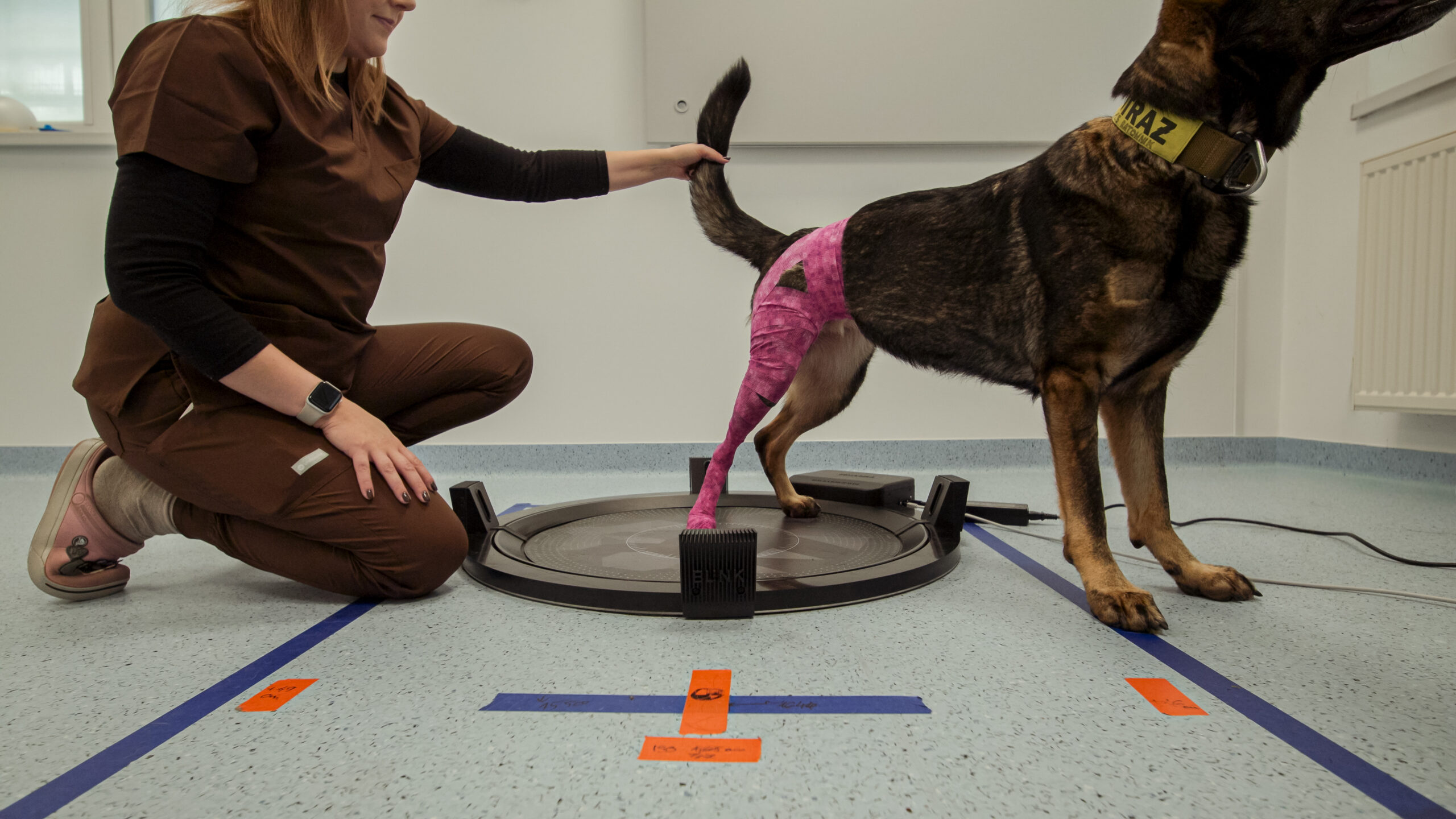
Wimba Launches Blink 3D Scanner for Quick Canine Orthotics Production Veterinary medtech company Wimba makes custom 3D printed orthotics & prosthetics for dogs in more than 30 countries, using 3D scanning, AI, and HP’s Multi Jet Fusion technology.It’s delivered more than 2,500 custom orthoses since 2022, and about 450 clinics measure their canine patients using its WimbaScan smartphone scanning process.But it can be hard to measure a canine patient’s limb, as dogs aren’t known for standing perfectly still for very long.
That’s why the company just launched Blink, a patent-pending 3D scanner developed in-house that can capture a 360° limb scan in less than two seconds.It sounds very simple: the dog stands on the Blink platform, which is silent and has no moving parts.A clinician presses a single button, and four sensors then capture the entire limb in one pass.
Within seconds, the detailed 3D model goes straight into WimbaAPP so the owner can see it, and the clinic can then order the orthosis via Wimba GO or Wimba PRO.Blink works with WimbaScan, and supports remote installation and automatic calibration, so clinics can get started ASAP.“A dog will give you a second or two of standing still, not a minute.
We built Blink around that moment.The scan is done before the patient has time to shift its weight, and it’s the same whoever presses the button,” said Franek Kosch, CEO and co-founder of Wimba.The first production batch of 100 units ships in early 2027.
Subscribe to Our Email Newsletter Stay up-to-date on all the latest news from the 3D printing industry and receive information and offers from third party vendors.Print Services Upload your 3D Models and get them printed quickly and efficiently.Powered by FacFox Powered by 3D Systems Powered by Craftcloud Powered by First Mold Powered by Xometry 3DPrinting Business Directory 3DPrinting Business Directory
Read More