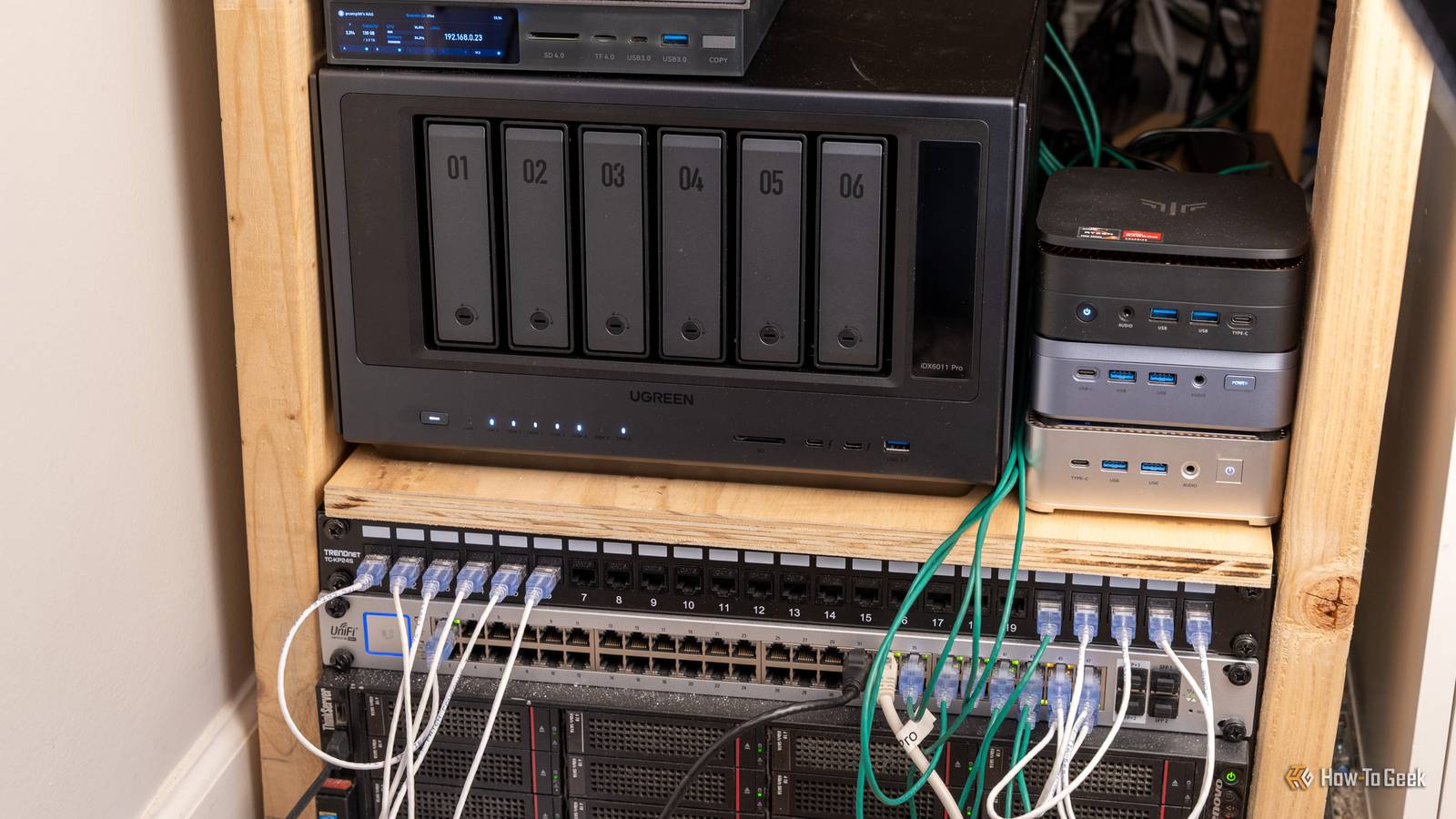
Self-hosting is awesome, because you own the hardware, and you have control over access and uptime.However, unless you've also written the software that runs your self-hosted services, there's still much of your homelab that depends on a third party to function.All it takes is one bad update or decision to slowly change a fantastic self-hosted service into something that costs you money, or works worse than it did before.
Why does this happen? And, what should you do to limit your risk, or take a different path? Your server can still come with someone else’s payment rules Your house, their rules Close As grownups, we all understand that creating and maintaining the software that we use in our self-hosted setups isn't free.Even if the software itself is open-source and maintained by an army of volunteer coders, someone has to pay for hosting, and all the other costs that come with maintaining a software project.Plex is a good example of an excellent, popular self-hosted app that has slowly moved more and more things behind a paywall.
Some have been paid features from the start, like hardware-accelerated transcoding.You might own the hardware capable of doing the job, but unless you pay Plex some cold hard cash, you can't unlock that feature.More controversially, Plex took remote streaming (watching your content from outside your LAN) and started charging for it.
It got a separate subscription tier that excluded the other features of Plex Pass, and this was not a popular move.Predictably, a year after introducing this remote streaming subscription, Plex bumped the price by 50%.And, as if it didn't think its image had been damaged enough, Plex tripled the price of its lifetime pass.
While, if you're already set up and invested in Plex, you might take this on the chin and just keep going, there's a bigger problem.Now that Plex has its foot in the door, it can slowly increment these subscription prices, and there's a chance that lifetime pass won't be around forever, even if you can swallow the upfront cost.The answer is to use something like Jellyfin or Emby.
My colleague Andy Betts actually runs Plex and Jellyfin side-by-side.This lets him benefit from the slick Plex interface, but also access features like downloading and hardware transcoding at no cost.An update can take away the interface you depended on You're always one update away from disaster In 2025 the MinIO project made a massively controversial update to its free open-source offering.
As reported in Cloudian, in what it describes as a "bait and switch," MinIO removed its intuitive web management interfaces from the free version.This forced users to either rely strictly on the command line interface or switch to a paid enterprise plan.Since MinIO has been used by some larger organizations, switching to those paid plans could potentially cost thousands or even millions of dollars.
Some homelabbers were affected as well, since MinIO was a neat and free way to integrate Amazon S3 storage into your setup.This has left people scrambling to find an alternative.Sometimes the project stops, and the community has to pick it up It's one of the FOSS superpowers It also seems like the open-source MinIO will only be getting security patches going ahead, which means that, effectively, the open-source version is on life support.
But, if you were using an open-source solution that suddenly loses support, there's no reason a new project can't just fork from where the last one left off.In the case of MinIO, there are a few forks, with Silo looking like the favorite, but since I have used neither this fork nor the original myself, we'll have to take community vibes as a sign.That is the issue with forks following the collapse of a popular FOSS project.
Quite a few people will try to fork it out in the hopes that their version will become the new popular thing.However, it will take a while to see if any of these forks result in a stable and well-maintained project.Choose projects you can support—and leave if necessary Whether it's open-source or a commercial closed-source project, your self-hosting setup will always be vulnerable to the apps you use somehow becoming worse.
Unless your network is completely isolated and self-contained, you also can't just lock in to the last "good" version and stick with it forever.Sadly, the state of world cybersecurity is such that someone will eventually figure out how to hack older versions of these apps, which is a disaster.The best you can do is pick your projects carefully.
It's not just about how good the software itself is, but how well-run the project is.Before you commit to something and make it part of your homelab, you have to ask whether the project has a sustainable business model, of it has incentives to "enshittify" its product down the line.If it has a clear way community members can support it, then even being a little rough around the edges is better than getting the rug pulled out of you when you're too entrenched to do anything other than pay up.
Read More