Australian metal 3D printing company Aurora Labs (ASX: A3D) is raising A$6 million ($4.2 million) to expand production of its small turbojet engines for defense and aerospace customers.The financing comes just days after Aurora secured its first US engine order and reflects a business increasingly focused on manufacturing propulsion systems, rather than selling 3D printing technology.This move is an interesting one because Aurora has spent years developing its own metal 3D printers and manufacturing technology.
Now it is using that know-how to make engines for drones and other uncrewed aircraft, with plans to move from small production runs to higher volumes.The new funding will help make that possible, although the company is still in the early stages commercially.Aurora secured commitments for the A$6 million placement by issuing roughly 109.1 million new shares at A$0.055 each ($0.039), a 6.77% discount to its last trading price of A$0.059 ($0.041) on October 23.
The company requested a trading halt on October 26 ahead of the announcement.According to the company, the financing will take place in two stages.The first, worth roughly A$4.6 million ($3.2 million), is scheduled to settle in early November.
The remaining A$1.4 million ($1 million) requires shareholder approval, with a meeting planned for January 2027.The placement includes a A$550.000 ($386.762) commitment from chairman David Trimboli.Another investor is Walkinshaw Group Holdings, part of an Australian manufacturing group known for its automotive engineering, vehicle development and production capabilities.
Aurora describes Walkinshaw’s participation as strategic, with the investment opening discussions about possible manufacturing support as Aurora increases production.What’s more, there may also be opportunities for Aurora to provide metal additive manufacturing services to Walkinshaw.Aurora plans to use the proceeds to expand its turbojet production lines, purchase industrial metal 3D printing equipment, prepare manufacturing documentation and systems, and add personnel needed for larger production volumes.
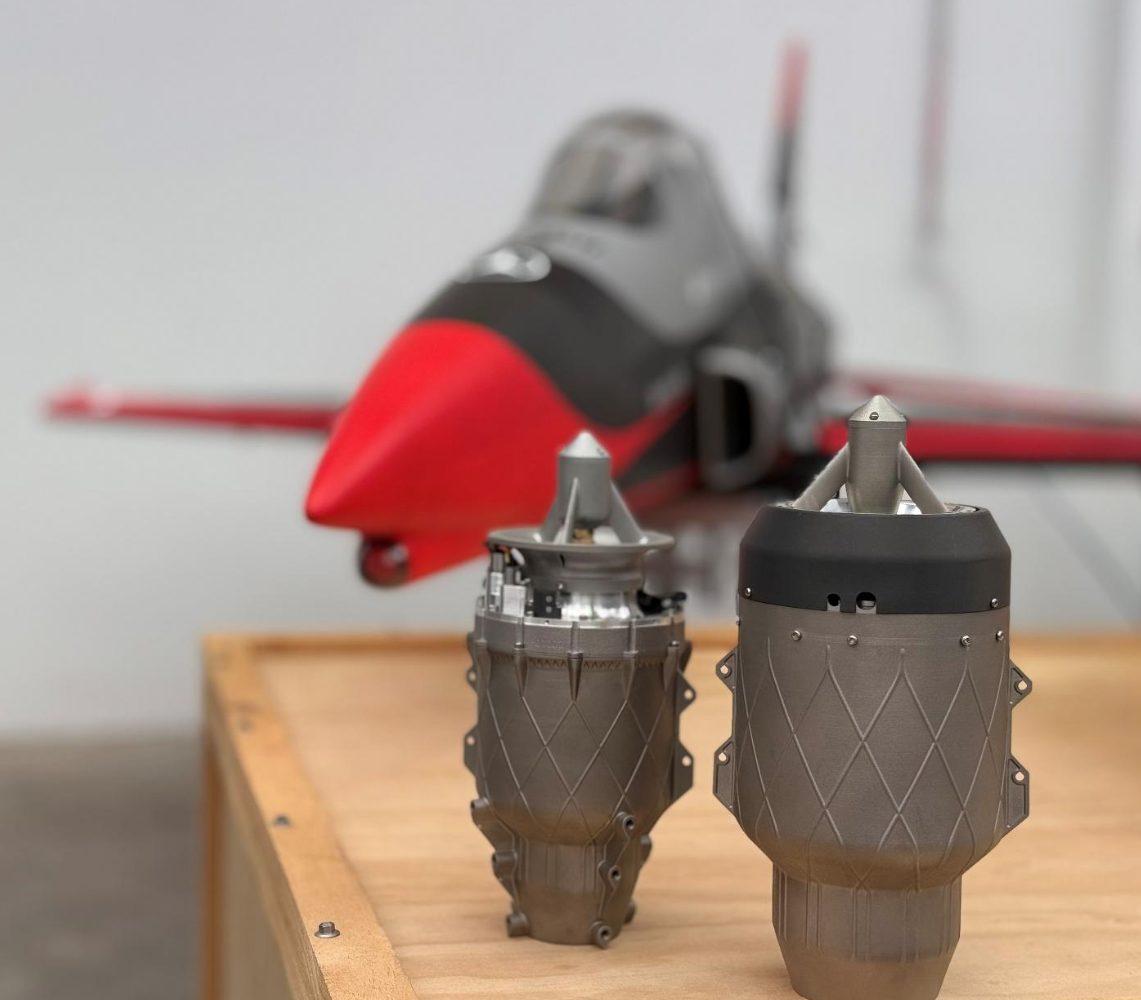
Funding will also support business development, intellectual property protection, aerospace quality compliance and working capital.AU4 micro gas turbine propulsion systems.Image courtesy of Aurora Labs.
From Building Printers to Manufacturing Engines The most interesting part of Aurora’s strategy may be how it plans to use 3D printing.Historically, the company developed proprietary metal additive manufacturing equipment, including laser powder bed fusion technology.But in June 2026, Aurora announced plans to use its own 3D printers for research and development, while relying on industrial 3D printers from other manufacturers to produce parts at scale.
So instead of building additional proprietary printers every time it wants to increase engine production, Aurora can invest in established equipment supported by outside manufacturers.Its own technology remains important for developing new components and refining manufacturing processes, while production can expand using machines already available on the market.The company had already received a A$1 million Australian government defense manufacturing grant in June, which it agreed to match with its own funds.
That A$2 million investment was intended to help purchase and commission a large-format industrial metal 3D printer at its Canning Vale facility in Western Australia.At the center of this manufacturing strategy is Aurora’s AU4 turbojet, a compact engine designed for uncrewed aircraft and defense applications.It produces up to 400 newtons of thrust, roughly equivalent to 40 kilograms of force, and weighs some 3.9 kilograms including its fuel pump, according to Aurora.
The AU4 works like other turbojet engines.It takes in air, compresses it, mixes it with fuel, and burns the mixture to create thrust.Its small size makes it suitable for drones and other aircraft that need jet power without a large, heavy engine.
3D printing plays an important role in how Aurora makes the AU4.It allows the company to combine several parts into a single component, reducing the number of pieces that need to be manufactured and assembled.Aurora Labs’ AU4 turbojet.
Image courtesy of Aurora Labs.In March 2025, Aurora reported removing 40 parts from the engine’s design.By redesigning the engine casing to include the exhaust nozzle, engine mounts, and gas seal, it eliminated 23 parts.
Changes to the combustion chamber, where fuel burns to generate heat, removed another 17.Aurora also reported a 6% reduction in fuel consumption compared with a conventional engine design, partly because it improved the engine’s internal structure and heat management.Not every part of the AU4 is 3D printed.
Aurora also uses traditional manufacturing methods, including machining, along with components from outside suppliers.The next challenge is producing these engines in larger numbers while keeping quality consistent and costs under control.Early Orders Aurora has begun turning its propulsion technology into commercial orders.
On October 22, the company announced its first US engine sale, which included three AU4 turbojets and associated integration services for US$42,000.The customer, an unnamed US aerospace and defense company, plans to use the engines in an experimental aircraft program.According to the company, “The customer chose Aurora because they see an advantage in our approach to additively manufactured turbines.
We’ll supply the engines and support their integration into the platform.The program will also test our propulsion technology against demanding performance objectives, which feeds directly into our future defence use cases.” Furthermore, CEO Andrew Garth noted that “Our first US engine sale is a practical step in expanding Aurora’s international customer base.Our immediate focus is on delivering the engines and supporting their integration, while developing opportunities for further commercial sales.” Andrew Garth and the team from Aurora Labs at Land Forces International Land Defence Exposition displaying the AU4 3D printed micro gas turbine propulsion system.
Image courtesy of Aurora Labs via LinkedIn.Aurora also received an A$250,000 ($175.801) order for 20 AU4 propulsion systems from Australia’s Sovereign Propulsion Systems in December 2025.By June 2026, it had announced progress on deliveries under that order.
In May, Aurora signed a teaming agreement with European defense company MBDA, adding another potential route into defense propulsion programs.In August 2026, Aurora also earned AS9100D aerospace quality certification, which shows that its quality management systems meet industry standards for aerospace and defense manufacturing.This is important when supplying parts and engines to customers with strict quality requirements.
Aurora’s latest annual results, published in August, show that the company still has a long way to go.For the year ended June 30, 2026, it reported revenue of A$564.218 ($396.760) and a net loss of A$5.1 million ($3.6 million) for the financial year ended June 30, 2026.And since it ended the year with A$2 million ($1.4 million) in cash, the new funding is important for both expansion and daily operations.
Subscribe to Our Email Newsletter Stay up-to-date on all the latest news from the 3D printing industry and receive information and offers from third party vendors.Print Services Upload your 3D Models and get them printed quickly and efficiently.Powered by FacFox Powered by 3D Systems Powered by Craftcloud Powered by First Mold Powered by Xometry 3DPrinting Business Directory 3DPrinting Business Directory
Read More