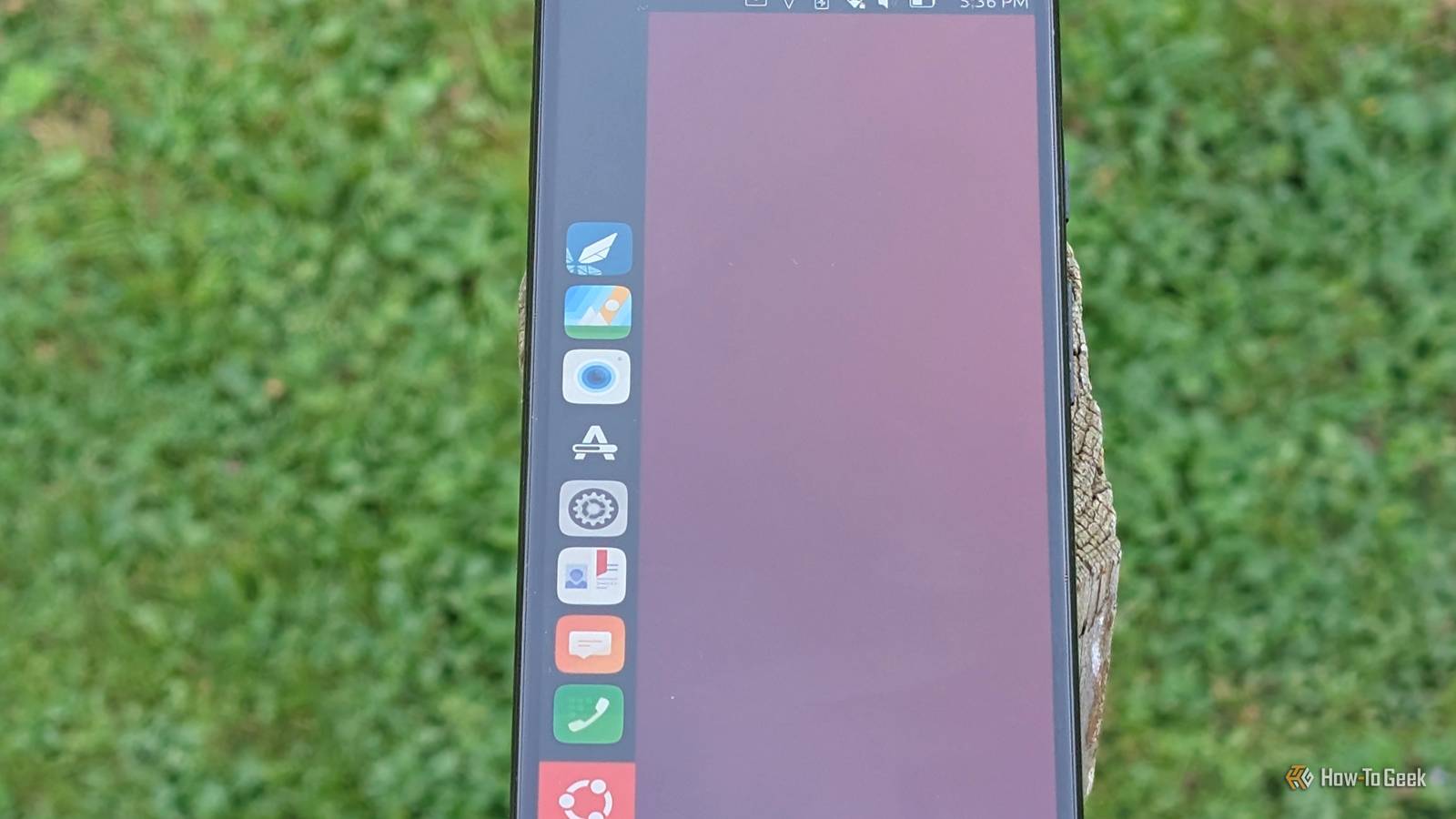
DeGoogling your digital life is difficult, though not impossible, when you have an Android phone.By default, all of Google's services are deeply integrated into the operation of the phone; if you start removing them, you'll quickly find your phone no longer functions.You can replace Android with a version of Ubuntu designed specifically for mobile devices.
Getting Ubuntu Touch running was very easy The UBports Installer makes flashing painless Close Once, installing a new operating system on a phone was a tall order.Thankfully, Ubuntu Touch uses a program called UBPports that makes the job quite easy—it is as close to a one-click desktop app as you can get.So long as you have a device that is supported and an unlocked bootloader, you won't have an issue.
The only sticking point is that your phone must be running a specific version of Android Related What’s a bootloader? And 10 other Android terms you should know Learn a little more about the device in your pocket.Posts By Joe Fedewa In my case, I'm using an old Pixel 3a that has been sitting in a drawer for years.It's an ideal candidate, since Ubuntu Touch advertises that the software for the Pixel 3a is 97% complete.
Ubuntu Touch is actually very nice Most things worked without a problem Close I expected my first few minutes on Ubuntu Touch to be unpolished and commensurately unpleasant, but that wasn't really the case.The basic features, like a calendar, email, photography, and media playback are all functional and quite minimalist.I wouldn't say that the minimalism is either.
The biggest practical gap is the app ecosystem.Android and iOS have several apps each that cover almost every conceivable way to use the hardware in a phone.Ubuntu Touch is much more immature and has relatively few native apps, but support for web apps goes a long way to making up for the deficit.
If you use an Android app, there is a program called Waydroid that allows you to run them in a container.Some apps—like Google Wallet—won't work with that setup.You're going to run into issues with banking apps and 2FA apps too.
The interface is unique Ubuntu Touch will feel familiar to anyone that has used Ubuntu, but it is fairly different from most modern smartphones.Most of the control comes from swiping from the left or the right rather than the top or the bottom.It took about 20 minutes to get used to it.
Cellular issues plagued my phone A phone that struggles to be a phone is a tough sell I love the idea of a Linux-based, privacy-focused phone, but my tests revealed one specific problem: the cellular connection was weirdly spotty.Mobile data would drop at random, and I had to toggle it to get it back.This be related to swapping between towers, but I couldn't isolate the issue.
I'm not alone with this issue either.In fact, one recent update (24.04-2.0) specifically aimed to address problems with mobile data, though that wasn't pushed to the Pixel 3a builds.Part of the problem probably stems from Voice-over-LTE (VoLTE).
VoLTE on Ubuntu Touch is experimental, and support depends on your carrier, your region, and your specific device—there is some variance between phones sold in different regions.This is especially pertinent since carriers in the United States dropped 3G years ago, which means my Pixel 3a has nothing to fall back on if VoLTE fails.Whatever the specific issue with the cellular modem is, I wouldn't count on cellular working on an unsupported device at this time.
Thankfully, Wi-Fi didn't seem to have the same issue.I was able to walk around with my phone connected to Wi-Fi and browse the internet without a problem.So far as I could tell without rigorously testing it, the Wi-Fi performance wasn't substantially different between Ubuntu Touch and stock Android.
That makes it an appealing as a replacement for Apple's classic iPod—a smart device with Wi-Fi connectivity, a camera, a mix of apps, and no cellular connection.De-Googling via Ubuntu Touch is still a ways away Ubuntu Touch was actually pleasantly surprising on the whole.Most things worked, it runs well, and looks good, but the cellular issue is currently a deal-breaker.
Thankfully, the project is obviously moving in the right direction.July's 2026 update aimed to address some cellular issues, and while it didn't solve issue (which could always be due to a quirk with my device, not the hardware), it seems it improved things for many others.If I could get Ubuntu Touch on my current Pixel (an 8 Pro) with a 2FA app and reliable 5G, I'd be willing to make the change.
Ubuntu Touch does open up other interesting avenues, though.Ubuntu is more friendly to tweaking and modification than stock Android, and the Wi-Fi connectivity works well.I'm very tempted to try and turn my phone into some kind of tiny server for my homelab.
It isn't powerful enough to run an AI, but it could easily host a simple game server or a network monitor.
Read More