Thermal cameras are really cool, because they give you the ability to clearly see something we humans usually can’t: temperature.It is interesting to look at the world through that lens.Thermal cameras are also very useful when working with anything that involves heat, such as for spotting a leak in an HVAC system or a component on a PCB that is overheating.
To get in on that action, Katie Dumont of element14 Presents used an Arduino UNO R4 Minima board to build her own thermal camera.Dumont’s camera design relies on the Seeed Studio MLX90640 thermal imaging sensor.Like all sensors in this class, it works by using a grid of thermopiles to detect the tiny amount of heat imparted by incoming infrared waves.
The MLX90640 has a 32×24 array, which is the raw resolution of the thermal image it produces.It spits out the raw data over I2C, so Dumont needed a way to do something with that.For that job, Dumont chose an UNO R4 Minima.
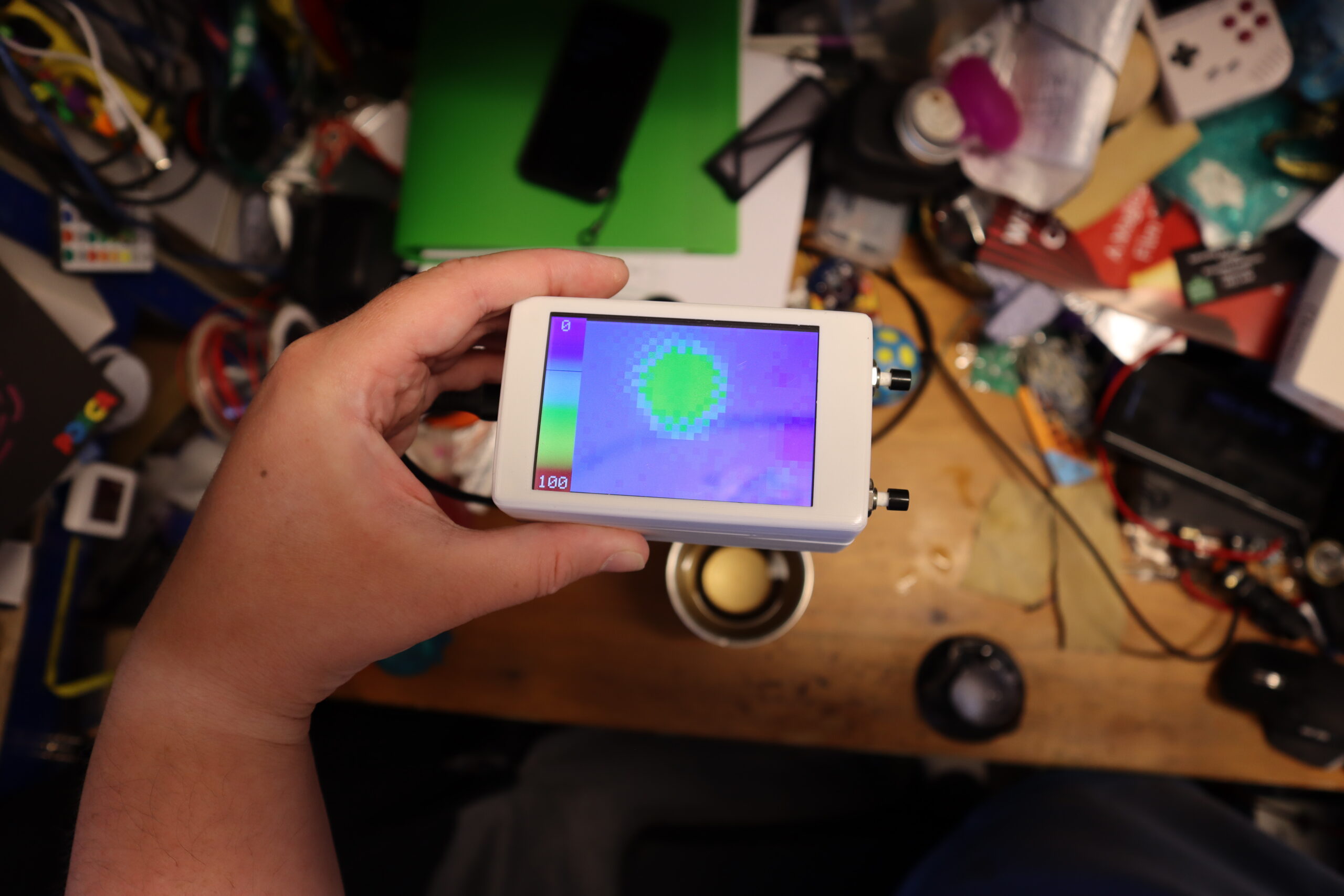
It grabs the data from the MLX90640 over I2C, then processes that into an image to display.Most of Dumont’s work went into developing the user interface, which shows up on a DFRobot Fermion TFT capacitive touchscreen.A couple of physical buttons make it easier to quickly adjust settings like range.
Those components all fit into an enclosure that she designed in FreeCAD and then 3D-printed.The result is a nifty little thermal camera that Dumont can use as a tool for her work, or simply to take a peek at the world through an infrared lens.
Read More