HDMI, DisplayPort, and USB-C are the most popular ports today, but they're not the only ports in use.In fact, if you take a look at the most popular ports today across all electronics, you'll find that a surprising number of them have been around for a long time.Add How-To Geek on Google Add as Preferred Source Follow on Google Discover These are 7 ports that have hung around because they're great at what they do.
The 1/4-inch jack A 19th-century telephone switchboard plug Close The 1/4 inch connector first entered widespread use in the in early telephone exchanges.Today, you'll still find it in use on guitars, speakers, and a range of other professional audio devices.It, like most of the other ports on this list, has remained in use because it is extremely practical.
It is rugged enough to survive getting dropped, stepped on, yanked out accidentally, and can handle high-voltage—like from an amp to a speaker—and line-level signals—like out of a guitar—without a problem.It is inexpensive, easy to manufacture, and you can often repair them in the field if one breaks.There are really only two trade-offs, and they're pretty minor.
The first is size: they're pretty bulky compared to USB-C and other modern ports.The second is a bit of confusion that crops up between the stereo and balanced versions, which use the same physical connector.The 3.5mm headphone jack Phones might lack them, but everything else loves them The 3.5mm port, which was ubiquitous on phones for nearly a decade and remains a mainstay of other consumer electronics, is basically the little sibling of the 1/4 jack.
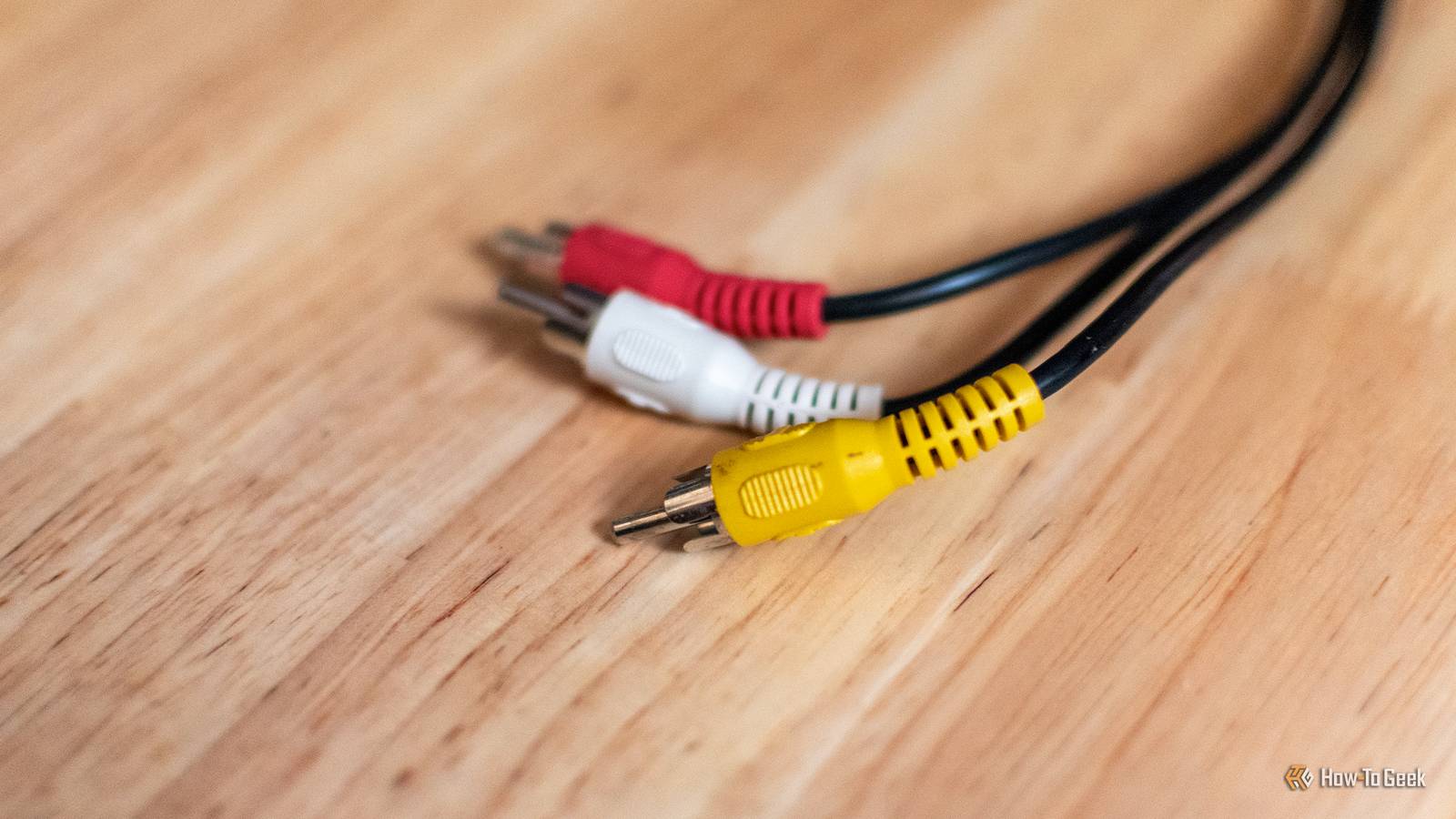
It adds no latency, doesn't require that you open up your settings to pair a device, and doesn't require batteries.It is also "high-fidelity," in that it doesn't an audio signal in the way lossy Bluetooth connections do.RCA ports The ultimate example of "if it ain't broke..." RCA connectors, which I often heard referred to as "those yellow, red, and white connectors you used to see on old TVs," are another port.
They were first introduced in the 1930s for home phonographs, and they've stuck around ever since.They used to be the go-to connector for TVs, VCRs, DVD players, vinyl turntables, and even some speakers, but they've been replaced in many of those roles by HDMI ports.Today, they're still commonly found on mixers, subwoofers, receivers (for line-level outputs), and other audio equipment.
They're simple, cheap, and practically indestructible.XLR port A three-pin connector from the 1950s is still normal Close XLR is an audio cable that has three pins and a small latch to hold it in place.Those extra pins allow XLR to carry balanced audio, which is essential for transmitting clean audio over long distances in noisy environments.
The latch ensures that your cable stays connected as it should.The XLR port also supports 48V Phantom Power, which allows you to connect a condenser microphone adding a battery or power supply to your setup.You'll find some XLR cables that are specifically designed for DMX lighting control, which is digital.
The cables are slightly different, so try to avoid mixing them with XLR audio cables.TOSLINK optical (S/PDIF) Fiber-optic connections still exist on soundbars, TVs, and AVRs Close TOSLINK is a plastic fiber-optic cable designed to carry digital audio signals.It is easily identified on the back of televisions and receivers due to its trapezoid shape and distinct soft red glow.
Its biggest advantage over other audio transmission cables is electrical isolation.An audio signal sent along a TOSLINK cable exists purely as light, which eliminates a lot of the potential for interference that exists with analog or digital audio cables.Of course, TOSLINK doesn't support high-end audio formats like Dolby Atmos or TrueHD, which makes it suboptimal for use in hi-fi home theater systems.
Related This Connector Has Been on TVs for Over 40 Years, And It’s Not Going Away The little red light that refuses to fade into obscurity.Posts By Sydney Butler The 5-pin DIN MIDI port Countless music devices still come with one MIDI is a protocol designed to connect musical instruments.It uses a 5-pin DIN plug.
Unlike USB connections, MIDI doesn't require drivers or even a computer, which makes it less prone to failure than more complicated setups.MIDI cables are unidirectional, which means you need separate in, out, and through cables depending on your specific setup.VGA An ancient analog video port is still around today VGA was the standard for PC monitors for decades, though most modern desktops and laptops have replaced it with a combination of HDMI, DisplayPort, and USB-C.
VGA is and doesn't carry audio, but it does have its perks.For one, it doesn't have HDCP, which means you're not going to connect a VGA cable only to be told that your cable is somehow "outdated" because it doesn't support the same copy-protection protocols.Today, VGA is still seen on a lot of projectors because it is physically robust, reliable, and prone to weird quirks.
If you need to plug in 100 different devices for presentations, VGA often comes with the fewest potential complications.Old ports are still in use because they're great at what they do Most of these ports are several decades old, and some are more than a century old.For the most part, they've stuck around because they're so good at what they do that there isn't much point in replacing them.
Even VGA, which seems especially outdated compared to HDMI or DisplayPort, theoretically supports up to 1440p at 75Hz.Their longevity also invites an interesting question: which popular ports today will still be around in 20 years, or even years? I can easily imagine the 1/4 inch jack or RCA ports sticking around for the foreseeable future.I'm significantly less sure about DisplayPort, HDMI, or even USB-C.
Read More