A close friend recently remarked that nobody wants a Raspberry Pi anymore.This is someone who has built up an extensive homelab setup and who frequently takes on projects powered by single-board computers.Though it sounds like a dramatic statement, there’s more than one reason that someone might think this way.
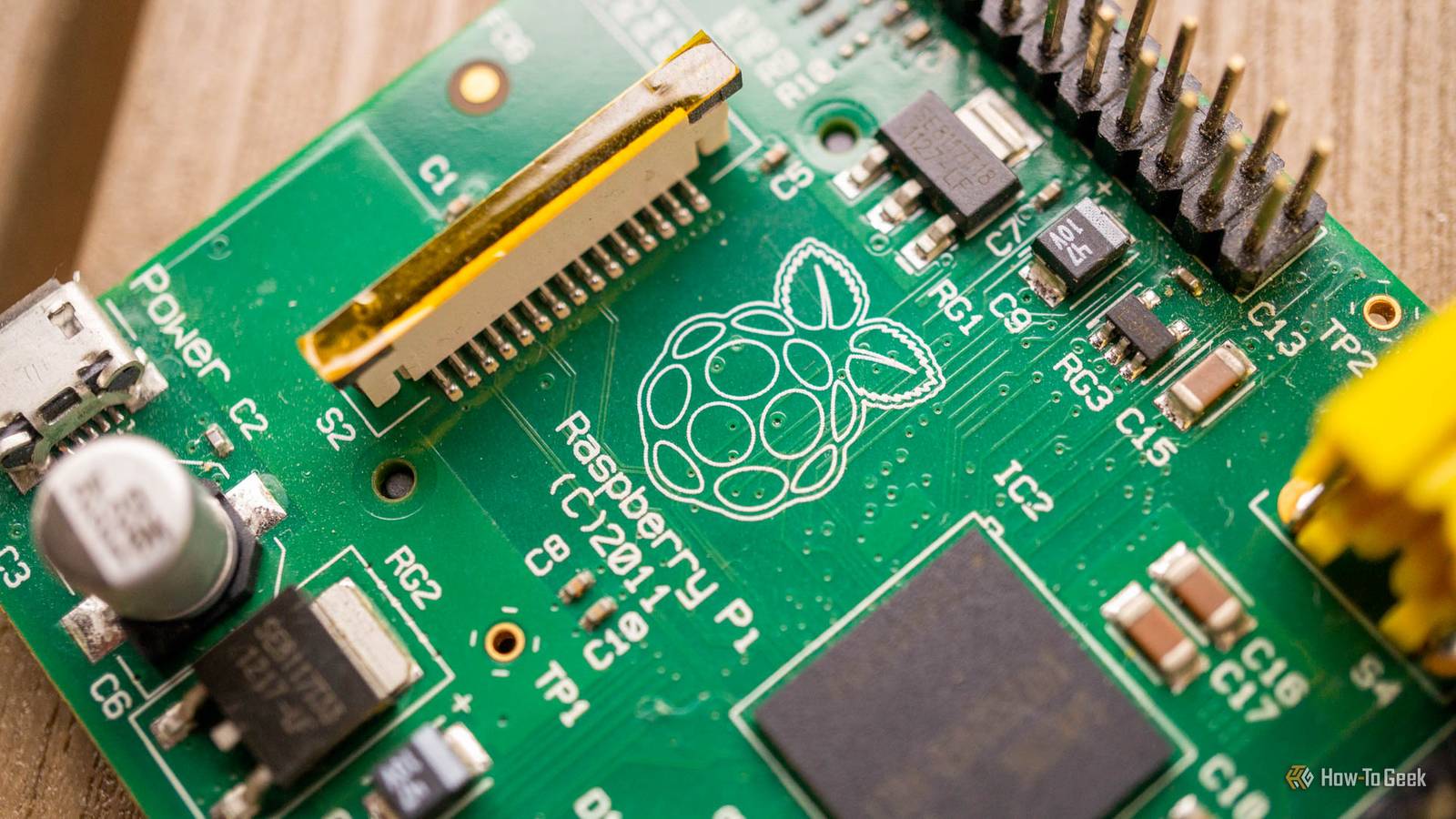
The Raspberry Pi’s success is 15 years in the making A certified icon of the computer world The Raspberry Pi is a single-board computer that first appeared in 2012, primarily as an educational tool.It quickly found favor with hobbyists and those looking for a device to better their skills, power small projects, and put power efficiency over raw grunt for general computing tasks.Though the Pi has been through four major revisions since then, the basic idea has remained the same.
It’s a single-board computer that runs Linux, with enough power to perform everyday computing tasks like browsing the web and lightweight programming.Over the years, the Raspberry Pi has become choice for single-board computer projects.Its expansive HAT standard (which stands for Hardware Added on Top) includes a massive range of official and third-party sensors and input methods, and the latest revisions include PCI Express support for faster communication between storage and GPU interfaces.
Quiz 8 Questions · Test Your KnowledgeSingle-board computers and the Raspberry PiTrivia challengeFrom humble British classrooms to global maker labs — how well do you know the world of SBCs?HistoryHardwareFoundersCompetitorsSoftwareBegin 01 / 8HistoryIn what year was the Raspberry Pi Foundation established?A2006B2009C2012D2015Correct! The Raspberry Pi Foundation was established in 2009 in the UK, though the first Raspberry Pi board didn't go on sale until February 2012.The Foundation's mission from the start was to promote the study of computer science in schools.Not quite — the Raspberry Pi Foundation was established in 2009, though it became famous when the first Pi launched in 2012.The gap between founding and product launch reflects how long it took to refine a board that could sell for just $35.Continue 02 / 8FoundersWho is widely credited as the primary creator and driving force behind the original Raspberry Pi?AGordon HollingworthBLinus TorvaldsCEben UptonDAlan SugarCorrect! Eben Upton, a computer scientist and engineer, co-founded the Raspberry Pi Foundation and is widely regarded as the primary visionary behind the project.
He was inspired by his experiences teaching at Cambridge University, where he noticed a decline in programming skills among incoming students.The answer is Eben Upton, who co-founded the Raspberry Pi Foundation and spearheaded the development of the board.Gordon Hollingworth is another key figure on the engineering team, but Upton is the most public face and driving force of the project.Continue 03 / 8HardwareWhat was the original price of the entry-level Raspberry Pi Model B when it launched in 2012?A$15B$25C$35D$50Correct! The original Raspberry Pi Model B launched at $35, a price point that was deliberately chosen to make computing accessible to students and hobbyists worldwide.A cheaper Model A was also planned at $25, though the Model B shipped first.The original Raspberry Pi Model B launched at $35, not the price you selected.
The $35 price point was central to the Foundation's mission — affordable enough that schools and individual students could buy one without much financial strain.Continue 04 / 8CompetitorsWhich SBC, produced by ODROID, became a popular Raspberry Pi competitor known for its significantly faster processor performance in the early 2010s?ABeagleBone BlackBODROID-U2CArduino UnoDCubieboardCorrect! The ODROID-U2, made by South Korean company Hardkernel, was widely praised for outperforming the Raspberry Pi in raw processing power when it launched in 2013.It featured a quad-core ARM Cortex-A9 processor and quickly gained a following among users who needed more computing muscle from an SBC.The answer is the ODROID-U2 by Hardkernel, a South Korean company.While the BeagleBone Black and Cubieboard were also notable Pi competitors, the ODROID-U2 stood out in the early SBC scene for its significantly faster quad-core CPU compared to the Pi's single-core chip at the time.Continue 05 / 8HardwareThe Raspberry Pi 4 Model B, launched in 2019, was notable for being the first Pi to support which key display feature?AHDMI outputB4K video outputCDisplayPort over USB-CDVGA output via adapterCorrect! The Raspberry Pi 4 Model B introduced dual micro-HDMI ports capable of driving two 4K displays simultaneously, a major leap from its predecessors.
This made it a genuinely capable desktop replacement candidate for the first time in the Pi's history.The answer is 4K video output.The Raspberry Pi 4 was the first in the lineup to support 4K resolution via its dual micro-HDMI ports.Earlier models topped out at 1080p, so the jump to 4K was a significant milestone for the platform.Continue 06 / 8SoftwareWhat is the name of the official operating system developed and maintained by the Raspberry Pi Foundation for its boards?AUbuntu PiBRaspbian / Raspberry Pi OSCArmbianDDietPiCorrect! Originally called Raspbian, the official OS was rebranded Raspberry Pi OS in 2020.
It is based on Debian Linux and is optimized specifically for the Pi's ARM-based hardware.The Foundation maintains it as the recommended starting point for new users.The official OS is Raspberry Pi OS, formerly known as Raspbian before a 2020 rebrand.While Armbian and DietPi are popular third-party options that run on the Pi, Raspberry Pi OS is the Foundation's own Debian-based distribution and the one they officially recommend.Continue 07 / 8CompetitorsWhich company released the Orange Pi series of SBCs, offering very low-cost alternatives to the Raspberry Pi often at a fraction of the price?AShenzhen Xunlong SoftwareBHardkernelCBanana Pi AllianceDRock64 IndustriesCorrect! Shenzhen Xunlong Software is the Chinese company behind the Orange Pi range of SBCs, which have been sold for as little as a few dollars for the most basic models.
The Orange Pi lineup has grown to include dozens of variants targeting everything from IoT projects to AI applications.The answer is Shenzhen Xunlong Software, a Chinese company that produces the Orange Pi family of boards.Hardkernel makes the ODROID series, while the Banana Pi is a product from a separate Chinese collaborative group.The Orange Pi brand is known for undercutting competitors aggressively on price.Continue 08 / 8HistoryThe Raspberry Pi 400 was a unique form factor released in 2020.
What made it physically distinct from all previous Raspberry Pi models?AIt was the first Pi with built-in Wi-FiBIt was built directly into a keyboardCIt had a built-in touchscreenDIt shipped inside a desktop tower caseCorrect! The Raspberry Pi 400 embedded a Pi 4-based computer directly inside a compact keyboard unit, evoking the spirit of classic home computers like the Commodore 64 and the BBC Micro.It was praised as a clever all-in-one design that made setup even simpler for newcomers.The Raspberry Pi 400 was unique because the entire computer was built into a keyboard, a nostalgic nod to classic home computers of the 1980s.It wasn't the first Pi with Wi-Fi (that was the Pi 3), and it had no built-in screen — you still connected it to a monitor via HDMI.See My Score Challenge CompleteYour Score/ 8Thanks for playing!Try Again While the Raspberry Pi has always aimed for an affordable price point (and arguably still meets the brief), there’s no denying that a lot has happened in the last 15 years that has many questioning where exactly the Raspberry Pi sits in the current computing landscape.
Raspberry Pi 5 Brand Raspberry Pi Storage 8GB It's only recommended for tech-savvy users, but the Raspberry Pi 5 is a tinkerer's dream.Cheap, highly customizable, and with great onboard specs, it's a solid base for your next mini PC.$80 at Spark Fun $93 at Amazon $80 at CanaKit Expand Collapse Raspberry Pi Zero 2 W Brand Raspberry Pi CPU Quad-core 64-bit ARM Cortex-A53 The Raspberry Pi Zero 2 W is super tiny and super affordable, but it packs enough computing power for a variety of DIY projects.
You can use it to create a handheld retro gaming console, for Klipper/Mainsail, a super compact home or media server, and more. $16 at CanaKit Expand Collapse Mini PCs are better for homelab and servers Way more overhead for your money, with everything you need to get going Close The rise of the mini PC has been a gift to anyone interested in building a homelab, offline smart home, or any server that lives on your local network.While a Raspberry Pi is perfectly capable of running Home Assistant, a bunch of Docker containers, or even acting as a makeshift NAS, it’s no longer the best tool for the job.That crown (currently) goes to the mini PC.
They’re usually cheaper than a Raspberry Pi, with brand-new budget options and a thriving used market.For your money, you’ll usually get fast, solid-state storage, a capable x86 or ARM-based CPU, a GPU that is capable of transcoding media on the fly, and at least 8GB of RAM.All of this is wrapped up in a neat package that has a larger footprint than a Raspberry Pi but also comes with some added bells and whistles to make up for it.
You don’t need to 3D print or buy an enclosure, and the cooling is taken care of for you.You’ll probably have more ports available to you than a Raspberry Pi, and you can still take advantage of compatibility with a vast range of operating systems.Compelling modern options include systems built around Intel’s N-series and AMD’s Ryzen systems-on-chip, plus older Apple silicon M1 and M2-based Mac mini models, which are getting dangerously close to the $100 mark on the used market.
GEEKOM A5 mini PC Brand GEEKOM CPU AMD Ryzen 5 7430U The GEEKOM A5 mini PC packs 16GB of user-replaceable RAM, a user-swappable NVMe SSD, plus two other storage slots, giving you plenty of user-upgradability in this compact system.The Ryzen 5 processor packs plenty of power for general tasks, and it's even great at lightweight gaming and CAD work too.$439 at Amazon $439 at Best Buy $439 at GEEKOM Expand Collapse Beelink SER3 Mini PC CPU Ryzen 3 3200U Graphics Radeon Vega 3 The Beelink SER3 mini PC is the perfect entry-level Windows desktop for those on a budget.
With a Ryzen 3 3200U processor, this desktop ships with Windows 11 Pro and 16GB of DDR4 RAM.A 500GB SSD is pre-installed (and user-upgradable), and you'll find dual HDMI ports, Ethernet, and four USB-A ports on this compact desktop.$299 at Amazon Expand Collapse The ESP32 dominates for lightweight, low-power uses Small, cheap, and hard to beat The full-fat Raspberry Pi rarely makes its way into smart home projects outside of acting as the server, 3D printer controller, or occasional camera builds.
The Pi Zero and its follow-up, however, are far better suited to these tasks given their smaller footprint, even lower power requirements, and cheap price point.Raspberry Pi later released the even lighter Pi Pico, too.But these offerings struggle when compared with Espressif’s ESP32 platform, which takes things to the next level.
These boards are favored for all manner of simple projects, particularly around the smart home.They make great Bluetooth and infrared proxies, they can interface with mmWave chips for presence detection, and they can even be used in Bluetooth speakers.What’s more, their deep sleep mode takes power efficiency to another level and makes them perfect for use in battery-powered projects like motion and temperature sensors.
With integrated GPIO pins, a dab of solder is all you need to turn a USB-C powered ESP32 into a powerful ally thanks to the robust support of platforms like ESPHome.They’re cheaper than the Pi Zero (at around $5 compared to $15) and more powerful than the comparatively-priced Pi Pico.Seeed Studio XIAO ESP32C3 Brand Seeed Studio The Seeed Studio XIAO ESP32-C3 is the perfect budget-friendly microcontroller for smart home projects.
With Wi-Fi and Bluetooth built-in, it also features a super deep sleep mode for low power usage when it isn't doing anything.The compact size makes this ideal for building smart home projects, and ESPHome allows it to easily integrate into Home Assistant.$5 at Seeed Studio $10 at Amazon Expand Collapse Seeed Studio XIAO ESP32-C6 Brand Seeed Studio The Seeed Studio XIAO ESP32C6 is the perfect microcontroller for your next smart home project.
The built-in Zigbee and Thread radios compliments Matter support.Plus, with Wi-Fi 6, it'll easily connect to modern wireless networks. $5 at Seeed Studio $12 at Amazon Expand Collapse The Raspberry Pi still has its place It's still a good choice for a wide variety of projects Despite the shifting nature of the industry, I still love the Raspberry Pi.Few single-board computers compare when it comes to software support and community.
So many projects call for a Raspberry Pi, and even if you can use a stand-in like the RISC-V-powered Orange Pi, choosing the Raspberry Pi means choosing a path that’s well-trodden.You’re going to have an easier run of a project if you’re picking one of the few boards that everyone recommends.Documentation, drives, and operating system support are unmatched in the field.
The Pi is still the default hobby board, even with mini PCs and rival boards nipping at its heels.Unfortunately, the RAM crisis hasn’t been kind to the Raspberry Pi.The system-on-chip is aging, but prices have had to rise.
This makes competing boards look more appealing, even if they have also seen price hikes.Mini PCs are having a moment, too.But the Raspberry Pi lives on, for now.
The project was always about doing what you can with what little resources you had available, which is why buying a 1GB “RAM crisis” Raspberry Pi isn’t as limiting as you think.The Pi's still great if you've got an old one sitting around Older Raspberry Pi models are compelling budget options, especially considering there are plenty of ways you can still put them to use.
Read More