Oxidation affects many substances but can also be beneficial.Aluminum, for example, forms a passive oxide film that helps it resist seawater.NAB is often used in ships and forms an aluminum oxide layer that resists seawater and pitting, a process in which local fissures form.
Now, researchers at Iowa State University, Arizona State University, and Virginia Tech have received a $2 million NSF grant to develop self-lubricating, wear-resistant metals that work at high temperatures.Self-lubricating polymers such as POM, PEEK, and PTFE are already widely used because they don’t need grease and can work as gears or other moving parts that experience a lot of friction.You could make a POM (acetal) gearbox, bearings, or a sliding system that would be inexpensive to make and maintain while lasting a long time.
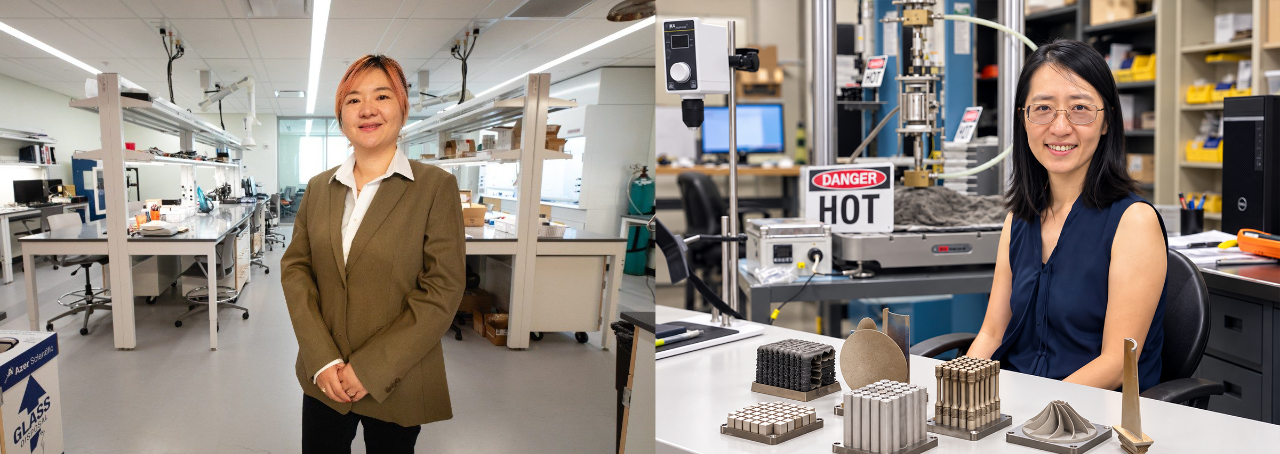
Imagine if we could make similar structures out of metals.Motors, actuators, pumps, or motion systems could make a lot possible in ships, engines, and military components.Associate professors Wenjun Cai and Yao Fu are leading the research.
Professor Cai said, “Above roughly 600 degrees Celsius, conventional liquid lubricants fail, and many traditional solid lubricants oxidize or lose their effectiveness.At the same time, components such as bearings, seals, turbine interfaces, and other moving contacts still experience friction and wear.Our inspiration came from realizing that oxidation might provide the missing link.
If we can make the alloy strong internally but cause its surface to form a stable, low-shear oxide during operation, we can potentially achieve structural strength and lubrication in the same material.The idea of turning what is normally a degradation mechanism into a functional response is really the origin of this project.” Meanwhile, Professor Fu stated that “Protective oxidation has a long history in materials science.What is exciting here is that we are deliberately designing the material and processing route so that oxidation becomes part of the desired functionality.
One challenge from the manufacturing and mechanics perspective is that a material’s high-temperature behavior is determined not only by its composition, but also by its microstructure and processing history.Additive manufacturing introduces unique microstructures, defect populations, dislocation networks and residual stresses, all of which can influence diffusion and oxidation.That complexity is a challenge, but it also gives us additional variables that we can potentially engineer to obtain the surface behavior we want.
A material that can generate and continuously regenerate its own lubricating oxide surface during operation could reduce dependence on conventional lubricants and coatings.” Both point out that use cases include power generation and aerospace turbines.In addition, friction assemblies could be more efficient, last longer, require less maintenance, and be more reliable than alternatives.Think of a bearing on an aircraft carrier that needs years of use or a tank turret which is difficult to repair in the field.
In this case, the team will be working on complex concentrated alloys.These cutting-edge materials could unlock many advanced applications by developing new designer alloys that replace today’s antiquated material systems.The team examined metals and oxides in tandem, based on the idea that “configurational entropy can help stabilize a strong bulk alloy while also promoting stable, low-shear spinel oxides at the surface.” By using several alloying agents in roughly equal parts, a random atomic configuration in the bulk alloy promotes spinel formation.
These spinels create the self-lubricating surface, while the rest of the alloy system is balanced to keep the material heat-resistant and strong.The team have developed a “closed-loop framework connects theory, simulation, additive manufacturing, high-throughput experiments, characterization, tribology, and machine learning.We need to narrow the search space by predicting which compositions should form stable spinels, retain high-temperature strength, and follow desirable oxidation pathways.
We then manufacture and test selected materials.Those experimental results are returned to the computational and machine-learning models, which update their predictions and identify the next most informative experiments.” This seems like a very thoughtful approach that may make alloy discovery less tedious and random.While the team is definitely on the hunt for alloys, they want to go further and aim to ¨create a reusable materials-discovery infrastructure.
The project will generate open datasets, computational workflows, physics-guided machine-learning models, and inverse-design tools that connect composition and processing to oxidation, mechanical properties, friction, and wear.¨ Now the whole self-lubricating high-temperature metal thing is very exciting indeed.But a system that can create these materials quickly and well could change the world.This is exactly what we explored in the Goldilocks Flywheel article, where we look at how a system using machine learning and new techniques such as additive manufacturing could replace and win in a materials future.
Subscribe to Our Email Newsletter Stay up-to-date on all the latest news from the 3D printing industry and receive information and offers from third party vendors.Print Services Upload your 3D Models and get them printed quickly and efficiently.Powered by FacFox Powered by 3D Systems Powered by Craftcloud Powered by First Mold Powered by Xometry 3DPrinting Business Directory 3DPrinting Business Directory
Read More